

Featured photograph: A broad cream cantilever and shallow reflecting pool at Oman Across Ages Museum in Manah, Oman. Photo: SeenPotos · Unsplash License · Cropped/resized and converted to WebP.
A hotel, guesthouse, resort or tourism camp in Oman is a regulated accommodation business. A commercial registration alone does not allow the property to receive paying guests. The project also needs the correct property rights, tourism approval, classification, safety approvals and operating systems.
The correct route depends on the real accommodation model. A hotel is not licensed in the same way as a camp. A guesthouse is not simply a villa listed on a booking website. A resort may also need environmental, coastal, utility and land approvals that do not apply to a small urban property.
This guide explains the main planning and licensing questions. Exact conditions can change by category, location, building, land use and project design. Confirm the final route with the Ministry of Heritage and Tourism and the other competent authorities before signing a long lease or starting construction.
Tourism and hospitality
Visitors and overnight stays
Annual visitor demand and the length of overnight visits.
Visitors and overnight stays
2025Overnight visitors are included in all visitors; the two counts must not be added.
The basic approval logic
- Choose the accommodation category before designing the property.
- Confirm that the land, building and lease can legally support that category.
- Obtain tourism initial approval and architectural map review before relying on the design.
- Complete municipality, environmental and civil protection approvals that apply to the site.
- Finish the property and meet the classification standards.
- Connect the required guest-reporting system and prepare the employment plan.
- Obtain the classification certificate and operating licence before opening.
1. Define the accommodation model first
The commercial name used in marketing is not always the legal category used by the Ministry. For example, “boutique hotel”, “eco-resort” or “desert retreat” may describe the customer experience, but the authority must still place the project under an approved accommodation category and classification standard.
| Model | Main planning point | Important warning |
|---|---|---|
| Hotel or boutique hotel | Star or approved quality classification, room and service standards, guest systems and operating facilities | “Boutique” does not remove hotel licensing or classification duties |
| Guesthouse or rest house | Property suitability, guesthouse standards, approved unit data and local permissions | A residential lease or online listing is not enough |
| Resort | Accommodation licence plus wider land, leisure, food, environmental, utility and safety planning | Each added facility may create another approval |
| Tourism camp | Camp standards, location approval, access, water, waste, power, fire safety and environmental controls | Desert or mountain land cannot be assumed to be usable |
| Green or eco-lodge | Tourism standards and possible agricultural, water or environmental approvals | “Eco” is not only a marketing word; the site and design matter |
| Heritage lodge or inn | Building safety, heritage character, structural suitability and classification requirements | Old buildings may need detailed engineering review |
| Accommodation management | Clear management agreement, correct commercial activity and separation of owner and operator duties | A management contract does not replace the property licence |
The Ministry of Heritage and Tourism publishes separate standards or requirements for hotels, tourist camps, guesthouses, hotel apartments, heritage lodges and green lodges. Ask the Ministry to confirm the intended category before the architect completes the concept.
2. At-a-glance licence and approval table
| Step | Main authority | Why it matters |
|---|---|---|
| Commercial activity and company structure | Ministry of Commerce, Industry and Investment Promotion | Creates the legal operator and records the approved business activity |
| Property and land-use confirmation | Property owner, Ministry of Housing and Urban Planning, municipality and relevant land authority | Shows that the project has valid rights to use the site for the intended purpose |
| Initial tourism approval and map review | Ministry of Heritage and Tourism | Reviews the accommodation concept and architectural plans before the operating licence |
| Building and municipal approvals | Relevant municipality | Covers construction, permitted use, completion and local operating requirements |
| Environmental permission | Environment Authority | May be needed according to the project category, location and environmental impact |
| Preliminary and final civil protection approval | Civil Protection and Ambulance Authority / Royal Oman Police service channel | Covers fire and life-safety plans, systems and final site inspection |
| Food and health approvals | Municipality and other relevant food authorities | Applies when the property prepares, stores or serves food |
| Classification | Ministry of Heritage and Tourism | Confirms the approved quality category after the property is ready |
| Hotel establishment licence | Ministry of Heritage and Tourism | Allows the approved accommodation establishment to operate |
| Employment plan and labour permissions | Ministry of Labour | Supports national workforce planning and later labour applications |
| Guest reporting and operating systems | Ministry of Heritage and Tourism and connected systems | Supports classification, guest records and official reporting |
| Tax registrations and tourism tax | Tax Authority and Ministry of Heritage and Tourism | Covers income tax, VAT where applicable and the tourism tax |
3. Hotel and boutique hotel
A hotel normally needs approved architectural plans, classification standards, guest facilities, fire and life-safety systems, an employment plan and an operating licence. The exact standards depend on the category and classification requested.
A boutique hotel may be small and design-led, but it is still an accommodation establishment. Do not assume that a small room count or a premium brand removes the normal hotel process. Confirm whether the project will be treated as a hotel, guesthouse, heritage lodge or another recognised category.
Tourism and hospitality
The hotel sector
Reported hotel supply, guests and revenue for the annual market.
Hotel guests are check-ins, not the same as inbound visitors.
- Plan rooms, bathrooms, reception, service areas and accessibility around the selected classification.
- Include parking, loading, waste, staff circulation and emergency access in the early design.
- Decide whether restaurants, pools, spas, events or other facilities need separate approvals.
- Confirm the brand name and trademark rights before the final licence application.
- Prepare the hotel system and guest-reporting connection before classification.
4. Guesthouse
A guesthouse is a regulated accommodation model. It should not be treated as a normal residential rental. The Ministry’s initial approval service asks for property and survey documents or a rental contract, project plans and location information. It also refers to specific guesthouse standards.
Some guesthouse projects are inside Integrated Tourism Complexes. In those cases, the Ministry may request documents from the master developer and information about the guesthouse units. A private landlord’s approval may also be needed for alterations, signs, guest use and commercial operation.
Important: A landlord’s permission, a municipality licence and a tourism licence answer different questions. One approval does not automatically replace the others.
5. Resort
A resort often combines accommodation with restaurants, pools, beach or mountain access, events, sports, wellness services, retail or other facilities. This makes the approval map wider than the hotel licence alone.
Tourism and hospitality
Visitor spending and nights
Total spending, average spending and nights describe different demand dimensions.
These values have different units; tourism expenditure is not hotel revenue alone.
Start with a complete project-use list. Show what will happen in every building and outdoor area. This helps the architect and advisers identify which approvals may be needed for food, water, waste, leisure facilities, transport, events, marine use, environmental impact and public safety.
- Confirm the land title, lease or usufruct right and the permitted tourism use.
- Check access roads, utility capacity, drainage and waste solutions before final design.
- Review coastal, wadi, mountain or protected-area limits where relevant.
- Separate the accommodation licence from licences for added activities.
- Do not rely on a hotel brand agreement as proof that the site is approved.
Foreign investors considering a property purchase should complete legal and technical checks before committing funds. The property route and the tourism operating route must still be reviewed separately.

Photo: Mark Walker from Peterborough, England · CC BY 2.0 · Cropped/resized and converted to WebP.
6. Tourism camp and eco-lodge
Tourism camps and eco-lodges are highly sensitive to location. A beautiful desert, coast, mountain or agricultural site is not automatically approved for commercial accommodation.
The project may need proof of land rights, location suitability, tourism approval, environmental permission, safe road access, emergency access, water, sewage, solid-waste control, power, lighting, staff facilities and fire protection. Temporary-looking structures can still create permanent operating and environmental duties.
Tourism camp planning
- Define whether the camp is regular, luxury, seasonal or permanent.
- Confirm the boundaries and permitted land use.
- Plan safe tents or units, guest paths, emergency exits and assembly points.
- Provide safe drinking water, toilets, wastewater and waste collection.
- Plan fire control for kitchens, generators, gas, tents and vehicles.
- Control noise, lighting and impact on nearby communities and wildlife.
Green or eco-lodge planning
The Ministry’s initial approval page states that green lodges may need approval from the Ministry of Agriculture, Fisheries and Water Resources. The Environment Authority may also require an environmental permit or study according to the activity and site.
Do not promise “zero impact” without evidence. Use measurable plans for water use, wastewater, energy, waste, local materials, food supply and protection of the surrounding land.
7. Property, lease and land use
The property document is one of the first important parts of the project. The Ministry’s initial approval route asks for land ownership and survey documents or a rental contract for rented land. The final licence also requires ownership or lease evidence.
Before signing, check that the property can support paid accommodation. The lease should be long enough for design, approvals, construction, opening and recovery of the investment. It should also deal with alterations, signs, utilities, subletting, brand use, assignment, early termination and restoration duties.
| Property question | Why it matters |
|---|---|
| Who legally owns or controls the site? | The licence applicant must have valid property rights or a valid lease |
| Is hospitality use allowed? | Residential, agricultural or other land may not automatically allow accommodation use |
| Can the building be altered? | Fire systems, accessibility, kitchens, lifts and service areas may need major work |
| Is the lease term sufficient? | A short lease can create a serious risk after fit-out investment |
| Who owns the improvements? | The contract should explain what happens to buildings, equipment and fit-out at the end |
| Can the operator use the brand and booking channels? | The owner, operator and brand rights must match the operating model |
| Are utilities and access adequate? | Water, power, sewage, parking and emergency access can limit capacity |
8. Tourism initial approval and classification
Initial approval and architectural map review
The Ministry of Heritage and Tourism states that investors should obtain initial approval for the architecture and design before applying for the operating licence. Its published service includes review of architectural maps for all hotel categories.
The current service page lists an OMR 80 fee and a one-year, non-renewable validity period. It asks for identity documents, property and survey evidence or a lease, architectural plans and site pictures. Extra documents apply to green lodges, heritage lodges and guesthouses in tourism complexes. Confirm the live fee and document list at submission because the electronic service can change.
Classification
Classification is not only a marketing star rating. It is the official quality category used for the establishment. The Ministry’s classification service states that construction must be complete and the project must be ready. It also requires electronic linkage with the visitor system and an employment plan form.
The property is reviewed against the standards for its type. Do not design first and search for a suitable classification later. This can lead to expensive changes in room layout, facilities, accessibility, safety or service areas.
Tourism and hospitality
Classified 3–5-star hotels
Annual demand and occupancy for classified three- to five-star hotels.
Classified 3–5-star hotels
2025This hotel population excludes other accommodation classes.
Operating licence fees published by the Ministry
| Published category | Current published licence fee |
|---|---|
| 4- and 5-star hotels and luxury hotel apartments | OMR 3,200 |
| 3-star hotels and premium hotel apartments | OMR 2,400 |
| 1- and 2-star hotels and regular hotel apartments | OMR 800 |
| Regular and luxury camps | OMR 1,000 |
| Rest houses and hostels | OMR 250 |
The Ministry’s service page states that the hotel establishment licence is valid for five years and is renewable. Renewal should be planned before expiry. Classification, property, employment and compliance documents may still need to remain current.
Fee note: These are the category fees shown on the Ministry’s current public service page. They do not include company registration, property, design, construction, classification work, municipality, environment, civil protection, food, technology, staffing or professional costs.
9. Civil protection, food and guest safety
Civil protection
Fire and life-safety planning should begin with the architectural design. Oman has a preliminary civil protection service for facility plans and a separate final civil protection licence after completion.
- Use an approved consultant for the plans and submissions.
- Show access, exits, alarms, firefighting systems and emergency routes.
- Include kitchens, gas, generators, laundry, stores and staff areas.
- Complete the final inspection before opening to guests.
- Keep maintenance, testing and emergency records after opening.
Food and public health
A property that prepares or serves food must also meet local food and health requirements. This can include kitchen layout, storage, cold-chain control, pest control, waste, cleaning systems and health cards for food workers. The exact process depends on the municipality and the food activity.
Guest safety
Guest safety is wider than fire protection. The operator should control pool safety, balconies, lifts, electrical systems, drinking water, food allergies, transport, children’s areas, excursions, medical response and incident reporting. Higher-risk activities may need their own licence, insurance or specialist approval.
10. Environmental and location approvals
The Environment Authority decides the environmental permit category according to the activity and project impact. Do not assume that every hotel is in the same category. A large coastal resort, mountain lodge or desert camp can need a different level of review from a small property in an existing approved building.
For projects with higher environmental impact, the Authority may require an Environmental Impact Assessment by an approved environmental consultancy. Tourism projects may also need the Ministry of Heritage and Tourism approval and the project’s internal and external plans as part of the environmental submission.
- Check environmental site suitability before buying or leasing sensitive land.
- Identify wastewater, solid waste, water demand and energy needs.
- Review coastal setbacks, wadis, groundwater, vegetation and wildlife where relevant.
- Do not begin site work based only on a commercial registration.
- Keep the environmental permit conditions in the operating manual.
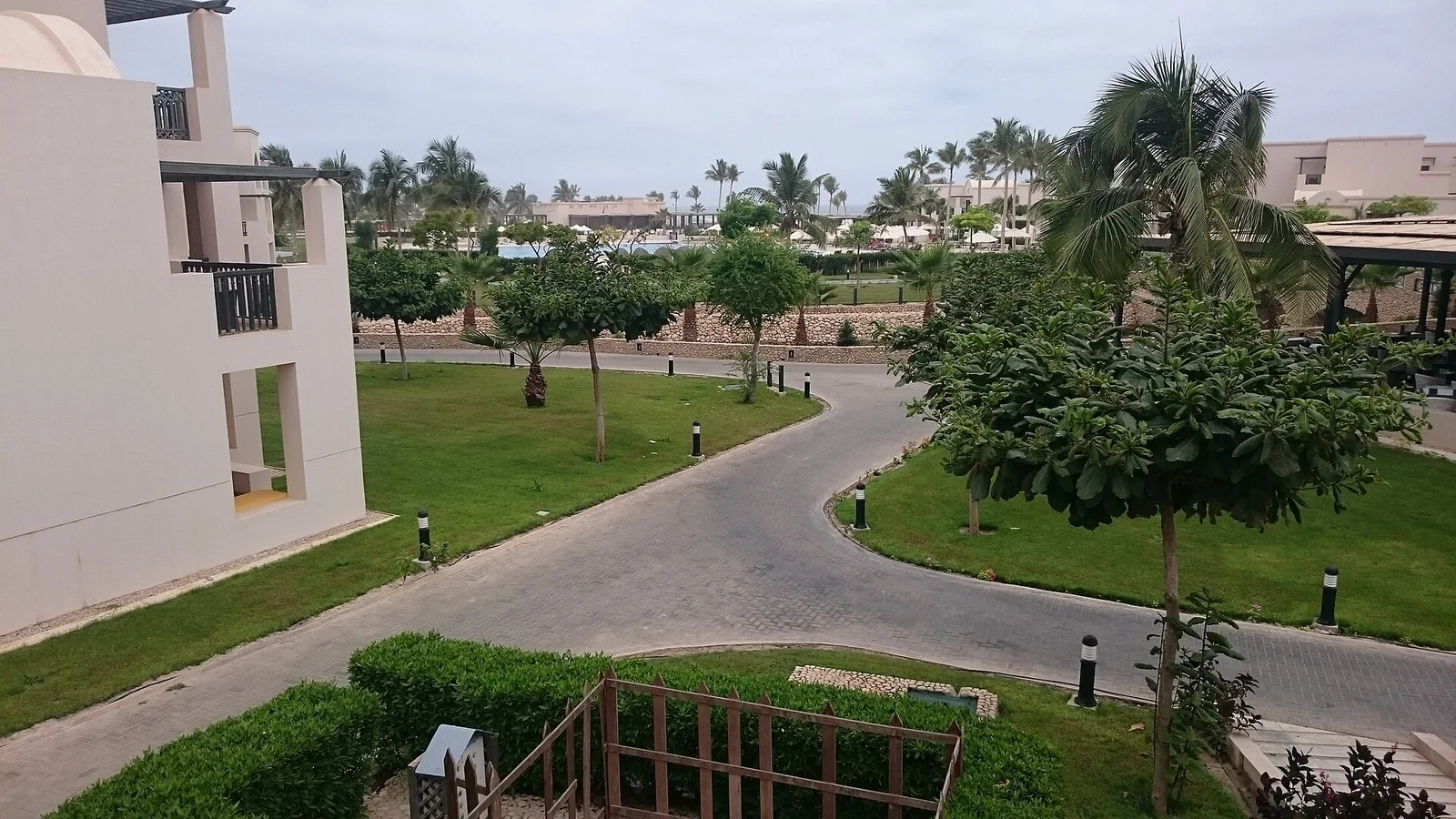
Photo: Ashashyou · CC BY-SA 3.0 · Cropped/resized and converted to WebP.
11. Management agreements and booking systems
Property ownership and hotel operation can be separate
A property owner may appoint another company to manage the hotel. This is common in branded and professionally managed properties. The management agreement should clearly separate the asset owner’s duties from the operator’s duties.
| Agreement topic | Question to answer |
|---|---|
| Licence holder | Which company will hold the tourism and local operating licences? |
| Employees | Which party hires, pays and manages staff? |
| Banking and revenue | Which account receives booking income and pays suppliers? |
| Taxes and fees | Who files VAT, income tax and tourism tax records? |
| Brand and systems | Who owns or licenses the name, website, software and customer data? |
| Maintenance | Who pays for routine maintenance, major repairs and replacements? |
| Approval changes | Who handles alterations, classification changes and licence renewal? |
| Termination | What happens to bookings, staff, data, equipment and licences? |
A management agreement does not remove the need for approved property rights, classification and operating licences. The actual ownership and operating structure should match the commercial registration, contracts and authority records.
Bookings, guest records and online platforms
The Ministry’s classification service requires electronic linkage with the visitor system. The operator should also have a reliable property-management system for reservations, room status, payments, guest records and reporting. For guests booking from Europe, the Americas or the Gulf, make arrival instructions and the contact method easy to understand before travel.
- Show the full price, taxes, fees and payment terms clearly.
- Publish cancellation, refund, no-show and damage rules.
- Issue correct invoices and keep accounting records.
- Protect passport, identity, payment and contact data.
- Reconcile booking-platform reports with bank and tax records.
- Use the approved property name and classification in advertising.
An accommodation licence does not automatically authorise a separate travel agency. If the business sells travel packages, tours, transport or agency services, review the separate Ministry of Heritage and Tourism travel and tourism agency licensing route.
12. Company, residence, banking and workforce pathway
The accommodation project needs a legal operating entity with the correct commercial activity. The company step should be kept short but accurate. Use the Oman company registration guide to review ownership, activities, investment-licence needs and the legal operator before the tourism application.
Search commercial activities below by code or title. The result is an initial screening and does not confirm ownership eligibility or licensing approval.
Hotel owners, managers and employees may need separate residence and labour processes. Immigration and labour approvals remain separate from the hotel licence.
The business also needs an operating account for booking income, card settlement, payroll and suppliers. Bank approval is independent. Prepare the ownership documents, business plan, source of funds, property contract, licences and expected transaction profile before applying for a corporate bank account in Oman.
The Ministry’s hotel licensing and classification pages refer to an employment plan form. Staffing should therefore be planned before opening. Current national workforce targets, reserved professions and labour permissions can change by activity and role. Consult the Oman labour and Omanisation guide before building the final staffing budget.
13. Taxes, tourism tax and customer charges
Hotels and tourism establishments must plan more than one tax or fee. The Ministry of Heritage and Tourism’s public service states that the 4% tourism tax is paid quarterly and that late payment can lead to penalties.
The Oman Tax Authority publishes a standard 15% income-tax rate for companies and establishments. A 3% rate may apply only to qualifying small enterprises that meet the legal conditions. The standard VAT rate is 5% on most goods and services, and the Tax Authority confirms that hotel stays and short-term accommodation are subject to VAT.
Local municipality or governorate fees may also apply according to location and service. Build the room price from the correct taxable base and show customers how mandatory charges are applied.
Pricing control: Your booking engine, front desk, accounting system and tax returns should use the same treatment for room charges, food, services, discounts, deposits, refunds and mandatory fees.
14. Main cost areas and useful tools
The tourism licence fee is only one part of the budget. The largest cost is often the property, construction or fit-out needed to meet the selected classification.
Estimate general Oman mainland company and investor-residence costs below. The estimate excludes project-specific costs and does not calculate free-zone or other countries’ fees.
Tourism and hospitality
Recent classified-hotel demand
Year-to-date performance in classified three- to five-star hotels.
Recent classified-hotel demand
2026-01 to 2026-08Year-to-date figures should not be compared directly with a full-year total.
| Cost area | Examples |
|---|---|
| Property | Purchase, lease, usufruct, deposit, registration and due diligence |
| Design and studies | Architecture, engineering, traffic, environment, fire, survey and feasibility work |
| Construction and fit-out | Rooms, kitchens, lifts, accessibility, fire systems, pools, landscaping and staff areas |
| Government approvals | Tourism, municipality, environment, civil protection, food and other activity licences |
| Technology | Property-management system, booking engine, guest-reporting connection, payment systems and cybersecurity |
| Pre-opening | Recruitment, training, uniforms, supplies, insurance, marketing and trial operation |
| Working capital | Payroll, utilities, food, cleaning, maintenance and booking-platform settlement gaps |
| Ongoing compliance | Licence renewal, classification, tax filing, tourism tax, accounting, labour and safety maintenance |
Use the Oman business activity finder to search possible commercial activity codes. The tool does not prove that an activity is open to foreign ownership or that a regulator will approve the project.
The mainland company registration cost estimator can show general company and investor-residence cost categories. It does not calculate the property, tourism licence, design, environment, construction, equipment, utilities, food, staff or operating capital of a hospitality project.
15. Common mistakes
- Choosing a marketing label before the legal category. “Boutique”, “eco” or “luxury” does not decide the Ministry classification.
- Signing a lease before land-use review. A low rent has no value if paid accommodation is not permitted.
- Designing without classification standards. Late changes to rooms, service areas or safety systems can be expensive.
- Starting construction before initial approvals. The design may later fail tourism, municipality, environment or civil protection review.
- Assuming one licence covers every facility. Food, pools, spas, events, transport and tours can create extra approvals.
- Using a residential property as an unlicensed guesthouse. A booking-platform listing does not create legal permission.
- Ignoring the environmental category. Camps, coastal resorts and remote lodges may need early studies and site review.
- Confusing the owner with the operator. A management contract must match the actual licensed and banking structure.
- Under-budgeting pre-opening cash. The project may pay staff, utilities, systems and suppliers before stable occupancy begins.
- Failing to connect guest, booking and tax records. Differences between systems can cause reporting and audit problems.
- Treating the hotel licence as a travel agency licence. Tours and travel packages may need a separate licence.
- Using fixed online figures as a final quotation. Project costs and official requirements depend on the live application.
16. Practical pre-application checklist
- Write a one-page description of the accommodation model and all added facilities.
- Ask the Ministry of Heritage and Tourism to confirm the likely category.
- Check the commercial activity and foreign-ownership position.
- Verify land title, survey, lease rights and permitted use.
- Confirm road access, parking, water, power, sewage and waste capacity.
- Give the architect the official standards for the intended category.
- Map municipality, environment and civil protection approvals.
- Identify food, pool, spa, event, transport and tour approvals.
- Prepare an employment plan and realistic Omanisation budget.
- Choose the property-management, booking and guest-reporting systems.
- Build a tax map for VAT, income tax, tourism tax and local fees.
- Prepare construction, pre-opening and working-capital budgets separately.
- Put renewal dates and permit conditions into a compliance calendar.
- Do not announce an opening date until the approval sequence is clear.
17. Frequently asked questions
Can a foreign investor own a hotel company in Oman?
Many activities can allow full foreign ownership, but the final position depends on the exact commercial activity, restricted activities, investment-licence rules, property structure and sector approvals. Check the live Oman Business Platform and tourism requirements before registration.
Is a commercial registration enough to open a hotel?
No. The project also needs valid property rights, tourism initial approval, classification, an operating licence and the other approvals that apply to the building, location and services.
Can I convert a villa into a guesthouse?
Only after the property, land use, building, lease, municipality and tourism requirements are checked and approved. A residential lease alone does not authorise paid guest accommodation.
Does a boutique hotel have a separate licence?
“Boutique hotel” may be a commercial description. The Ministry must confirm the recognised accommodation category and classification that applies to the actual project.
What is the first tourism approval?
The Ministry of Heritage and Tourism provides an initial approval and architectural map review service. It reviews the property evidence, project plans and category requirements before the final operating licence.
How much is the hotel establishment licence?
The current published fee depends on the category. The Ministry lists OMR 3,200 for 4- and 5-star hotels and luxury hotel apartments, OMR 2,400 for 3-star hotels and premium apartments, OMR 800 for 1- and 2-star hotels and regular hotel apartments, OMR 1,000 for regular and luxury camps, and OMR 250 for rest houses and hostels. Confirm the live fee before payment.
Does a tourism camp need an environmental permit?
It may. The Environment Authority decides the permit category according to the activity, site and environmental impact. Remote, coastal, desert, mountain or sensitive locations should be reviewed early.
Can a hotel also sell tours and travel packages?
Do not assume that the accommodation licence covers agency services. The Ministry has a separate licence route for travel and tourism agencies. Review the exact activity before selling packages, transport or tours.
Can the property owner appoint a separate hotel operator?
Yes, this can be structured through a management agreement. The agreement should clearly allocate licences, staff, revenue, tax, systems, maintenance and termination duties. The authority records and contracts must match the real operating model.
What taxes apply to accommodation businesses?
The operator may need corporate income tax, VAT, the 4% tourism tax and local fees. The exact treatment depends on registration status, location and each charge. Use a hospitality accounting setup from the first booking.
Is the opening date guaranteed after submitting the applications?
No. Timing depends on the property, plans, documents, authority reviews, construction, inspections, classification and system readiness. No adviser can guarantee government approval or a fixed opening date.
18. Related Oman Verified guides and services
Employment visas
Review the separate work-permit and residence sequence for hospitality employees.
Omanisation planning
Understand workforce planning before hiring local and non-Omani staff.
Tax guide
Review income tax, VAT, registration and filing duties for an Oman company.
Tourism and Vision 2040
See how tourism and investment fit into Oman’s long-term development priorities.
19. Conclusion
The safest way to start a hotel, guesthouse, resort or tourism camp in Oman is to confirm the accommodation category and property route before spending heavily on design or construction. The tourism classification should guide the plans, not be added at the end.
Build one approval map covering the Ministry of Heritage and Tourism, property and land use, municipality, environment, civil protection, food, labour, guest systems and tax. This makes the project easier to budget and reduces the risk of late redesign.
20. Official sources
- Ministry of Heritage and Tourism — Initial Approval and Architectural Map Review
- Ministry of Heritage and Tourism — Hotel Establishment Classification
- Ministry of Heritage and Tourism — Hotel Establishment Licence
- Ministry of Heritage and Tourism — Hotel Licence Renewal
- Gov.om — Travel and Tourism Agency Licence
- Environment Authority — Environmental Permit Service Catalogue
- Gov.om — Preliminary Civil Protection Licence for Facility Plans
- Gov.om — Final Civil Protection Licence for an Establishment
- Ministry of Heritage and Tourism — 4% Tourism Tax
- Oman Tax Authority — Tax Rates
- Oman Tax Authority — VAT FAQs
- Gov.om — Register an Employment Plan
- Consumer Protection Authority — Consumer Services and Guidance
Official public information reviewed on August 1, 2026. Confirm the current requirements in the live government systems before submission.
Image sources and licences
- SeenPotos – https://unsplash.com/photos/a-large-white-building-with-a-pool-in-front-of-it-UbbM9Ov2Ljo
Unsplash License – https://unsplash.com/license - Mark Walker from Peterborough, England – https://commons.wikimedia.org/wiki/File:Turtle-Oman_Dive_Centre.jpg
CC BY 2.0 – https://creativecommons.org/licenses/by/2.0 - Ashashyou – https://commons.wikimedia.org/wiki/File:Rotana_Salalah.jpg
CC BY-SA 3.0 – https://creativecommons.org/licenses/by-sa/3.0