
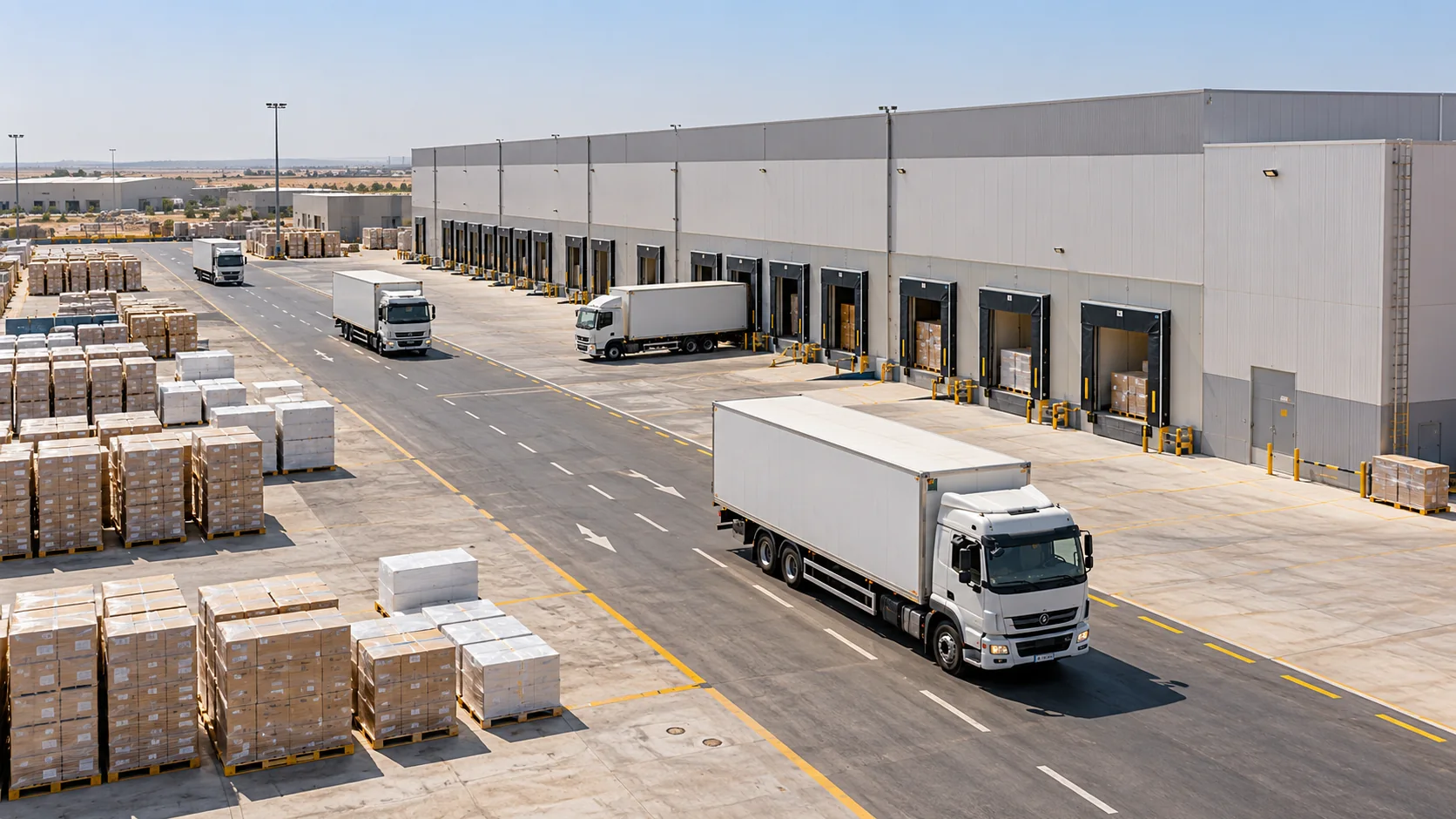
Salalah Free Zone can serve as a regional distribution and re-export base for companies moving goods between Asia, the GCC, East Africa and wider international markets.
For the complete Salalah investment framework, see the Salalah Free Zone Investor Guide.
The operating model brings together Port of Salalah connectivity, free-zone warehousing, Bayan customs procedures, inventory control and destination-market planning.
For the detailed customs flow, see Salalah Free Zone Port Logistics: Cargo Flow, Customs and Re-export.
1. Regional distribution model
| Stage | Operational focus |
|---|---|
| Inbound cargo | Supplier, origin, shipping document and customs transfer. |
| Zone storage | Warehouse, inventory control and product conditions. |
| Value-added work | Approved packing, labelling, consolidation or processing. |
| Order allocation | Customer, country, product and customs destination. |
| Outbound cargo | Re-export declaration, transport and destination documents. |
| Mainland Oman orders | Free-zone-to-free-market route with importer and VAT planning. |
2. Markets served from Salalah
SFZ positions Salalah as a gateway to GCC, East Africa, South Asia and wider global markets. Its location on major east–west shipping routes supports companies building a multi-market inventory strategy.
- GCC markets
- Yemen and nearby regional markets
- East Africa
- South Asia
- Europe-linked maritime routes
- International transshipment and re-export destinations
3. Warehouse design for distribution
A distribution warehouse is designed around SKU profile, pallet positions, order frequency, loading, returns and destination-market segregation.
Current facility options are covered in Salalah Free Zone Offices, Warehouses, Industrial Units and Land.
| Warehouse input | Planning question |
|---|---|
| SKU count | How many product lines and variants? |
| Pallet/carton profile | Racking, floor and picking design. |
| Order size | Full-container, pallet, carton or mixed order? |
| Temperature | Ambient, chilled, frozen or controlled storage? |
| Returns | How are returned goods inspected and segregated? |
| Security | High-value or controlled products? |
4. Customs and re-export records
The distribution file connects the original entry or transfer declaration to the warehouse stock and the outbound re-export declaration. This preserves a clean audit trail for each shipment.
- Commercial invoice
- Packing list
- Transport document
- Entry/transfer declaration
- Warehouse receipt
- Inventory movement
- Outbound invoice
- Re-export declaration
- Certificate of origin where applicable
5. Rules of Origin and value-added work
Packing, labelling, assembly or processing can support the operating model, while preferential origin follows the product-specific rule of the relevant trade agreement.
Use the Oman trade agreements and Rules of Origin guide when a tariff preference forms part of the export strategy.
6. Mixed Oman + export model
A company can design separate routes for export orders and mainland Oman orders. Export inventory remains aligned with the free-zone/re-export workflow, while Oman sales use the applicable importer, Bayan and VAT path.
Need more Oman business tools?
Access all Oman Verified tools in one place.
7. Distribution KPI framework
| KPI | Why it matters |
|---|---|
| Inventory turns | Measures capital tied in stock. |
| Order cycle time | Tracks speed from order to dispatch. |
| Container dwell | Shows port/warehouse efficiency. |
| Pick accuracy | Supports customer and customs accuracy. |
| On-time dispatch | Measures logistics reliability. |
| Cost per order / pallet | Supports market-by-market profitability. |
8. Frequently asked questions
Can Salalah Free Zone support regional re-export?
Yes. Logistics, warehousing and re-export are core operating models supported by SFZ and Oman Customs procedures.
Can one warehouse serve several countries?
Yes. Inventory can be organised by customer, market and customs destination inside the approved warehouse and activity model.
Can some goods also be sold in Oman?
Yes. Mainland orders use the dedicated free-zone-to-free-market customs and VAT route.
How is origin handled after repacking or assembly?
The applicable trade agreement’s product-specific Rule of Origin determines preferential origin.
9. Official sources
- Salalah Free Zone — logistics business opportunities
- Salalah Free Zone — logistics facilities
- Oman Customs — transfer between free zones
- Oman Customs — transfer to free market
Official public information reviewed on October 7, 2026.