
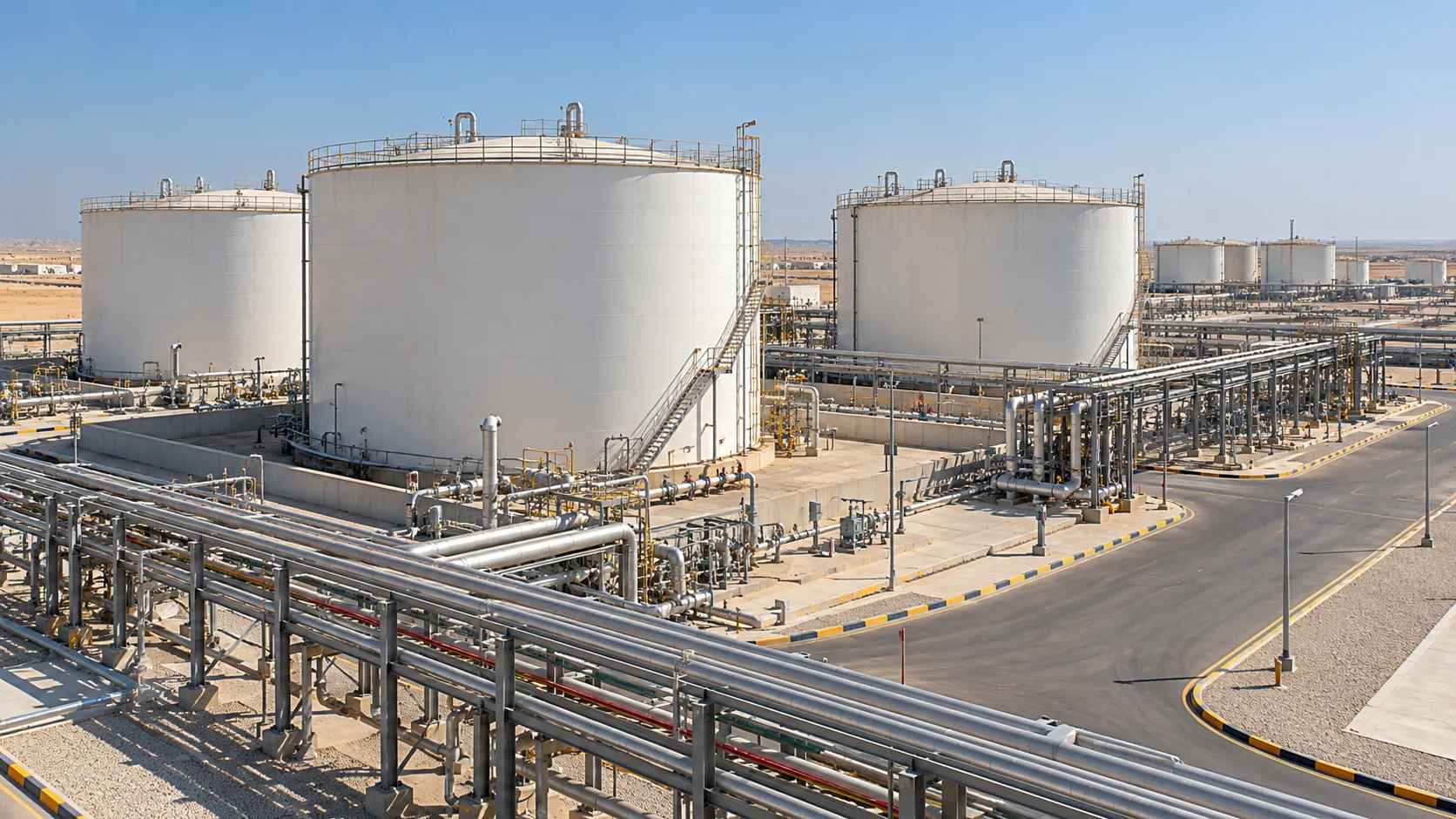
Salalah Free Zone has an established petrochemical cluster supported by industrial land, gas and water networks, a dedicated liquid-bulk corridor and proximity to Port of Salalah.
For the complete Salalah investment framework, see the Salalah Free Zone Investor Guide.
The project model is built around feedstock, process, storage, pipeline interface, utilities, safety, environment and export logistics as one integrated system.
For the land and utility framework, see Salalah Free Zone Offices, Warehouses, Industrial Units and Land.
1. Current petrochemical ecosystem
SFZ’s current business-opportunities material identifies established petrochemical activities including methanol, ammonia, LPG and PET-related production, with opportunities for downstream chemicals and industrial products.
- Methanol and derivatives
- Ammonia and related products
- LPG-linked activities
- PET and polymer-related production
- Engineering plastics
- Solvents and industrial chemicals
- Downstream chemical manufacturing
2. Liquid-bulk corridor
SFZ’s current land information highlights a dedicated 4.5 km liquid-bulk transportation corridor connecting the liquid terminal area with investor plots. The same material states a design context of up to 4.5 million tonnes of liquid cargo annually.
This creates a specialised project option for companies whose feedstock or finished product moves efficiently by pipeline between the industrial site and port terminal.
| Liquid-bulk input | Project design focus |
|---|---|
| Product | Physical/chemical properties and compatibility. |
| Flow rate | Annual and peak transfer requirements. |
| Pipeline | Diameter, material, pressure and route. |
| Tank storage | Capacity, segregation and turnover. |
| Terminal interface | Loading/unloading and scheduling. |
| Safety | Containment, detection, fire and emergency systems. |
3. Utility planning
Petrochemical projects can use the zone’s gas, water, power, wastewater and telecom infrastructure, with project-specific loads defined during technical review.
| Utility | Key project data |
|---|---|
| Gas | Feedstock/fuel demand, pressure and continuity. |
| Electricity | Process load, motors, critical systems and backup. |
| Water | Process, cooling, potable and fire-water demand. |
| Wastewater | Process streams, treatment and discharge. |
| Telecom/control | Process control, security and operational data. |
| Fire systems | Fire-water, foam and emergency response design. |
4. Plot and cluster selection
Plot selection aligns process safety, utility corridors, liquid-bulk interface, road access, storage, expansion and environmental requirements. SFZ allocates land according to project nature, scale, infrastructure needs and cluster availability.
5. Environmental and process-safety file
Petrochemical projects typically carry a detailed environmental and safety file. The project design can integrate emissions control, wastewater, waste, hazardous materials, spill containment, fire systems and emergency response from concept stage.
The current approval sequence is covered in the Salalah utilities, construction and environmental approvals guide.
6. Port and export logistics
Port proximity supports bulk export, containerised chemicals and industrial inputs. The logistics design maps pipeline or road movement, terminal capacity, storage and shipping schedules around the production plan.
Connect the plant and terminal designs.
Plan production, storage and transfer around the same cargo profile.
Industrial site
Process and tank-storage plan.
Transfer interface
Pipeline or road movement and the terminal connection.
Port terminal
Handling, storage and shipping schedules.
Shared design basis
Product properties, transfer demand and storage turnover.
Utilities, safety and environment connect across the project.
7. Downstream opportunities
- Specialty chemicals
- Engineering plastics
- Industrial solvents
- Packaging materials
- Polymer conversion
- Chemical blending
- Industrial intermediates
8. Project readiness checklist
- Feedstock source and specification
- Product slate and annual capacity
- Plot and cluster requirement
- Pipeline and terminal interface
- Tank storage design
- Utility loads
- Environmental studies
- Process-safety philosophy
- Emergency response
- Construction and commissioning plan
- Export/offtake strategy
- Expansion phase
9. Frequently asked questions
Does Salalah Free Zone target petrochemical projects?
Yes. Petrochemicals and downstream industries are current SFZ target sectors.
Is there liquid-bulk infrastructure?
SFZ currently highlights a 4.5 km liquid-bulk transportation corridor linking terminal infrastructure with investor plots.
Can a petrochemical project use gas infrastructure?
SFZ’s current land and infrastructure information highlights a developed gas-pipeline network supporting industrial operations.
Can downstream chemical projects locate in the zone?
Yes. SFZ identifies downstream opportunities including engineering plastics, solvents and industrial chemicals.
Keep entity formation separate from the industrial approval file: the Oman company registration guide explains the wider structure and company-setup workstream.
10. Official sources
- Salalah Free Zone — petrochemical business opportunities
- Salalah Free Zone — land, gas, water and liquid-bulk infrastructure
- Salalah Free Zone — environmental services
Official public information reviewed on October 7, 2026.