
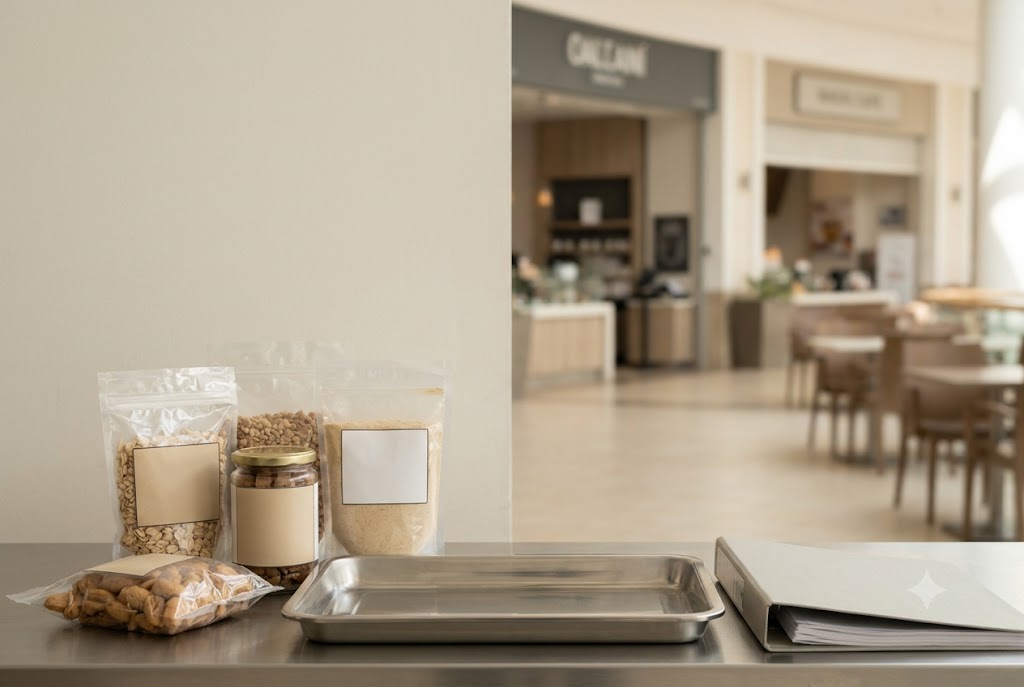
Importing food into Oman needs checks before the supplier ships the goods. The importer, product, label and shipment must each be ready.
A company licence does not approve every food item. Product registration, special permits and border inspection are separate controls.
This guide explains the first commercial food import. It covers packaged food, sensitive products, Bayan documents, labels and cold-chain risks.
First-import decision box
- Confirm the importer’s activity and foreign-ownership position.
- Confirm the product category and responsible authority.
- Register the product when the current service requires it.
- Approve the final label before printing or shipping.
- Confirm the HS code, permits and Bayan documents.
- Protect temperature and shelf life until final delivery.
Importer versus product registration
| Control | What it does | What it does not do |
|---|---|---|
| Company and activity licence | Allows the company to carry out approved business activities. | It does not approve every food product. |
| Customs and Bayan access | Connects the importer and approved users to customs procedures. | It does not register a food product or release a shipment. |
| Food product registration | Checks one product against the approved requirements for local sale. | It does not replace a shipment permit or border inspection. |
| Product-specific permit | Controls a sensitive product or one shipment, where required. | It may not cover later shipments or another product. |
| Customs declaration | Declares a specific shipment, value, origin and tariff position. | It does not correct a weak label or missing health document. |
These controls connect to each other. They should still be checked as separate tasks.
Food import documents at a glance
| Document or record | Main use | Important check |
|---|---|---|
| Commercial Registration and business licence | Proves the importer’s legal activity. | The activity must match the planned food trade. |
| Food product photo | Shows the product and pack. | It should match the product being registered. |
| Product label PDF | Supports the product review. | Use the final, readable label version. |
| Nutrition facts report | Supports the nutrition panel. | Values should match the label and formulation. |
| Laboratory report | Shows compliance with approved standards. | Use an accepted laboratory and relevant test scope. |
| Health certificate | Supports imported food safety and origin controls. | It must come from the country of origin when required. |
| Halal evidence | Supports halal claims or animal-based products. | Confirm the accepted issuer and exact product scope. |
| Commercial invoice | Supports value, seller, buyer and goods details. | Descriptions, quantities and values must be consistent. |
| Packing list | Shows packs, weights and quantities. | It should match the invoice and shipment. |
| Transport document | Shows the cargo movement. | Use the correct bill of lading, air waybill or road document. |
| Country-of-origin evidence | Supports origin and possible tariff treatment. | Origin claims must match the goods and documents. |
| Product or shipment permit | Covers goods controlled by another authority. | Check validity, quantity, port and single-use limits. |
The exact file depends on the product and HS code. Customs or the food authority may request more evidence.
Importer prerequisites
Correct commercial activity
The Commercial Registration must include an activity that fits the real import and trading work. A broad trade name is not enough.
You can search Oman commercial activity codes before requesting a formal activity review. The tool does not prove foreign-ownership eligibility or sector approval.
Some food trading activities may be reserved or restricted. Check the exact code against restricted activities for foreign investors in Oman and the live Oman Business Platform.
Valid licence and importer records
The current Gov.om product-registration service requires a valid business licence from the Ministry of Commerce, Industry and Investment Promotion.
The company details, authorised person and contact data should also be correct. Expired or different records can stop registration or customs access.
Premises and storage
A food importer may need a suitable warehouse, cold store or approved third-party storage plan. The requirement depends on the activity and product.
Do not sign a long lease before checking zoning, food-safety and technical conditions. Fish, animal products and temperature-controlled foods can have extra storage rules.
Product categories and approvals
Food products do not all follow one approval path. The ingredients, use, origin and health claims can change the responsible authority.
| Category | Likely extra check | Before shipment |
|---|---|---|
| Normal packaged food | Product registration, label, nutrition and laboratory evidence. | Confirm the conformity path and final label. |
| Plant products | Plant-health permit and phytosanitary controls may apply. | Check the permit before completing the purchase order. |
| Meat, poultry and animal products | Veterinary permit, health evidence and halal evidence may apply. | Confirm origin, approved issuer and permitted entry point. |
| Fish and fish products | Competent-authority registration, quality control and storage conditions may apply. | Confirm the fishery and veterinary requirements. |
| Dairy and egg products | Animal-health, origin and product-specific evidence may apply. | Check the current permit and certificate wording. |
| Energy drinks | A separate registration fee is shown on Gov.om. | Check ingredients, warnings and any tax treatment. |
| Supplements and health products | The Ministry of Health may regulate the product as a health product. | Confirm classification before using the normal food route. |
| Infant and special-purpose foods | Closer composition, claim and label review may apply. | Get product-specific confirmation before production or shipment. |
Important: Do not describe a supplement as normal food only because it is eaten or drunk. Ingredients, dosage instructions and health claims may place it under Ministry of Health control.
Food product registration
Gov.om now provides a food product registration certificate service. It covers imported products and products made in Oman for local sale.
The current service requires one product per application. It lists the following main documents:
- A photo of the food product.
- A PDF copy of the product label.
- A nutrition facts report.
- An invoice with the packing list.
- A laboratory report showing compliance.
- A health certificate from the country of origin for imported food.
- Evidence for any nutrition or health claim on the pack.
The public service page shows a one-day service time. This should not be treated as a guarantee for every case. Missing evidence, testing, a classification question or a special permit can add time.
| Current Gov.om fee item | Published fee |
|---|---|
| Product subject to conformity procedures | OMR 30 |
| Product not subject to conformity procedures | OMR 0 |
| Energy drink registration | OMR 20 |
| Product registration for export | OMR 10 |
| Health, food-export or free-sale certificate | OMR 10 per certificate |
These are public service fees reviewed on the date below. They do not include testing, translation, label design, permits, storage, broker or shipment costs.
Arabic food labels
Prepare the label before the goods are produced or shipped. A late sticker may not solve a missing or incorrect field.
Arabic should be clear and easy to read. A bilingual Arabic and English label is common. The approved standard and product category decide the final content.
| Label field | Practical check |
|---|---|
| Food name | Use a clear name that matches the product. |
| Ingredients | List the formulation accurately and in the required order. |
| Allergens | Make required allergen information clear. |
| Net quantity | Use the accepted unit and correct pack quantity. |
| Nutrition facts | Match the laboratory or nutrition report. |
| Production and expiry dates | Use a clear, valid date format. Do not cover or change original dates. |
| Batch or lot number | Keep it readable and linked to production records. |
| Country of origin | Match the origin evidence and shipment documents. |
| Manufacturer details | Use the correct legal producer information. |
| Oman importer details | Use the correct local company name and details when required. |
| Storage and use | State temperature, handling and preparation instructions where needed. |
| Claims and logos | Keep evidence for nutrition, health, organic, halal or similar claims. |
Label warning: Do not print a large production run from an unreviewed translation. A wrong allergen, date, ingredient or claim can stop the product or shipment.
Health and halal certificates
Health certificate
The product-registration service asks for a health certificate from the country of origin for imported food. The wording and issuer should fit the product and Oman’s current requirement.
Plant, animal and fish products may need separate certificates or permits. Confirm these before the supplier exports the cargo.
Halal evidence
Meat and poultry normally need halal evidence. Other products may also need support when they contain animal ingredients or show a halal claim.
Check the certifier, certificate scope, factory, product names and validity. A general certificate may not cover the exact product or production site.
HS codes and Bayan
The HS code affects customs duty, permits, restrictions and inspection. Similar products can have different codes because of ingredients, processing or packaging.
Oman Customs provides a public HS code search and an import-requirements search. An importer can also request an advance ruling for classification, origin or customs value before import.
Read the separate guide to Oman customs registration and Bayan account for company access, users and account control.
A customs broker can prepare and submit shipment work when properly authorised. The broker does not replace the importer’s company registration, product approval or responsibility for correct documents.
Cold chain and shelf life
Temperature-controlled food needs an unbroken cold chain. This covers loading, sea or air transport, port waiting, inspection, customs release, local transport and storage.
- Use the manufacturer’s approved storage temperature.
- Use suitable refrigerated equipment and clean loading areas.
- Keep temperature records for the full journey.
- Plan power backup and emergency transfer options.
- Avoid mixing goods with different temperature or contamination risks.
- Confirm the port, inspection and delivery time before dispatch.
There is no safe universal remaining shelf-life figure for every food. The accepted position can depend on the product, total shelf life and current authority rule.
Check the remaining life before loading. Include possible inspection, testing, storage and delivery delays in the plan.
Shipment clearance
The importer or authorised representative creates the customs declaration in Bayan. Oman Customs lists the commercial invoice, origin evidence and permit file among the main declaration documents.
The full shipment file may also include the packing list, transport document, health certificate, product registration and category permits.
- Check the manifest and transport document.
- Match the invoice, packing list and product description.
- Enter the correct HS code and customs procedure.
- Attach all permits and product evidence.
- Submit the declaration and pay assessed amounts.
- Complete inspection or sampling when requested.
- Move the released goods under the correct storage conditions.
Businesses that need help with a specific cargo movement can review commercial shipment clearance support. Final clearance remains subject to Customs and other competent authorities.
Short company, banking and residence pathway
Company
Form or update the company with the right food activities, ownership and licence path. Use support with registering an Oman company when the importer is not ready.
Banking
A working company account supports supplier payments and trade records. Banks review each application. See business banking preparation support for the separate bank process.
Owner or employee residence is a separate process. It does not approve the food activity, product or shipment.
Common mistakes
| Mistake | Possible result | Better action |
|---|---|---|
| Shipping before product review | Delay, storage cost or rejection risk. | Complete the product and permit checks first. |
| Using the wrong trading activity | The importer may not be eligible. | Check the exact activity code and restriction. |
| Treating every food as a normal packaged product | A special authority or permit is missed. | Classify the product from ingredients, use and claims. |
| Printing an unapproved Arabic label | Large relabelling cost or non-compliance. | Review the final artwork before production. |
| Changing original date information | Serious inspection and authenticity concerns. | Use correct original production records and printing. |
| Using a weak halal certificate | The evidence may not be accepted. | Confirm issuer, scope, factory and validity. |
| Guessing the HS code | Wrong permit, duty or declaration. | Use the official search or an advance ruling. |
| Letting the broker control all access | The importer loses account control. | Keep a company administrator and clear permissions. |
| Ignoring remaining shelf life | The product may become commercially or legally unusable. | Plan for border, testing and delivery time. |
| Breaking the cold chain at port | Quality loss or failed inspection. | Plan refrigerated transfer before arrival. |
First food import checklist
- Confirm the exact product, brand, size and formulation.
- Confirm the Oman importer and authorised person.
- Check the commercial activity and foreign-ownership rule.
- Check the responsible authority and product category.
- Confirm whether product registration is required.
- Prepare the product photo and final label PDF.
- Prepare nutrition, laboratory and claim evidence.
- Obtain the health, halal or plant certificate where needed.
- Confirm the HS code and import requirements.
- Confirm customs and Bayan access.
- Match the invoice, packing list and transport document.
- Check permit validity, shipment quantity and entry point.
- Check remaining shelf life before loading.
- Book cold storage and refrigerated local transport.
- Keep funds ready for duty, tax, port and inspection costs.
- Keep a complete copy of the final submission and clearance file.
Frequently asked questions
Does every food product need the same registration process?
No. The current product-registration service uses one product per application. The fee, conformity work, permit and responsible authority can still change by product.
Can I import food with only a Commercial Registration?
No. The CR must contain a suitable activity. The company may also need Bayan access, product registration, permits, labels, certificates and shipment clearance.
Must the food label be in Arabic?
Prepare clear Arabic information. A bilingual Arabic and English label is common. Check the approved standard and product-specific rule before printing.
Can I add an Arabic sticker after the goods arrive?
Do not rely on this plan. The label should be reviewed before shipment. A sticker cannot safely correct every field, claim, date or approval problem.
When is a halal certificate needed?
Meat and poultry normally need halal evidence. It may also be needed for animal ingredients or a halal claim. Confirm the accepted issuer and product scope.
Who selects the HS code?
The declaration must use the correct code. The importer and broker should check it carefully. Oman Customs can issue an advance ruling for eligible questions.
Does a customs broker register the food product?
Not automatically. A broker handles authorised customs work. Product registration and sector approvals remain separate tasks for the importer and competent authority.
How long does food product registration take?
Gov.om currently shows one day for its registration service. This is not a full shipment timeline or a guarantee. Testing, missing documents and special approvals can add time.
Can a product be inspected or sampled at the border?
Yes. Registration and documents do not remove risk-based inspection, sampling or a request for more evidence.
Does Oman use one fixed remaining shelf-life rule for all food?
No safe universal figure should be assumed. Check the product standard, total shelf life and current authority requirement before loading.
Related Oman Verified guides and services
Customs access
Prepare the company, authorised user and Bayan position before the first declaration.
Activity restrictions
Check whether the exact food trade activity is open to the planned ownership.
Company tax
Review Oman tax rules for companies, including income tax, VAT registration and import VAT.
Conclusion
A safe first food import starts before shipping. Confirm the importer, product route, label, certificates, HS code and cold chain first.
Keep product registration separate from company licensing and customs clearance. Each authority can still review its own part of the file.
Oman-side customs and licensing coordination
Oman Verified coordinates client-side customs, food-import, product-registration, licensing and logistics preparation and follow-up in Oman. Food-regulatory, customs and port services are completed by the relevant authorities and authorised providers, while banking services are completed by the relevant banks.
The relevant official services and decisions—including company licences, product registrations, permits, health certificates, halal approvals, customs declarations or cargo-release decisions—are completed by the competent authorities and authorised providers; Oman Verified coordinates the client-side preparation and follow-up in Oman. Final decisions remain with the competent authorities and authorised providers.
Official sources
- Gov.om — Apply for a Food Product Registration Certificate
- Oman Customs — Create a Customs Declaration
- Oman Customs — Users Registration in Bayan System
- Oman Customs — Search Import and Export Requirements
- Oman Customs — HS Code Search
- Oman Customs — Advance Rulings
- Oman Customs — Permit to Import Plant Products
- Oman Customs — Veterinary Permit for Animal Products
- Oman Customs — Veterinary Permit for Fish and Fish Products
- Ministry of Health — Register Health Products
Official public information reviewed on 28 July 2026. Confirm the current requirements in the live government systems before submission.