
OMAN CUSTOMS AND BAYAN GUIDE
Customs Clearance in Oman: Import, Export and Bayan Guide
This guide explains what must be ready before goods move through Oman: the importer and company record, Bayan access, authorised users, the 12-digit HS code, commercial documents, product permits, duties and VAT, shipment route, broker roles and post-clearance records.
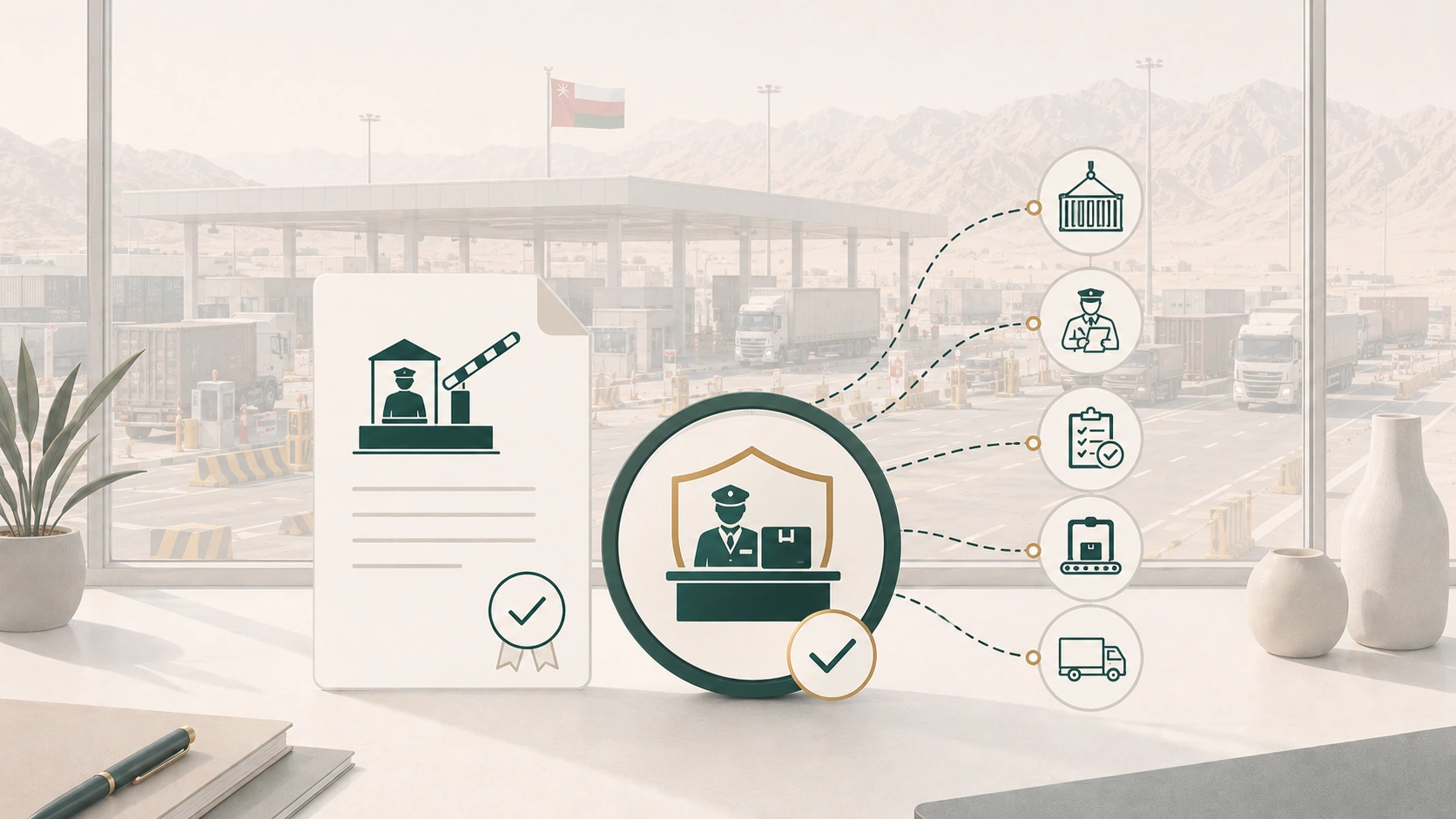
BAYAN SYSTEM
Company & User Readiness
CUSTOMS ROUTES
Import, Export & Transit
DUTIES & VAT
Shipment-Based
LOCAL CONTEXT
Muscat, Oman
Company and Shipment Readiness Comes First
Customs clearance begins before a declaration is submitted. The company position in Bayan, authorised access, importer or consignee, customs route, tariff classification, customs value, origin, permits, invoice, packing list, transport document, carrier manifest, terminal arrangements and tax treatment must work together.
A customs-readiness check should identify missing information, likely cost categories, authorised customs-broker responsibilities, and the authority-controlled stages. Company registration, customs classification, valuation, inspection and release remain subject to the competent authorities.
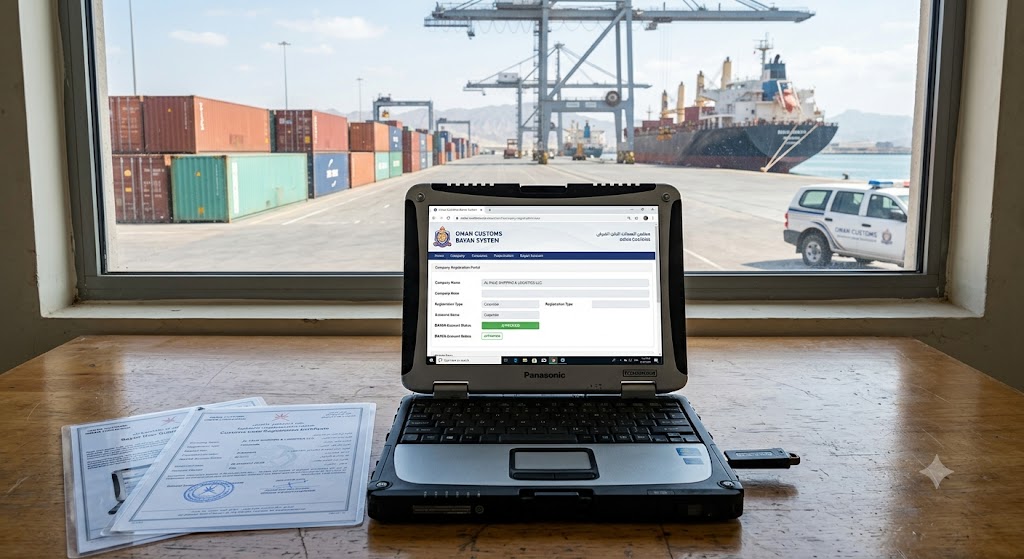
BAYAN COMPANY AND ACCOUNT READINESS
Bayan Company Registration and Account Readiness
Registering a company in Bayan establishes its position and authorised access within Oman Customs’ electronic environment. It is separate from adding an activity to the Commercial Registration and separate from clearing an individual shipment.
Company Registration Readiness
- Commercial Registration and Oman Chamber status
- Partner, board member or authorised-manager check
- Company request letter and signature evidence
- Contact details and electronic-access readiness
- Commercial-activity and branch consistency review
Account and User Readiness
- Initial company-registration status
- Company administrator and user-access planning
- Branch-registration and user-allocation requirements
- Licensed customs-broker or representative roles
- Review of missing credentials, record mismatches or access issues
The eligible person recorded in the company documents must initiate or approve the relevant official registration steps. Oman Customs controls registration, access and approval.
TRADE AND LOGISTICS IN OMAN
Why Plan Customs Clearance Before Shipping?
Oman is connected to regional and international trade through major gateways such as Sohar, Salalah and Duqm ports, Muscat International Airport, courier networks and land-border customs offices.
Pre-arrival planning helps reduce avoidable storage, detention and demurrage. The correct route depends on the goods, origin, destination, importer, final use, transport mode, permits and whether the shipment is entering mainland Oman, a free zone, transit or re-export.
Review the shipment-readiness checklist →
Key Reasons
- Confirm the importer and consignee before departure
- Use the correct customs regime and declaration type
- Check the current 12-digit Oman/GCC HS code
- Identify permits, tests and certificates in advance
- Estimate customs duty, VAT and external charges
- Coordinate the broker, carrier, terminal and delivery route
Advantages and Limitations
A well-prepared customs file can improve predictability, but no private provider controls the authority, port, carrier, laboratory or inspection outcome.
Main Advantages
- Fewer document queries and avoidable amendments.
- Earlier identification of permits and product restrictions.
- Better visibility over duty, VAT and landed-cost categories.
- Clear responsibility between importer, broker and logistics provider.
- Improved control of storage, detention and demurrage exposure.
- A structured record for tax, accounting and future imports.
Read the customs-preparation benefits →
Main Limitations
- The final HS code and customs value are not guaranteed.
- Inspection, sampling or testing may still be required.
- Permit approval can depend on a separate regulator.
- Incomplete or inconsistent documents may delay release.
- Port and carrier charges are separate from customs charges.
- Clearance time depends on the facts of each shipment.
Read the common customs risks →
When This Customs Route May or May Not Fit
✓ Suitable For
- Oman companies importing commercial goods
- Exporters and manufacturers shipping from Oman
- Re-export, transit and regional distribution cases
- Free-zone companies moving goods between customs regimes
- Foreign suppliers that need an Oman importer-route review
× May Not Be Suitable For
- Requests to bypass customs, permits, inspection or tax
- Prohibited, concealed, misdeclared or undocumented goods
- Applicants expecting guaranteed classification or release
- Cases where the true owner, origin, value or buyer is not disclosed
- Shipments sent before the importer and permit route are confirmed
Bayan Setup and Customs Clearance Cost Categories
A cost estimate may include company and user readiness, official account steps, shipment review, declaration preparation, customs duty, VAT, permits, inspection, terminal handling and external operational costs. Official charges should be separated from broker, carrier and other operational costs.
Bayan and Official Account Fees
Some Bayan user or branch actions may carry separate official fees. Initial company-registration charges and system requirements should be confirmed during the actual application because published account functions and payment steps may change.
Customs Duty and Import VAT
Many goods are commonly subject to customs duty and standard-rated imports are generally subject to VAT. The actual treatment can be zero, higher, preferential, exempt or suspended depending on the tariff line, origin, value and customs regime.
Broker and External Costs
Broker fees, carrier documentation, delivery orders, port handling, inspection, testing, permits, storage, transport, insurance, warehousing, guarantees and other external charges should be separated from duties, VAT and official charges.
Bayan registration process, account requirements and published official fees →
All estimates are indicative. Final classification, customs value, duty, VAT, exemptions, deposits, inspection route and external charges are determined by the relevant authorities, carriers, brokers and other external parties using the actual shipment documents.
Common Customs Routes in Oman
The correct route depends on where the goods come from, where they will go, who owns them and what will happen to them after arrival.
| Route | Best For | Main Point |
|---|---|---|
| Mainland Import | Goods entering the Omani market | Duty, VAT, permits and local release may apply |
| Export from Oman | Omani sellers and manufacturers | Export declaration and proof of exit are important |
| Transit | Cargo moving through Oman | Guarantees, seals, route controls and proof of exit may apply |
| Re-export | Regional distribution and returned goods | The original import route and re-export evidence matter |
| Free-Zone Movement | Storage, processing, production and distribution | Mainland transfer normally creates a customs event |
Compare customs routes and free-zone movements →
Compare Your Options
| Point | Mainland Import | Transit or Re-export | Free-Zone Route |
|---|---|---|---|
| Main Purpose | Sell or use goods in Oman | Move goods onward | Store, process or distribute under zone rules |
| Duty and VAT | Normally assessed at import | May be suspended subject to conditions | May be suspended until mainland release |
| Importer Role | Eligible local importer normally required | Responsible transit or re-export party | Zone entity and customs-transfer parties |
| Best For | Local market supply | Regional trade and onward shipment | Logistics, production and distribution |
| Main Limitation | Permits, taxes and local compliance | Guarantees, time limits and proof of exit | Mainland entry may trigger duty, VAT and approvals |
Importer, Consignee and Customs Broker
An authorized customs broker may prepare and submit a declaration, but the broker and importer do not perform the same role. The importer, consignee or other legally responsible party remains central to the accuracy of the description, value, origin, permits, duty and VAT treatment.
A foreign supplier without a suitable Omani structure may need a contractual route through an eligible importer or importer-of-record provider. Ownership of goods, payment responsibility, VAT recovery, product compliance, records and liability should be reviewed before this route is used.
Your Import Route Can Affect
- Who is legally responsible for the goods
- Bayan registration and broker authorization
- Permit ownership and product compliance
- Customs duty and VAT payment
- Import VAT recovery and accounting records
- Post-clearance amendments, claims and audits
Requirements and Documents
Company and Bayan Information
- Commercial Registration and Oman Chamber records
- Authorised person, civil ID and contact details
- Existing Bayan account, users, branches or access issue
- Relevant activities and proposed broker or representative
Shipment Information
- Goods description, composition, function and intended use
- Origin, dispatch country and final destination
- Invoice value, currency, freight, insurance and Incoterm
- Importer, consignee, transport mode and expected arrival
Commercial and Technical Documents
- Commercial invoice and packing list
- Bill of lading, air waybill, road note or courier record
- Certificate of origin and freight or insurance evidence where required
- Import permits, conformity documents, catalogues and test reports
The seller, buyer, importer, consignee, description, quantity, value, currency, origin, weights, package count and transport references should be consistent across the documents. Generic descriptions such as “parts,” “samples” or “general cargo” may be insufficient.
BAYAN FILING AND TARIFF CLASSIFICATION
Bayan Filing, Authorised Access and 12-Digit HS Codes
Bayan is Oman Customs’ electronic single-window environment for company access, declarations, required documents, permits, payments and related procedures. A registered company still needs the correct administrator, authorised user or licensed customs broker before a shipment declaration can be filed.
Oman uses the current 12-digit Oman/GCC tariff structure. The code should match the goods’ real composition, function and use. A supplier’s foreign-country code should not be copied without checking the Oman tariff line and permit consequences.
Important Points
- Confirm the company position, importer and authorised representative.
- Confirm the administrator, user or licensed-broker access.
- Match the declaration to the carrier manifest and transport document.
- Use the current 12-digit tariff code for each line item.
- Check whether the code triggers a permit, restriction or special duty.
A preliminary review is not a binding customs classification ruling or a guarantee of Bayan registration, permit approval or cargo release. Detailed Bayan company-registration guide.
Which Goods Need Additional Approvals?
Product approval should be checked before shipment. A business activity on the Commercial Registration does not automatically mean every product is cleared for import.
Telecom and Radio Equipment
Phones, routers, wireless devices, IoT equipment and products using radio frequencies may require type approval and shipment-specific customs-release permission.
Food, Health and Agricultural Goods
Food, plants, animals, medicines, medical devices, cosmetics and related goods may require health, veterinary, agricultural, labelling, registration, testing or quarantine documents.
Chemicals, Vehicles and Controlled Goods
Chemicals, batteries, hazardous materials, vehicles, machinery, used goods, excise products and controlled items may require safety evidence, conformity checks, age or condition rules, environmental approval or specialist handling.
The permit route should be confirmed before departure. Cargo sent without the required approval may be held, inspected, returned, re-exported or otherwise handled according to authority instructions.
Bayan and Customs Clearance Process
1. Company and Bayan Readiness
Review the CR, Oman Chamber record, authorised person, existing account, users, branches and intended customs role.
2. Initial Shipment Review
Review the goods, origin, value, transport mode, importer, destination, Incoterm and intended customs route.
3. Importer, HS Code and Permit Check
Confirm the responsible importer, preliminary classification, regulator route and known restrictions before cargo departure.
4. Document Preparation
Align the invoice, packing list, origin evidence, transport document, technical evidence and permit files.
5. Bayan Declaration
An authorized user or licensed customs broker creates and submits the declaration and required documents through Bayan.
6. Review, Payment and Release
Customs and relevant regulators review the file. Duties, VAT and charges are paid, inspection or sampling is completed if required, and cargo is released only after official approval.
Estimated Timeline
| Stage | Typical Timing | Main Dependency |
|---|---|---|
| Bayan Company Readiness | Varies by company record and approval | Active records, authorised person and complete documents |
| Pre-arrival Review | Usually 1–2 working days | Complete shipment information |
| Permit Preparation | Depends on the product | Regulator, testing and document readiness |
| Bayan Declaration | After manifest and documents are available | Authorized filing and payment readiness |
| Customs Review | Varies by risk route | Classification, valuation and inspection |
| Release and Delivery | After official release | Terminal, carrier and transport sequencing |
Clearance times are not guaranteed. Complete low-risk files may move quickly, while inspection, testing, missing permits, valuation questions, origin checks, amendments, payment delays, holidays or port congestion can add days or longer.
What Happens After Customs Release?
Customs release is not the end of the compliance file. The company should retain the declaration, assessment, payment, permits and transport evidence for tax, accounting, audit, warranty, product and future customs purposes.
1. Final Customs Record
Keep the final declaration, tariff line, assessed value, release note and payment evidence.
2. VAT and Accounting
Record import VAT, inventory cost and related charges using the responsible importer’s valid documents.
3. Delivery and Receipt
Coordinate the delivery order, terminal release, transport and proof of receipt.
4. Product Compliance
Continue any labelling, storage, traceability, expiry, warranty or market-surveillance duties.
5. Amendment or Claim
Address post-entry amendments, overpayments, refunds or re-export claims within the applicable procedure and time limits.
6. Record Retention
Maintain the commercial, customs and tax file for the period required by applicable law.
PORT AND DELIVERY
Ports, Airports and Final Delivery
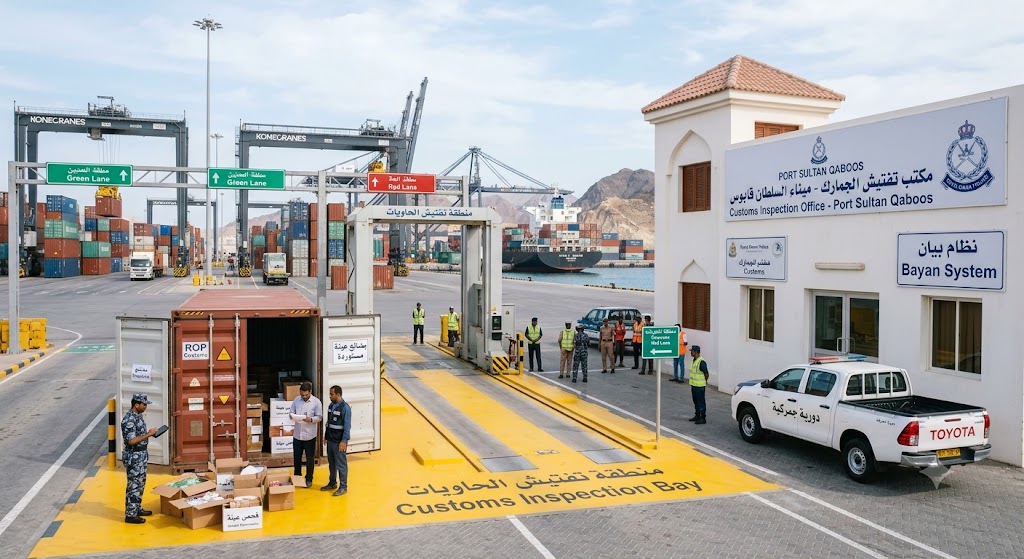
Major commercial gateways include Sohar, Salalah and Duqm ports, Muscat International Airport, express-courier networks and land-border customs offices. The suitable route depends on the carrier, shipment size, commodity, importer location, permits and final delivery point.
The carrier manifest, delivery order, customs broker, terminal payment, inspection appointment, transport vehicle and final delivery should be aligned. Delays in one part of the chain can create storage, detention or demurrage.
- Carrier and manifest alignment
- Port, airport and terminal payment readiness
- Inspection, sampling and scanning appointments
- Delivery order, transport and final-receipt planning
Customs, VAT and Ongoing Compliance
After import or export, the company must keep its customs, tax, commercial and product records consistent and available.
Customs Classification and Valuation
The company should retain the evidence supporting the tariff code, customs value, origin and any preferential or exempt treatment.
Import VAT Records
Import VAT recovery depends on the responsible importer, valid customs evidence and the company’s VAT position.
Permits and Product Compliance
Approval, labelling, storage, traceability and market requirements may continue after customs release.
Temporary and Suspended Routes
Transit, bonded, temporary-import and free-zone procedures may require guarantees, inventory control, time limits and proof of exit.
Post-Clearance Review
Customs may request additional evidence or review declarations according to its legal powers and procedures.
Clearance and Landed-Cost Categories
The cost of a shipment does not end with the customs declaration.
| Category | Examples | Depends On |
|---|---|---|
| Customs and Tax | Duty, VAT, excise and special tariffs | HS code, value, origin and customs regime |
| Broker and Documentation | Declaration, handling and documentation work | Shipment complexity and filing scope |
| Carrier and Terminal | Delivery order, terminal handling and port charges | Carrier, port, equipment and cargo type |
| Inspection and Permits | Scanning, sampling, testing and approvals | Risk route, product and regulator |
| Storage and Delay | Storage, detention and demurrage | Free time and resolution speed |
| Transport and Delivery | Trucking, insurance, handling and warehousing | Distance, weight, equipment and destination |
The final landed cost depends on the tariff line, customs value, permit route, transport mode, inspection, storage time and external parties.
Risks and Common Mistakes
The highest costs often come from preventable errors made before shipment, not from the declaration fee itself.
Wrong HS Code
An incorrect code can affect duty, permits, restrictions, inspection and statistics.
Shipping Before Permit
Cargo may arrive before the responsible regulator has approved the product or shipment.
Document Mismatch
Different descriptions, quantities, origins, parties or values can trigger queries and amendments.
Ignoring Storage Exposure
Storage, detention and demurrage can exceed the original clearance cost when issues are not resolved quickly.
Frequently Asked Questions
Who submits customs declarations and decides customs outcomes?
Official declarations are submitted by authorised Bayan users or licensed customs brokers. Customs, permit, tax, inspection and release decisions remain with the relevant authorities.
What is the Bayan system?
Bayan is Oman Customs’ electronic single-window system for customs declarations, required documents, permits, payments and related procedures.
Is Bayan company registration the same as customs clearance?
No. Company registration establishes the business and authorised access within Bayan. Customs clearance is the separate shipment process involving a declaration, classification, documents, permits, payments, inspection where applicable and release.
Who can initiate a company registration in Bayan?
The initiating person should be properly recorded in the company documents, such as a partner, board member or authorised manager. Oman Customs verifies the applicant and controls the final registration decision.
Who completes a company’s Bayan registration?
The eligible company person must complete or approve the required official steps. Final registration and access decisions remain with Oman Customs.
Can users and company branches be added after registration?
Where the official records and permissions allow, the company administrator can add suitable users and register relevant branches through the available Bayan functions. User roles should be limited to the access actually required.
Do I need an Oman company to import commercial goods?
A commercial import normally needs an eligible and legally responsible importer or consignee with the appropriate Oman and Bayan position. A foreign supplier may need a suitable local importer or importer-of-record arrangement.
What documents are usually required?
Common documents include a commercial invoice, packing list, transport document, certificate of origin where required, importer and authorization records, and product-specific permits or technical certificates.
Is a customs clearance time guaranteed?
No. Timing depends on document readiness, permits, classification, valuation, inspection, payment, terminal operations and authority review.
Are goods in an Oman free zone automatically duty-free?
Not in every situation. Goods may receive customs-suspension treatment while they remain under an approved regime, but transfer into mainland Oman can trigger a declaration, duty, VAT and local-market requirements.
Can the process be completed remotely?
Document preparation may take place remotely. Physical inspection, original documents, authorised filing, payments, sampling, port operations or other steps may still require local action.
Related Guides
Oman Customs Registration and Bayan Account
Eligibility, documents, authorised access, users, branches and the steps before the first customs transaction.
Oman Free Zones and Special Economic Zones
Customs treatment, mainland transfers, logistics uses and operating conditions.
Setting Up a Company in Oman
Company, activity and local operating considerations before becoming an importer.