
OMAN FREE ZONES • INVESTOR GUIDE
Oman Free Zones: Compare SOHAR, Salalah, Duqm, Al Mazunah & Other Investment Locations
Oman offers free zones, a special economic zone, economic-city developments, technology parks and industrial cities. The best location matches the customers, movement of goods, premises, workforce and infrastructure the business actually needs.
For an export warehouse, port access and customs-controlled inventory may be decisive. For a factory, land and utilities can matter most. An office-based company serving customers inside Oman may find a mainland structure more appropriate. Companies serving global clients should compare the legal framework, total operating cost and cross-border supply chain alongside the location’s incentives.
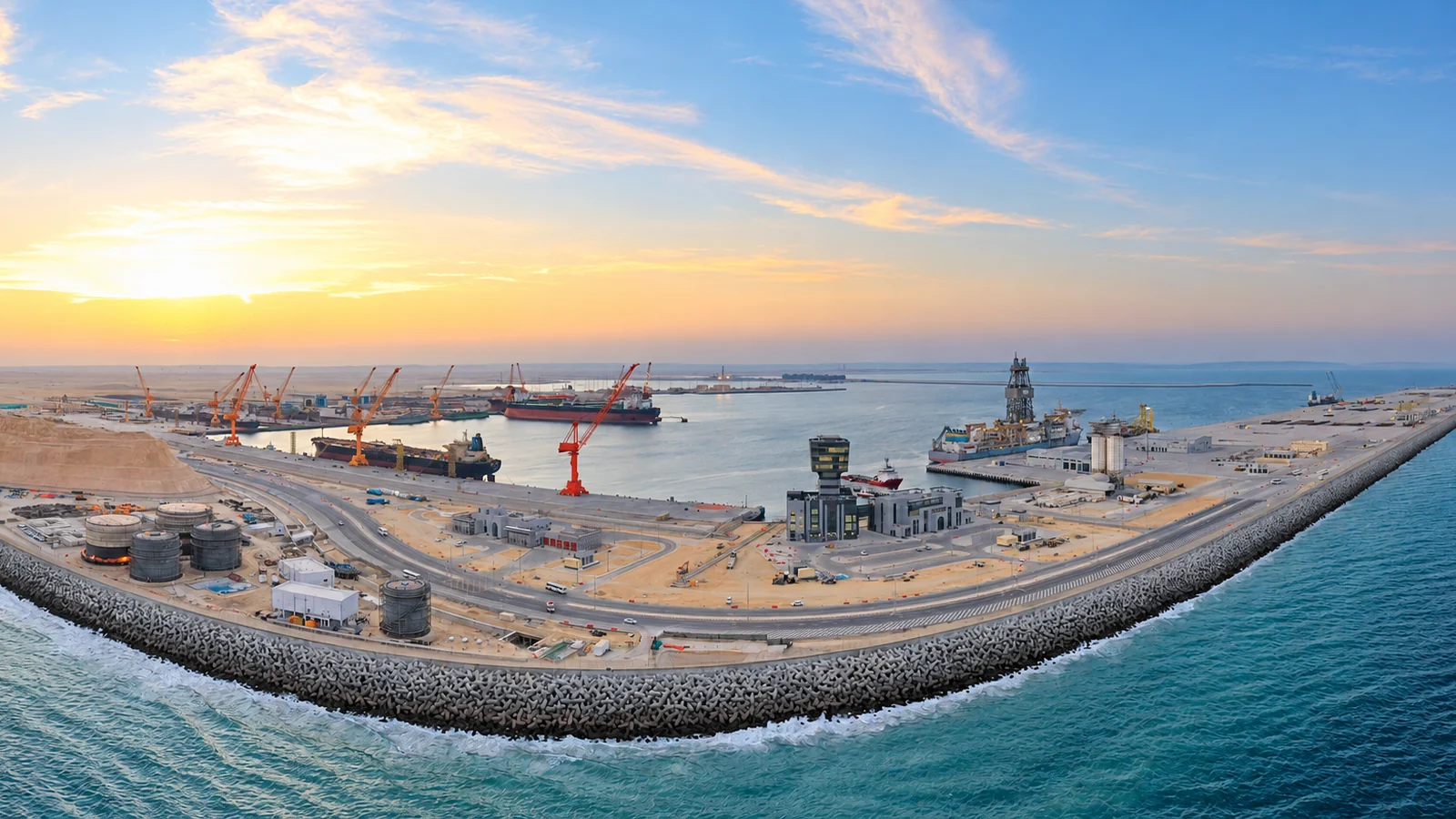
Photo: AbdullahAlMaani · CC BY-SA 4.0 · AI-assisted light/colour restoration; cropped and WebP. Fine textures and sky regenerated.
Where should your business be based?
Oman Free Zones at a Glance
- Foreign ownership: 100% ownership is available in the main OPAZ free-zone and special-economic-zone framework for approved activities and projects.
- Legal types: SOHAR, Salalah and Al Mazunah are established free zones. Muscat Airport is separately listed as an airport free zone. Duqm is a Special Economic Zone, Khazaen is an Economic City with a designated free-zone component, and Knowledge Oasis Muscat is a Madayn technology park.
- Income tax: Royal Decree 38/2025 provides an initial ten-year exemption from commencement of activity for qualifying enterprises, with up to two further ten-year periods for activities of a special nature through the prescribed process. Previously granted incentives retain their applicable terms.
- VAT Special Zones: the cited Tax Authority guidance identifies SOHAR, Salalah, Al Mazunah and Duqm. Zero-rating depends on the transaction and the Executive Regulation conditions.
- Mainland sales: goods can enter mainland Oman through the appropriate customs route, with applicable importer, duty, VAT and product requirements.
- Premises: choose an office, warehouse, ready industrial unit, accepted 3PL arrangement or land according to the licensed operation.
- Commercial Registration: the published OPAZ service schedule lists OMR 250 for project registration. Licence, operator, premises and technical charges are additional where applicable.
- Activity licence fees: light industry OMR 150, medium industry OMR 450, heavy industry OMR 750 and commercial activity OMR 600 in the published schedule.
- Banking: prepare ownership and UBO records, source of funds, premises, counterparties and expected transactions as part of the bank’s onboarding requirements.
- Best business fit: export, re-export, regional inventory, port or airport logistics, manufacturing and projects using specialised infrastructure.
Free Zone, Special Economic Zone, Economic City or Technology Park?
The location’s legal classification determines which customs, tax, property and operating rules can apply. Similar investment benefits or marketing language do not make every industrial location the same type of zone.
Industry and zones
Investment in economic zones
Investment scale, change and the industrial share of added investment.
Investment in economic zones
2025Commitments are not realised spending or FDI stock; the industrial share covers added investment.
Free zones
SOHAR, Salalah and Al Mazunah are the established core free zones highlighted in OPAZ’s operating network. Muscat Airport Free Zone is separately listed and was established under Royal Decree 10/2022. Its airport-linked facilities and admissions should be assessed for the actual project.
Special Economic Zone
Duqm is a Special Economic Zone. Its scale, land framework and range of industrial, logistics, energy, fisheries, tourism and urban projects differ from a standard free-zone company package.
Economic City
Khazaen combines industrial, logistics, commercial and residential components in Barka, including an inland dry port and a designated free-zone component. The specific plot and company route determine whether free-zone customs or incentive treatment applies.
Technology parks and industrial cities
Knowledge Oasis Muscat is a Madayn technology park. Madayn also operates industrial cities across Oman. These locations can offer a suitable business environment without sharing the same customs and tax treatment as an OPAZ free zone.
Airport-zone distinction: Royal Decree 10/2022 established separate free zones at Muscat International Airport, Sohar Airport and Salalah Airport. The latter two are distinct from the existing port-linked SOHAR and Salalah free zones. Confirm the exact location and operator when comparing project proposals.
Industry and zones
Investment entry rules
The general ownership framework and a special-zone project threshold.
The ownership framework and project threshold apply to different scopes and eligibility rules.
Oman Investment Locations Compared
| Location | Type | Typical business fit | Planning point |
|---|---|---|---|
| SOHAR | Free Zone | Port-linked industry, warehousing, trading and re-export | Connect the project, premises and cargo route |
| Salalah | Free Zone | Export, distribution, food, pharma and industrial projects | Plan physical presence and facility requirements |
| Duqm | Special Economic Zone | Large industrial, energy, logistics, fisheries and tourism projects | Budget land, mobilisation and infrastructure |
| Al Mazunah | Free Zone | Yemen-border trade, vehicles, warehouses and light industry | Test the border corridor’s commercial value |
| Muscat Airport | Airport Free Zone | Air freight, express distribution and high-value or time-sensitive goods | Check current admissions and airport-linked facilities |
| Khazaen | Economic City with a free-zone component | Logistics, warehousing, food and light industry near Muscat | Identify the legal treatment of the exact site |
| Knowledge Oasis Muscat | Technology Park | Software, ICT, cloud, AI and knowledge-based services | Assess office and technology-park requirements |
| Madayn industrial cities | Industrial-city network | Factories, processing and industrial services | Compare individual cities, utilities and customer access |
Industry and zones
Zone business activity
Businesses and administrative activity in the economic-zone system.
Registrations, licences, agreements and existing firms are distinct administrative measures.
Free Zones and Investment Locations: Practical Summaries
SOHAR Free Zone
A 45 km² port-linked free zone beside SOHAR Port, suited to industrial production, warehousing, re-export and regional distribution. Commercial and industrial licensing, ready-built and build-to-suit warehouses, industrial land and port access support goods-based operations. Choose the facility and licence around the real cargo or production process.
Salalah Free Zone
An export, logistics and industrial location in Dhofar near the Port of Salalah. It fits Indian Ocean-linked distribution, food and cold chain, pharmaceuticals, petrochemicals and mineral processing. Physical presence is required; the office, warehouse, industrial unit or land should match the project. Availability, utilities and rent are specific to the chosen facility.
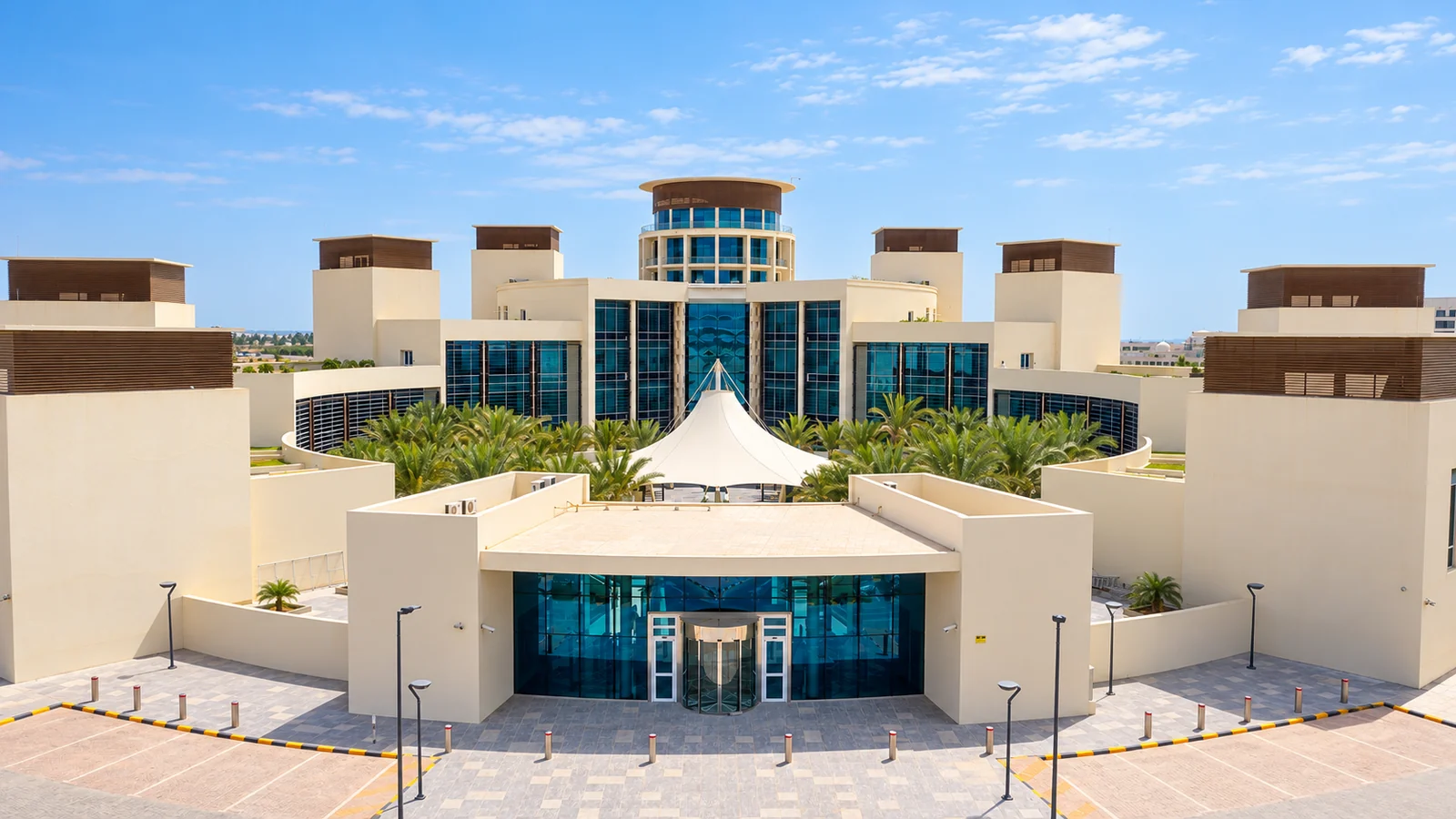
Photo: OPAZ · Oman Open Government Licence · AI-assisted light/colour restoration and foreground car removal; cropped, WebP. Fine textures and sky regenerated.
Special Economic Zone at Duqm
A roughly 2,000 km² Special Economic Zone on Oman’s Arabian Sea coast, combining port, dry dock, industry, logistics, energy, fisheries, tourism and urban development. Duqm is particularly relevant to projects needing substantial land, port access or infrastructure. The implementation, utilities and mobilisation plan matter as much as company registration.
Al Mazunah Free Zone
A 14.5 km² free zone near the Oman–Yemen border, focused on cross-border trade, vehicles, warehousing, logistics and light industry. OPAZ publishes full foreign ownership, no minimum investment requirement, customs incentives, a 20% Omanisation benchmark and special arrangements for Yemeni workers. Its commercial value is strongest when the Yemen trade corridor forms part of the actual supply chain.
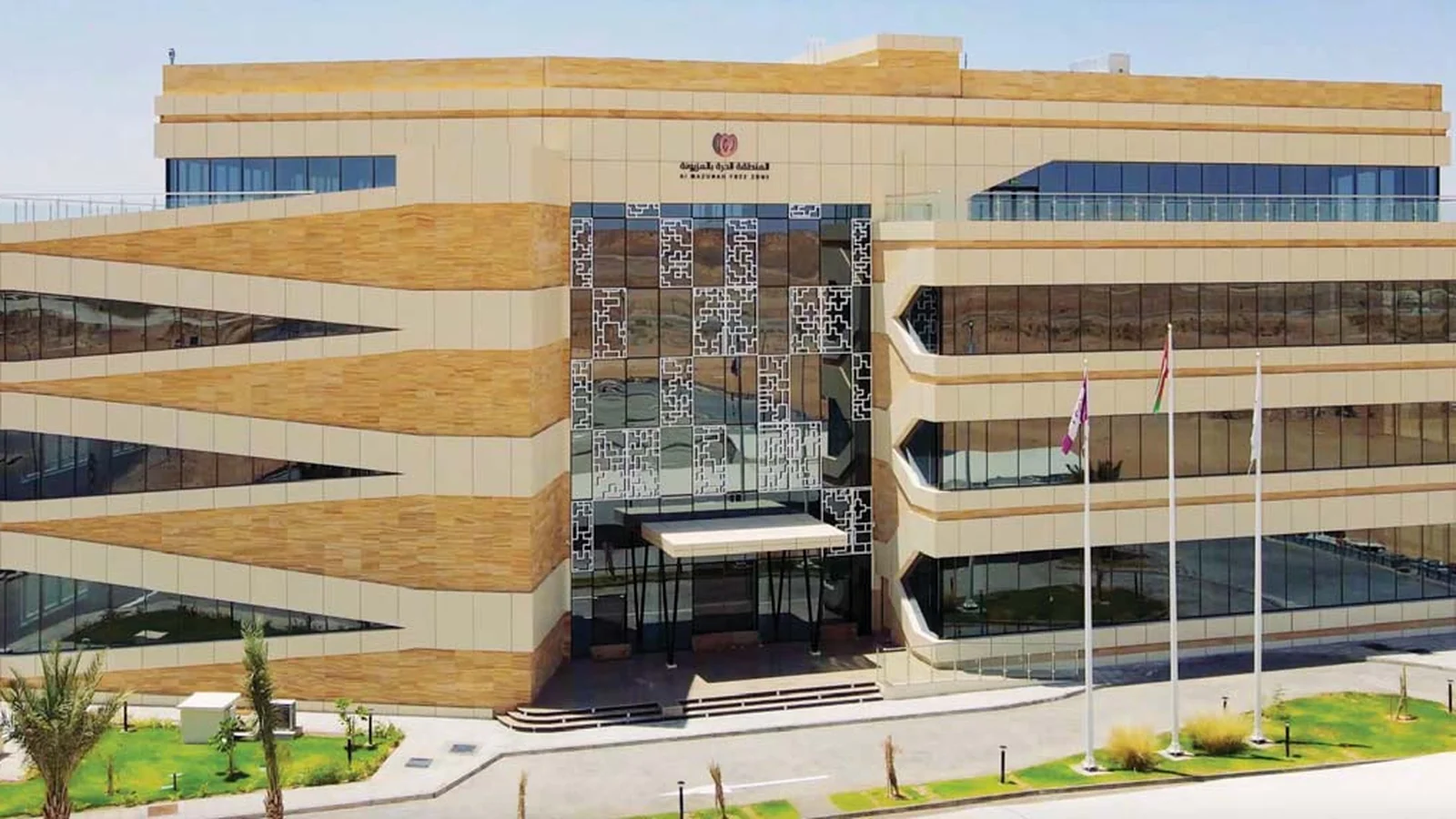
Photo: OPAZ · Oman Open Government Licence · Cropped and converted to WebP.
Muscat Airport Free Zone
An OPAZ-listed airport free zone with direct access to Muscat International Airport and links to Asyad’s logistics ecosystem. Air freight, express distribution, pharmaceuticals, electronics, perishables and high-value or time-sensitive cargo are relevant operating models. Check the current facility, admission and activity conditions for the intended airport-linked project.
Khazaen Economic City
An integrated economic city in Barka on the Muscat–Al Batinah corridor. Its logistics, industrial and commercial districts, ready warehouses and dry port can support domestic and regional distribution near Muscat. The city includes a designated free-zone component, so confirm whether the proposed company and premises use that route or another economic-city arrangement.
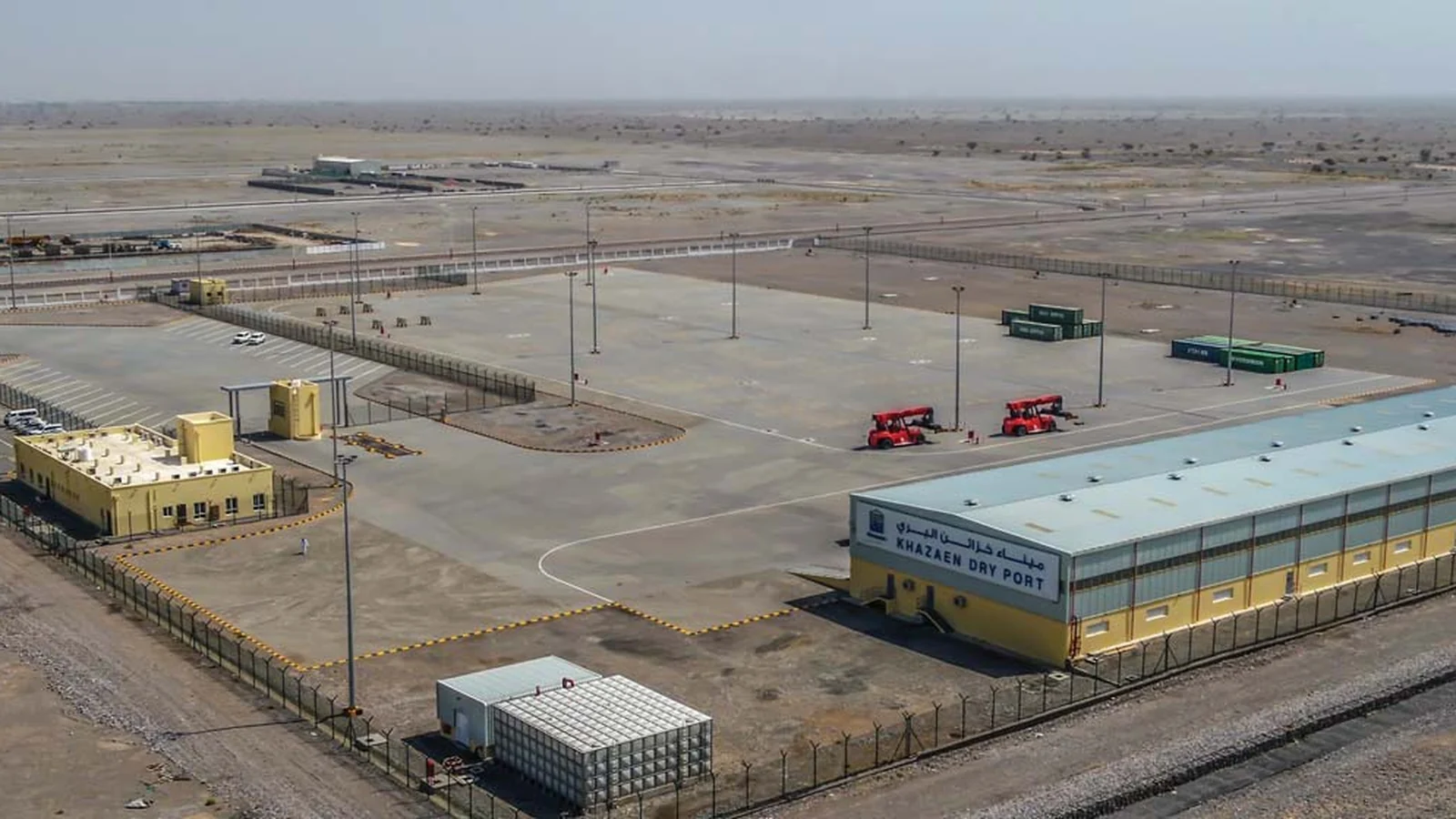
Photo: OPAZ · Oman Open Government Licence · Cropped and converted to WebP.
Knowledge Oasis Muscat
Madayn’s technology and innovation park in Muscat supports software, ICT, cloud, cybersecurity, AI, consulting, education and other knowledge-based businesses. Its office and technology ecosystem are the main location benefits. Apply the actual technology-park and company requirements rather than assuming an OPAZ free-zone customs or tax regime.
Madayn industrial cities and specialised projects
Madayn’s network serves factories, processing and industrial services in different parts of Oman. Emerging technology and AI developments add further options. Compare the individual site by sector, land, utilities, customer geography and applicable incentives rather than treating the network as one registration package.
Oman Investment Locations on Google Maps
Compare roads, ports, airports, borders and distance from customers using the location maps. Map pins provide general orientation; confirm the gate, plot, office or meeting point before travelling.
Sohar Free Zone
Open Sohar Free Zone in Google Maps
Salalah Free Zone
Open Salalah Free Zone in Google Maps
Special Economic Zone at Duqm
Al Mazunah Free Zone
Open Al Mazunah Free Zone in Google Maps
Muscat Airport Free Zone
Open Muscat Airport Free Zone in Google Maps
Knowledge Oasis Muscat
Open Knowledge Oasis Muscat in Google Maps
Khazaen Economic City
Open Khazaen Economic City in Google Maps
Madayn spans multiple industrial cities, so identify the particular destination before planning a visit. Emerging specialised projects also need a confirmed operating site rather than an assumed map location.
When Does a Free Zone Fit Better Than Mainland Oman?
Choose the structure around where the business operates and where its customers are. Tax and registration costs are part of that comparison, alongside logistics, premises and continuing compliance.
Where does the business create its value?
Customer geography and physical operations guide the mainland-versus-zone comparison.
Mainly domestic operations
Omani customers, local services, retail, contracting or domestic distribution.
Supply chain or industrial project
Export, re-export, regional stock, port or airport logistics, land and utilities.
Compare the whole operation
Consider mainland first for a domestic operating model
Mainland can fit a business with mainly Omani customers, services performed locally, retail, contracting, domestic B2B distribution or goods imported chiefly for sale in Oman. A normal office-based company with no need for port, airport or zone infrastructure should compare the mainland option before taking on zone premises.
Consider a zone when it improves the supply chain or project
Export and re-export, regional stock, port or airport-linked distribution, customs-controlled goods and industrial production can justify a zone location. Land, utilities and a specialised cluster can be decisive for manufacturing. Include the continuing conditions for incentives in the operating plan rather than comparing only the first registration invoice.
Mainland or free zone?
Oman Free-Zone Setup Costs
The total combines authority charges and the actual operating project. Premises, rent or usufruct, utilities, fit-out, technical work, customs and workforce can cost more than registration. Compare quotations on the same set of inclusions.
| Published OPAZ item | Fee or treatment |
|---|---|
| Commercial Register project registration | OMR 250 |
| Modification of CR details | OMR 5 |
| Normal lease registration | 3% of annual rent |
| Land or usufruct registration | Separate value-based assessment for the actual agreement |
| Light industrial activity | OMR 150 |
| Medium industrial activity | OMR 450 |
| Heavy industrial activity | OMR 750 |
| Commercial activity | OMR 600 |
| Investor work licence: two / five / ten years | OMR 200 / 300 / 500 |
| Environmental permit: Category 1 / 2 / 3 | OMR 900 / 600 / 300 |
Land-registration rate: a previously recorded OPAZ web-schedule figure for usufruct is 0.05% of total consideration, capped at OMR 10,000, while the published SOHAR English schedule states 0.5% for land-lease registration. Use the written assessment for the relevant contract and zone rather than treating these different published figures as interchangeable.
The OPAZ fee schedule is not a single national package for every location. Khazaen, KOM, Madayn facilities, airport-zone commercial offers and private warehouses can carry separate operator and facility charges.
Build the budget in layers: authority fees, premises, deposits, utilities, construction or fit-out, machinery, technical approvals, cargo handling, workforce, insurance, professional work and working capital. For an industrial project, develop the debt, equity or equipment-financing plan alongside the implementation schedule.
Office, Warehouse, Industrial Unit or Land?
The premises should support the licensed activity, technical approvals and practical operation. The choice also affects banking evidence, fixed costs, expansion and the eventual exit from the site.
Choose the space around what happens there.
An address, an inventory base and a production site solve different operating needs.
Office
Management, administration and eligible services with little or no stock.
Warehouse
Inventory, re-export and distribution; check product, handling and customs needs.
Ready industrial unit
Manufacturing or processing; verify utilities, machinery and technical fit.
Land or usufruct
Custom facilities, yards or phased expansion; assess development and exit obligations.
Office
An office suits management, administration and eligible commercial or technology services with little or no stock. Where storage, production or a regulated physical operation is involved, add the appropriate premises instead of using the office address for a different activity.
Warehouse
Warehouses support re-export, inventory-led trade and regional distribution. Check customs status, product controls, temperature, fire systems, loading, racking, security and the permitted scope of packing, assembly or other value-added work.
Ready industrial unit
A ready unit can shorten facility development for light manufacturing or processing. Confirm power, water, wastewater, ventilation, fire protection, machinery loads and the environmental route before selecting equipment.
Land or usufruct
Custom factories, major logistics, tank farms, heavy industry, large yards and phased expansion can require land. Review development milestones, utility responsibilities, construction approvals, permitted use, transfer or subletting, termination and reinstatement obligations before signing.
Income Tax, VAT and Customs Incentives
Ten years is the initial statutory exemption period
Article 27 of Royal Decree 38/2025 provides a ten-year exemption from taxes imposed by the Income Tax Law from commencement of activity. Two further ten-year periods can be available for activities of a special nature through the Executive Regulation and approval process. The exemption is issued by decision of the Minister of Finance.
Thirty years is therefore a possible maximum, rather than an automatic initial grant to every company. Previously granted incentives can continue to their approved expiry under the transition arrangements.
Sector exclusions
The Article 27 exemption excludes banking and financial institutions, insurance and reinsurance, telecommunications, construction, land transport and maritime transport. Assess a project in these sectors under its applicable tax provisions rather than a generic zone incentive.
VAT Special Zone treatment
The cited Tax Authority guidance identifies Al Mazunah, SOHAR, Salalah and Duqm as VAT Special Zones. Zero-rating requires the Executive Regulation conditions for the actual supply. Check the Tax Authority designation before applying this treatment to another location such as Khazaen, KOM, a Madayn city or an airport-zone project.
Customs-controlled goods
Qualifying goods can enter and remain under the free-zone customs framework, with the relevant treatment for exports and re-exports. Moving goods into mainland Oman changes the customs position and requires the appropriate declaration and payment analysis.
Can a Free-Zone Company Sell in Mainland Oman?
Goods can be sold into mainland Oman using the appropriate customs route. The Free Zone to Free Market service can require a Bayan declaration, commercial invoice, entry certificate, product permissions and the applicable customs and VAT treatment.
Define who owns the stock, who is the importer or consignee, the HS code, product approvals, any trade-agreement preference and who invoices the Oman customer. Service activities require a separate licensing and operating analysis because there is no physical customs movement of goods.
Where most revenue will come from mainland Oman, compare the recurring transfer and compliance costs with a mainland entity before accepting a long warehouse or land commitment.
Workforce, Omanisation, Visas and Banking
Workforce planning
Build the staffing plan by actual role, qualifications, occupation and operating phase. The activity, project, zone conditions and Ministry of Labour position determine the accepted mix of Omani and expatriate employees. Compare the current requirements rather than treating an older percentage as a fixed quota for every company.
Royal Decree 38/2025 provides a fast decision framework for the specified non-Omani worker permits in zones. The entry visa, medical and residence formalities remain separate stages in the employee’s timeline.
Corporate banking preparation
Prepare the CR and licence together with ownership and UBO evidence, source of funds, premises, customers, suppliers, countries, turnover and expected payment flows. A trader should explain inventory and customs movements; an industrial investor should show the facility, machinery, implementation and funding plan.
A consistent corporate and commercial file supports the KYC, AML and risk checks required for bank onboarding. Align the banking explanation with the activity and location chosen during formation.
Documents for Free-Zone Company Setup
Prepare three connected layers. An office company needs a different technical file from a factory, but both need consistent ownership and activity records.
Tell one consistent ownership and project story.
The technical detail grows with the operation; the company and activity should stay consistent.
Shareholder file
Identity or corporate records, ownership chain, signatories and beneficial-owner information.
Commercial project
Products, markets, cargo flow, premises, funding, workforce and implementation.
Operating permissions
Applicable technical, utility, customs, product, labour and sector records.
Same activity. Same premises. Same project. Keep the company, commercial and technical information aligned.
Shareholder and company records
- Passports or accepted identity records for individual shareholders.
- Corporate registration and constitutional documents for corporate owners.
- Resolutions, powers of attorney and authorised-signatory evidence where applicable.
- Ownership chart and ultimate beneficial owner information.
- Proposed legal form, company name and activities.
Commercial project information
- Products or services, customers and target markets.
- Import, export, re-export and mainland supply flows.
- Premises type, area and site requirements.
- Investment, funding and implementation phases.
- Workforce and Omanisation planning.
- Utilities, machinery and major logistics requirements.
Technical and operating permissions
Add the applicable environmental permit or assessment, construction and Civil Defence approvals, utility connections, customs/Bayan, labour and residence records, product registrations, sector licences and final operating or commissioning certificates.
How to Set Up in an Oman Free Zone: Step by Step
Start with customer and cargo flow, then establish the legal entity and operating project. The technical stages apply according to the selected activity and facility.
The 15 setup steps, grouped into four phases.
Move from customer and cargo flow to an operating project.
- Steps 1–5
Define and compare
Revenue model, legal route, location, activities and premises.
- Steps 6–9
Prepare and establish
Shareholder/project file, application, registration, licensing and premises agreement.
- Steps 10–13
Activate operating files
Applicable tax, customs, technical, workforce, residence and banking work.
- Steps 14–15
Launch and maintain
Commission the activity, keep records current and plan changes or exit.
1. Define the revenue model
Separate mainland customers, export customers, re-export destinations and project-specific demand. This identifies where the company needs to operate.
2. Compare the legal structures
Compare mainland, free zone, Special Economic Zone, economic city and technology-park routes against the operating model before comparing incentives.
3. Shortlist the location
Compare port, airport or border access, customer distance, land, warehouse supply and utilities across the relevant locations.
4. Confirm the activity and legal classification
Establish the legal type of the selected location and acceptance of the exact activities, including any external approvals.
5. Select the premises model
Choose an office, warehouse, industrial unit, accepted 3PL arrangement or land according to what physically happens at the site.
6. Prepare the shareholder and project file
Complete identity or corporate documents, ownership and UBO records and the commercial and technical information for the project.
7. Submit the zone application
Use the relevant One-Stop Shop or operator channel for the project, premises and registration review. Resolve information requests before finalising commitments.
8. Complete entity registration and licensing
Obtain the Commercial Registration or accepted zone entity and the licences required for the operating activities.
9. Conclude the premises agreement
Sign and register the lease or usufruct after confirming the activity, technical fit, cost, development milestones and exit obligations.
10. Establish tax, VAT and customs records
Complete the tax file, applicable exemption decision, VAT registration or authorisation and Bayan requirements for goods operations.
11. Complete technical approvals
Obtain the environmental, Civil Defence, construction, utility, product or sector approvals required by the facility and activity.
12. Complete workforce and residence requirements
Use the approved professions and Omanisation plan to prepare labour permissions, visas and residence formalities.
13. Apply for corporate banking
Present matching ownership, funding, premises and expected-transaction evidence for the selected bank’s onboarding.
14. Commission and start the activity
Complete any final operating permissions before opening a factory, controlled warehouse or regulated business. Check that the activity matches the issued licence.
15. Maintain compliance and an exit plan
Track company, premises, tax, customs, staff, UBO and technical records, together with the obligations triggered by expansion, relocation or closure.
Renewal, Expansion, Relocation and Closure
A zone company maintains several parallel records. One renewal payment does not update every licence, employee, property or tax obligation.
- Company and licence: keep entity data and licensed activities current. Regulation 81/2026 supports automatic licence renewal where the prescribed data and conditions remain current.
- Premises: maintain rent, service charges, insurance, permitted use, development milestones and approvals for subletting, sharing or expansion.
- Income tax: retain exemption evidence and file required returns and supporting records.
- VAT: follow the applicable quarterly return cycle and retain evidence for Special Zone transactions.
- Customs: reconcile declarations, invoices, inventory, exemptions, re-exports and mainland transfers.
- Employees: track permits, residence, professions, Omanisation and personnel records.
- Ownership and authority: update shareholders, UBOs, signatories and governance across the relevant files.
- Technical permissions: maintain environmental, fire, construction, product and sector conditions.
Moving inventory can trigger customs procedures. Adding land or machinery can require new utility and environmental work. Share transfers affect ownership and banking records. Closure needs coordinated completion of the company, labour, customs, tax, premises and environmental files, including any site reinstatement or outstanding liabilities.
Common Free-Zone Planning Mistakes
- Comparing registration price alone: include premises, logistics, utilities and recurring compliance.
- Mixing legal location types: distinguish free zones, SEZs, economic cities, industrial cities and technology parks.
- Budgeting the maximum tax period from day one: apply the initial exemption and the conditions for later periods.
- Applying 0% VAT by address alone: establish Special Zone status and the requirements for the particular transaction.
- Overlooking mainland customs: plan the importer, declaration, product approvals, duty and VAT.
- Signing premises too early: confirm licensed use, technical fit and utility capacity first.
- Using an office for an inventory or production activity: choose the premises the actual operation requires.
- Preparing workforce and banking too late: align roles, funding and transaction evidence with the project file.
- Missing exit obligations: review termination, transfer, environmental and reinstatement terms before the agreement is signed.
- Using only older brochures: read operational information alongside the 2025/2026 legal framework.
Frequently Asked Questions About Oman Free Zones
How many free zones are there in Oman?
SOHAR, Salalah and Al Mazunah are the established core free zones described in OPAZ’s operating network. Muscat Airport is separately listed, and Royal Decree 10/2022 established zones at Muscat, Sohar and Salalah airports. Keep that count separate from Duqm SEZ, Khazaen Economic City and technology or industrial locations.
Which location is best for my business?
Match the business to the location: SOHAR for port-linked industry and logistics; Salalah for export and southern industrial clusters; Duqm for substantial land and industrial projects; Al Mazunah for Yemen-border trade; Muscat Airport for air cargo; Khazaen for distribution and industry near Muscat.
Can a foreign investor own the whole company?
Full foreign ownership is available within the main OPAZ framework for the approved activity, structure and project. Check the selected route’s shareholder and licensing requirements when preparing the company.
Is there a minimum capital requirement?
Several zones publish no universal minimum capital requirement. A regulated activity, project, land agreement or financing arrangement can still require a particular financial position, and every business needs sufficient operating funds.
How much is company registration?
The published OPAZ schedule lists OMR 250 for project registration in the Commercial Register. Add activity licences, Chamber requirements, premises, agreement registration, utilities, workforce and project costs where applicable.
How does the thirty-year tax incentive work?
The initial Article 27 exemption under Royal Decree 38/2025 is ten years from commencement of activity. Activities of a special nature can qualify for two further ten-year periods through the prescribed process. The maximum period is different from an initial automatic entitlement.
Which locations are VAT Special Zones?
The cited Tax Authority guidance identifies Al Mazunah, SOHAR, Salalah and Duqm. The Executive Regulation conditions for the actual transaction still determine zero-rating.
Can goods be sold into mainland Oman?
Yes. Use the appropriate Free Zone to Free Market customs procedure and establish the importer, product approvals, customs duty and VAT position for the goods entering Oman.
Do I need an office or warehouse?
The activity and location determine the premises. An administrative or eligible service business may use an office; inventory can need a warehouse or accepted 3PL; production can need an industrial unit or land. Some zones expressly require physical presence.
How do permits and residence connect to the company?
Prepare an activity-based workforce plan, establish the accepted professions and Omanisation requirements, and complete the labour, visa and residence stages. The company’s registration is the business foundation rather than completion of all personal immigration records.
What is needed to open a corporate bank account?
Combine corporate registration and licensing records with ownership and UBO identification, source of funds, premises and a credible customer, supplier and transaction profile. The bank’s KYC and risk checks use this broader operating evidence.
Is Duqm a free zone?
Duqm is a Special Economic Zone. It is relevant to many of the same industrial and logistics decisions, but its land, scale and project framework differ from a standard free zone.
Is all of Khazaen a free zone?
Khazaen is an Economic City with a designated free-zone component, dry port, industrial and logistics areas. Establish the legal treatment of the specific site and company route rather than applying one customs regime to the whole city.
Is Knowledge Oasis Muscat a free zone?
KOM is a Madayn technology park. Its office and knowledge-industry environment can suit technology businesses, while tax, customs and licensing must follow the applicable company and park rules.
What is Muscat Airport Free Zone?
It is an OPAZ-listed airport free zone established under Royal Decree 10/2022 and positioned for airport-linked investment and logistics. Assess the current admissions, activity and facilities for the proposed air-cargo or related business.
Detailed Location and Free-Zone Guides
- SOHAR Free Zone
- Salalah Free Zone
- Duqm Special Economic Zone
- Al Mazunah Free Zone
- Khazaen Economic City
- Knowledge Oasis Muscat
- Madayn industrial cities
- New and emerging investment locations
- Mainland versus free-zone structure
- Mainland sales from a free-zone company
- Tax exemptions under Royal Decree 38/2025
- Office, warehouse, industrial unit or land
- Lease and usufruct due diligence
- Company and project document checklist
- Workforce, visas and Omanisation planning
- Corporate banking for a free-zone company
- Annual compliance, audit and licence renewal
- Expansion, relocation and closure
- Industrial project financing
Sources and Legal References
Royal Decree 38/2025 and Regulation 81/2026 provide the unified legal framework. Read older operational material alongside the current legislation and any previously granted project rights.
- OPAZ: zones and investment framework
- SOHAR profile
- Salalah profile
- Duqm profile
- Al Mazunah profile
- Muscat Airport Free Zone profile
- Khazaen Economic City
- Royal Decree 38/2025
- Executive Regulation 81/2026
- OPAZ legislation and service-fee schedule
- SOHAR English service-fee schedule
- Tax Authority VAT Special Zone guidance
- Customs: Free Zone to Free Market transfer
Last major review: 7 October 2026. Obtain the current admissions, premises quotation, utility capacity, workforce requirements and project conditions before committing to a lease, usufruct, construction contract or equipment order.
Image sources and licences
- AbdullahAlMaani – https://commons.wikimedia.org/wiki/File:%D9%85%D9%8A%D9%86%D8%A7%D8%A1_%D8%A7%D9%84%D8%AF%D9%82%D9%85_%D8%A7%D9%84%D8%AC%D8%AF%D9%8A%D8%AF.jpg
CC BY-SA 4.0 – https://creativecommons.org/licenses/by-sa/4.0/ - OPAZ – https://www.opaz.gov.om/en/zones/salalah-free-zone
Oman Open Government Licence – https://www.utas.edu.om/en-us/Licence - OPAZ – https://opaz.gov.om/upload/files/Duqm-Magazine36-English.pdf
Oman Open Government Licence – https://www.utas.edu.om/en-us/Licence - OPAZ – https://opaz.gov.om/upload/files/Duqm-Magazine32-English1.pdf
Oman Open Government Licence – https://www.utas.edu.om/en-us/Licence