
KHAZAEN ECONOMIC CITY INVESTOR GUIDE
Khazaen Economic City in Oman: Investor Guide
Khazaen is an economic city in Barka for industrial, logistics, trade and related projects. It also contains two designated free zones. The exact plot determines the licensing, tax, customs and workforce route. This guide gives foreign investors the key figures, legal differences, documents, complete application sequence, costs and obligations to check before committing to a site. Overseas founders planning an Oman distribution base should compare supplier routes, customer locations and the team responsible for daily operations.
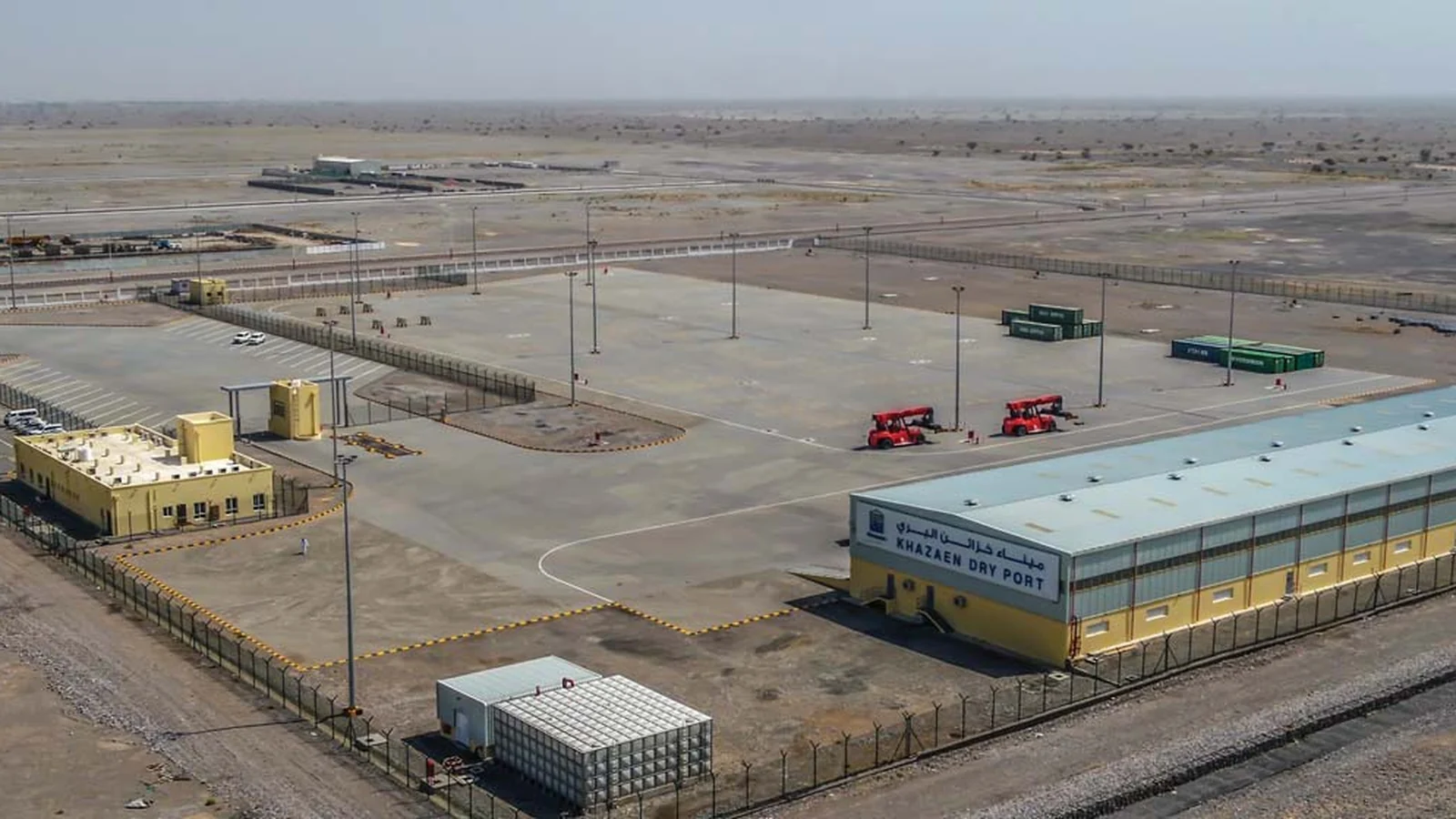
Photo: OPAZ · Oman Open Government Licence · Cropped and converted to WebP.
Where should your business be based?
Khazaen company setup: key facts
The first question is whether the proposed site is an ordinary economic-city plot or one of Khazaen’s two legally designated free-zone plots. Royal Decree 44/2023 created both, but their incentives are different.
- Location and authority: Khazaen is in Barka, South Al Batinah, under OPAZ supervision. Oman Logistics Company is the statutory operator; Khazaen Economic City Company is the developer.
- Two free zones: only the two mapped areas created by Royal Decree 44/2023 have free-zone status. A warehouse elsewhere in Khazaen is not a free-zone warehouse merely because it is in the city.
- Foreign ownership: the 2025 free-zone law permits 100% non-Omani capital for a licensed free-zone enterprise. Khazaen also advertises full foreign ownership for eligible city projects; the actual activity and legal form must qualify.
- Minimum capital: Article 9 of the 2025 law allows a free-zone minimum-capital waiver by OPAZ Board decision. The wider city has no universal exemption under that article; any general or sector capital rule and real project financing still need review.
- Land term: Khazaen currently advertises leases of land and facilities for up to 45 years. The granted plot, use, rent, milestones and duration are set in the signed agreement.
- Initial evaluation: Khazaen says it evaluates a complete investment application within five working days; allocation, contracts and licensing take additional time.
- City workforce: Royal Decree 44/2023 permits a non-Omani workforce of up to 65% for city operators, which implies at least 35% Omanisation under that city rule; labour approvals still apply.
- Free-zone workforce: the 2023 Khazaen system sets a minimum 15% Omanisation for companies in the two free zones. Confirm the current approved project ratio and permits before recruitment.
- Free-zone income tax: Article 27 of Royal Decree 38/2025 provides an initial 10-year exemption, with up to two further ten-year periods only for qualifying special-nature activities and a Finance Minister decision. Excluded sectors and tax returns remain.
- Ordinary city industrial tax: the nationwide industrial income-tax path is five years, non-renewable, from production for eligible licensed industry and requires the prescribed decision; it is not a tax holiday for all Khazaen tenants.
- Published OPAZ fees: the published first commercial-registration charge is OMR 250, with a five-year renewal cycle; confirm the renewal invoice separately. Industrial activity licences were set at OMR 150 / 450 / 750 for light / medium / heavy industry for three years. OPAZ approved application of its service-fee decision in Khazaen; private rent and other authorities’ charges are additional.
- VAT: the Tax Authority’s published Special Zones guide does not name Khazaen as a VAT-classified zone. Do not budget a VAT zero rate without a current Tax Authority classification and transaction-specific conditions.
The legal distinction comes from Royal Decree 44/2023 and Royal Decree 38/2025. The Khazaen incentives page, application flow and OPAZ fee decision announcement provide the current institutional figures.
Where Khazaen is and what the location changes
Khazaen lies in Barka on the Muscat–Al Batinah road corridor. It can support road distribution to the Greater Muscat market, the northern ports and land routes, while the dry port offers cargo-handling and inland logistics services. A dry-port location does not itself place every neighbouring plot inside a free-zone customs boundary.
Map the actual route for each product: arrival port or border, Khazaen facility, buyer location and final customs status. A company that mainly sells to Oman’s mainland needs a different landed-cost calculation from one that warehouses goods for export. The Royal Oman Police customs requirements search helps identify goods-specific permits.
Which projects fit Khazaen?
Khazaen suits a business that needs an operating site: a production line, storage, processing, commercial premises, distribution space or an identifiable service to those activities. The developer approves proposed activities against the master plan and permitted land use, while sector regulators retain their own approvals.
- Industrial and food processing: assembly, packaging, light or medium manufacturing and food-related production need the right plot, industrial licence, utilities, waste plan and often environmental clearance.
- Logistics and warehousing: a warehouse or distribution project should document cargo types, origin, storage conditions, vehicle movements, customs route and whether the site must be in a designated free zone.
- Trade and commercial services: wholesale, showrooms, business services and offices can fit particular city plots if the exact activity is approved. A free-zone licence alone does not grant unrestricted mainland trading.
- Residential, retail and social infrastructure: Khazaen’s wider master plan includes homes, retail, schools, clinics and hospitality, each with its own land-use and sector approvals.
The operator lists these categories in its official offerings. For an office-only consultancy with no operational need for Khazaen, compare an ordinary mainland location before taking on a plot or facility commitment.
Economic-city plot or designated free-zone plot?
Khazaen is not one legal regime across its full area. Royal Decree 44/2023 established an economic city and, separately, two free zones defined by the attached master plan and development agreement. Ask for the exact plot number and a written confirmation of its legal designation before pricing customs, tax or staffing.
Begin with the exact plot
Request the plot number and written confirmation of its designation.
Which specific site is being offered?
Ordinary city plot
Check the permitted use and the operating route applicable to that site.
Designated free-zone plot
Confirm its mapped designation and customs boundary.
| Question | Ordinary Khazaen city plot | One of the two free-zone plots |
|---|---|---|
| Controlling framework | Khazaen’s 2023 city system, ordinary Omani law and the approved activity | Khazaen’s zone decree plus the 2025 Special Economic Zones and Free Zones Law and 2026 regulations |
| Income-tax route | Normal tax rules; eligible licensed industry can seek the national five-year industrial exemption | Potential Article 27 ten-year period, with conditional further periods and a formal Finance Minister decision |
| Customs | The 2023 city system specifically provides relief for production inputs; general imports are not automatically duty-free | Article 28 project-input relief and Article 29 export relief; mainland release is a separate customs event |
| Workforce rule | 2023 city rule permits up to 65% non-Omani workers | 2023 Khazaen free-zone rule sets at least 15% Omanisation; verify applicable current ratio |
A 2023 free-zone provision described a different 15-year-plus-five-year tax term. The later 2025 law introduced a new Article 27 framework and expressly protects benefits already granted to existing free-zone companies for their granted terms. For a new application, use the 2025 framework for planning and obtain the tax decision before treating any term as awarded. OPAZ issued the implementing regulation in 2026 through Decision 81/2026.
Foreign ownership, company form and mainland sales
A licensed enterprise in a designated free-zone plot may have 100% non-Omani capital under Article 8 of the 2025 law. Khazaen advertises 100% foreign ownership for projects elsewhere in the city as well; outside the designated free zones, the exact activity code, legal form and general foreign-investment rules determine eligibility. Full capital ownership does not approve a restricted activity or replace a sector licence.
- New Omani company: often suitable when the investor wants a separate local entity to sign land, employment and sales contracts.
- Branch or corporate shareholder: an established parent may use an approved branch or own a local company, with parent registration, constitutional documents, board authority and signatory evidence.
- Representative office: a free-zone enterprise may register a commercial representation office in the Omani customs territory under Article 12 of the 2025 law; that is not a general mainland sales licence.
Decide where contracts will be performed and where goods will be released. Goods moving from a free-zone plot into mainland Oman need the applicable customs declaration and duties/taxes; a regular city plot is part of a different customs model. Our Oman company registration guide explains the underlying legal forms.
Land, warehouses and property rights
Khazaen currently advertises land and facility leases for up to 45 years. The developer can grant lease or usufruct rights over plots under the 2023 system, and the OPAZ zone page describes an application, plot allocation and usufruct agreement. The length and price of a particular project are contractual outcomes, not guaranteed benefits of company registration.
- Industrial land: check permitted use, plot size, setbacks, access, construction deadline, power, water, drainage and waste facilities.
- Warehouse or built unit: verify clear height, loading, fire systems, temperature, office allowance, maintenance and permitted cargo.
- Free-zone plot: request its mapped designation and customs boundary. If the business relies on zone treatment, the exact plot must qualify.
- Transfer and sublease: the operator advertises rights to sell buildings on leased land and sublease facilities, but the actual agreement, OPAZ approval and registration conditions govern a transaction.
The 2023 Khazaen system allows the developer to allocate land uses and grant land rights. It also contemplates sale of certain residential and commercial units. That should not be described as foreign freehold ownership of an industrial plot. Review the draft agreement for rent escalation, deposits, development milestones, permitted mortgage or transfer, restoration duties and exit.
Registration, licences and other approvals
A Khazaen investment application is a project proposal, not the commercial registration or the right to start construction. The 2023 system assigns the operator a one-stop process linked with OPAZ, while the developer approves land use and proposed activities. The official government service covers company and branch registration; industry, food, health, transport, environment and construction may require separate competent-authority decisions.
- Commercial registration: choose legal form, shareholders, signatories and exact activity codes, then register the approved entity or branch.
- Project/activity licence: obtain the authorisation matching the proposed industrial, commercial, logistics or service operation and its chosen plot.
- Technical approvals: environmental classification, civil defence/fire, building, food safety, transport or utility approvals follow the actual plant and product.
- Customs and tax accounts: set up the importer/exporter and tax records appropriate to the route; a dry-port or free-zone address does not replace a goods-specific permit.
- Labour and residency: jobs, Omanisation, work permits and immigration are separate decisions after the company and project route are established.
The Gov.om OPAZ registration service expressly includes local and foreign company branches. The OPAZ registration guidance lists identity documents for shareholders and attested corporate documents for foreign company shareholders. Prepare those according to the legal form actually selected. Use the Oman Business Activity Finder to shortlist exact codes, then obtain the authority’s decision.
Income tax, customs and VAT in Khazaen
Income tax: match the benefit to the plot and project
On an ordinary city plot, normal income-tax rules apply unless a separate exemption is granted: the Tax Authority publishes a standard 15% rate on net taxable income for commercial companies and a conditional 3% small-enterprise rate. An eligible licensed industrial establishment can apply under the national industrial route for five non-renewable years from production, subject to the Tax Authority conditions and Finance Minister decision. Manufacturing is the relevant activity; an ordinary warehouse or trade office does not become eligible because it is located near a factory.
For a new licensed free-zone enterprise, Article 27 of Royal Decree 38/2025 sets a ten-year exemption from commencement of activity, with up to two further ten-year periods for qualifying activities of a special nature under the 2026 regulation. The Minister of Finance must grant the exemption. Banks, financial institutions, insurance/reinsurance, telecommunications, construction, land transport and maritime transport are excluded. Tax returns and required records continue even during an exemption. Already granted older awards have a specific transitional protection until their granted terms expire.
Customs: production inputs and free-zone goods differ
The 2023 city system grants relief from taxes and customs duties for production inputs of eligible city businesses. This wording does not remove duties on every commercial import. For the two free zones, the 2025 law exempts specified machinery, equipment, raw materials and other goods needed to build or operate a licensed enterprise when introduced into the zone, and it exempts products exported from the zone to destinations outside Oman. Diverting exempt inputs to another purpose needs OPAZ approval and payment of duties. Moving goods into mainland Oman requires the applicable customs process and tax treatment.
VAT: confirm classification and the transaction
Oman’s standard VAT rate is 5%. The published VAT Special Zones guide names Duqm, Sohar, Salalah and Al Mazunah, and explains that a further zone needs Tax Authority classification. It does not establish that the two Khazaen free-zone plots have been classified for VAT purposes. Ordinary Khazaen city plots do not gain special-zone VAT treatment from their location. Standard Oman VAT analysis therefore remains essential for supplies, imports and any mainland release; even in a classified special zone, zero rating is conditional, not a blanket VAT exemption.
Sources: Tax Authority rates, industrial exemption guidance, Gov.om industrial tax application, 2025 zone law and Tax Authority VAT Special Zones guide.
What to prepare before applying
A useful first submission identifies the investors and the real operating project. Khazaen says the application becomes the basis for its commercial proposal and eventually an annex to the land agreement, so estimates of land, utilities and activity should be consistent with the business plan.
| File | Typical contents | Why it matters |
|---|---|---|
| Investor and company | Passports or national IDs; proposed shareholding and signatories; parent registration, constitution and authorising resolution where relevant | Establishes the applicant, form and ability to sign; foreign corporate papers may need attestation and translation |
| Project and market | Products and activities, intended customers, Oman versus export sales, production or storage model, investment estimate and implementation schedule | Determines plot designation, permitted use, licence category and realistic commercial terms |
| Site and engineering | Requested area, layout or process flow, machinery, power, water, drainage, traffic and construction needs | Allows the developer and technical authorities to test a plot and infrastructure capacity |
| Regulatory and finance | Expected workforce and Omanisation, environmental/waste information, import/export model and evidence of funding when requested | Supports sector screening, customs/tax route and the project delivery timetable |
Ask the operator which documents are required for initial evaluation and which are needed only after a plot is offered. This avoids paying for engineering, translations or attestations in a form the authority will not use. The official application form sets out the project intake.
The complete Khazaen setup process
Khazaen publishes a short application-to-plot-to-agreement flow. A functioning project needs the additional company, activity, site, customs, tax and employment steps below. The output of each stage should be recorded before the next costly commitment.
1. Define the commercial route
List products or services, where goods originate, where buyers are, and whether the project needs a factory, warehouse, dry-port services or office. Output: A one-page operating model and target markets.
2. Choose the legal site regime
Determine whether the economics require an ordinary city plot or a specifically mapped free-zone plot, then seek the plot designation in writing. Output: A route decision that can be used for tax, customs and staffing analysis.
3. Check activity and ownership eligibility
Match the precise activity code and proposed ownership or branch form to Omani registration rules, Khazaen land use and any sector restriction. Output: A shortlist of permitted entity and activity combinations.
4. Size the project and budget
Estimate area, building type, utilities, traffic, equipment, staff, capital expenditure and working capital, with a realistic implementation schedule. Output: A feasibility file suitable for operator review.
5. Assemble the investor file
Prepare IDs, corporate authorities, shareholder details, project plan and early technical information in the form Khazaen requests. Output: A complete initial application rather than a name-only enquiry.
6. Submit the investment application
Send the project file through the published Khazaen application or designated OPAZ channel and respond to clarification requests. Output: A logged proposal; Khazaen publishes a five-working-day evaluation target for a complete application.
7. Review site and designation
Inspect the offered plot or unit, its mapped status, permitted use, access, utility capacity and delivery condition. Output: A site proposal that actually supports the business model.
8. Price and negotiate the agreement
Obtain the rent or usufruct offer, service charges, deposit, term, escalation, build milestones and transfer or exit clauses before signing. Output: A costed and reviewable land or facility agreement.
9. Register the company or branch
Complete the approved legal form, shareholder and signatory information, commercial registration and any chamber or investment formalities. Output: A registered Omani operating entity or branch with the right named activity.
10. Secure activity and technical permissions
Apply for OPAZ/Khazaen activity licensing and any industrial, building, environmental, fire, health, transport or food approvals relevant to the design. Output: The specific permits required to build and later operate.
11. Set up tax and customs records
Register for income tax and VAT as required; establish importer, Bayan and goods permits; apply separately for a qualifying tax exemption. Output: Tax and customs accounts plus any formal exemption decision.
12. Deliver site, utilities and fit-out
Complete design approval, construction or fit-out, electricity/water connections, equipment installation and final inspections. Output: A premises fit for the licensed activity.
13. Approve the workforce and banking
Open the labour file, obtain positions and work permits, arrange immigration, meet the applicable Omanisation plan and complete bank due diligence. Output: A lawful staffing and payment setup; neither visa nor bank approval follows automatically from the lease.
14. Start and maintain the operation
Commence within the approved project timetable and maintain licences, rent, tax returns, customs records, workforce compliance and technical permits. Output: An operating project with a renewal and reporting calendar.
What company setup in Khazaen costs
A Khazaen budget has distinct public fees, operator or facility charges, third-party implementation costs and any professional fee. The published OPAZ fees are useful starting figures, but the chosen activity and the actual lease determine the total.
| Cost | Published reference or calculation | Budget treatment |
|---|---|---|
| OPAZ commercial registration | Published first registration charge: OMR 250; commercial registration has a five-year renewal cycle | Confirm the first invoice and the separate renewal fee for the approved entity form; land and sector licences cost extra |
| OPAZ industrial licence | OMR 150 light / OMR 450 medium / OMR 750 heavy, each for three years in the published package | Only for the classified industrial activity; the approved category controls the charge |
| Other activity/technical fees | Set by the approved commercial, environmental, building, food, transport or other licence | Request the applicable fee schedule after the activity and design are classified |
| Land or facility | Khazaen quotes rent or usufruct, service charges, deposit and possible fit-out obligations for the actual area and term | Usually the largest recurring and upfront commitment; up-to-45-year lease is a ceiling, not a price |
| Implementation | Engineering, construction, utilities, equipment, fire systems, customs handling, recruitment, immigration and banking | Third-party or authority charges; budget separately from the commercial registration |
| Advisory or filing support | Written scope and fee from the chosen provider | A professional-service cost, never a government or Khazaen fee |
OPAZ announced that Khazaen could apply its Decision 63/2023 service fees. Its published explanation gives OMR 250 for the first commercial registration and a five-year renewal cycle, without establishing that every renewal invoice is OMR 250; it also gives the industrial licence figures above. The decision provides a 50% reduction of specified OPAZ service fees for qualifying small and medium enterprises; it does not automatically halve private rent or every outside regulator’s fee. Khazaen separately advertises a 50% environmental-approval discount, which should be priced only after the authority confirms the current category and invoice.
Before paying a deposit, obtain an itemised proposal showing plot area, annual rent, escalation, services, utilities, design and construction responsibilities, licence and regulatory charges, and payment milestones. A single “company setup package” price cannot convey these project costs. See the OPAZ fee adoption, published OPAZ fee figures and operator’s current land terms.
How long does Khazaen registration take?
Khazaen publishes five working days to evaluate a complete initial investment application. That is an intake target, not a promise that the company, land rights or factory will be ready in five days. The later schedule depends on plot availability, negotiations, shareholder documents, licence classification and construction.
| Stage | Known timing | What changes it |
|---|---|---|
| Initial project evaluation | Khazaen states five working days after a complete application | Missing project or investor information leads to clarification and a new practical schedule |
| Plot offer and agreement | No universal published completion period | Availability, plot designation, technical fit, rent and contract negotiation |
| Company and activity registration | No single Khazaen-wide total | Legal form, foreign corporate documents, precise activity and external authority approvals |
| Construction and opening | Project-specific | Design, environmental class, utilities, contractor programme, inspections and imported equipment |
Make a schedule with separate gates: investment acceptance, site agreement, commercial registration, activity/technical approvals, construction, workforce and first transaction. Keep bank onboarding and residency as independent dependencies. The Khazaen application page is the source of the five-day initial evaluation target.
Track readiness across the project
Keep commercial, technical and operating dependencies visible together.
Commercial track
Investment acceptance, site agreement and company or branch registration.
Technical track
Activity permissions, site delivery, utilities and required inspections.
Operating track
Workforce, banking, tax and customs records for the actual business.
What must be maintained after approval?
A signed agreement and commercial registration begin an operating project; they do not end its obligations. Track the approved use, construction and commencement milestones, rent and service payments, company renewals, activity permits, tax returns, VAT, customs inventory and workforce ratios. Free-zone enterprises must also maintain records for at least ten years under Article 16 of the 2025 law.
- Land and activity: use the site only for approved activities, meet build or launch milestones and seek approval before material changes, assignment or sublease.
- Tax and accounting: keep books and submit required returns even if an income-tax exemption was granted. Separate any exempt zone income from other activities.
- Customs: retain import, storage, transfer and export evidence. A free-zone-to-mainland movement needs a customs route; unused inputs cannot simply be diverted.
- Workforce: maintain the approved Omanisation, job-title, permit and payroll position for the actual city or free-zone site.
- Technical safety: maintain environmental, food, civil defence, machinery and occupational approvals as relevant to the plant.
A common mistake is to choose a free-zone plot based on the customer-facing “tax-free” label and discover later that most sales are to mainland Oman, changing the customs, VAT and distribution cost. Another is to sign a long lease before power, water or the activity licence is confirmed. These questions should be resolved during the initial business model and plot review. The labour and Omanisation guide covers the employer-side duties in greater depth.
Frequently asked questions about Khazaen
Is all of Khazaen a free zone?
No. Royal Decree 44/2023 created the wider economic city and two specifically designated free zones inside it. The offered plot’s mapped designation determines whether a free-zone route is available.
Can a foreign investor own 100% of a Khazaen project?
A licensed enterprise in one of the two free zones may be wholly foreign-owned under Article 8 of Royal Decree 38/2025. Khazaen also advertises 100% foreign ownership for city projects, subject to the approved activity, legal form and sector rules.
Is there a 30-year tax exemption for every Khazaen company?
No. Ordinary city plots follow normal tax rules unless a separate benefit is granted, including a possible five-year national industrial exemption for eligible licensed industry. For new free-zone enterprises the 2025 law sets an initial ten-year framework and conditional further periods. Older benefits already granted can retain their awarded term.
Does the free-zone tax exemption remove annual tax returns?
No. Article 27 of the 2025 law expressly requires the enterprise and operator to submit tax returns and attached documents under the Income Tax Law even when an exemption applies.
Is VAT zero-rated in the Khazaen free zones?
The published Tax Authority guide does not identify Khazaen as a VAT-classified Special Zone. A zone must receive classification, and even a classified zone has transaction-specific zero-rating conditions. Use the normal VAT analysis until current classification and transaction treatment are confirmed.
How long can I lease land in Khazaen?
The operator currently advertises leases of land and facilities for up to 45 years. Your term, rent, allowed use, milestones and transfer rights are those approved in the signed agreement; a plot is not automatically granted for the maximum period.
Can I register a company in five working days?
Khazaen’s five-working-day figure applies to evaluation of a complete investment application. Plot allocation, agreement, commercial registration, activity licences, banking, immigration and site works follow separate schedules.
What does Khazaen company setup cost?
The published OPAZ package gives OMR 250 as the first commercial-registration charge and a five-year renewal cycle; confirm the separate renewal fee. Where applicable, industrial licences are published at OMR 150/450/750 for light/medium/heavy categories over three years. Add the land or facility quote, services, utilities, approvals, equipment and professional costs.
What is the Omanisation requirement?
The 2023 city system permits non-Omani staffing up to 65% for ordinary city projects. Its rule for companies in the two free zones sets a minimum 15% Omanisation. The approved labour and activity conditions still need to be satisfied for each employer.
Can a Khazaen free-zone company sell directly to mainland Oman?
A free-zone company may sell under an approved legal and customs route, but free-zone status does not remove mainland customs, VAT, importer or activity requirements. Model the movement of each product and any mainland commercial registration before contracting.
Do I need a real project or can I take an address only?
Khazaen’s published application asks for a proposed project, space needs and an operating plan, and the proposal can become part of the land agreement. A simple office-only business should compare a conventional mainland site if it does not need the city’s facilities.
Who decides whether my activity and plot are accepted?
Khazaen’s operator evaluates the investment application, the developer approves activities and allocates site rights under the OPAZ-supervised framework, and sector regulators decide their own technical permits. Bank, immigration and tax decisions are also independent.
Decide on the plot and the route
A useful next decision is a short investment brief with the activity, goods flow, proposed site type, facility area, utilities, ownership, staff and first-year budget. Use it to request a plot designation and itemised commercial offer. Only then can tax, customs, licence and total-cost assumptions be tested against the actual project.
Oman Verified can help organise the comparison and project file. Khazaen, OPAZ and the competent public bodies issue the plot, registration, tax and licence decisions. Request an investment review once the project model is defined.
Official sources and review date
Reviewed 24 October 2026. The legal statements above distinguish Royal Decree provisions, official application procedures, operator offers and practical planning advice. Exact project rights depend on the plot, licence and signed decisions.
- MJLA Official Gazette: Royal Decree 44/2023 and Khazaen system (Arabic)
- OPAZ English summary and map of the two Khazaen free zones
- OPAZ official English text of Royal Decree 38/2025
- OPAZ announcement of Executive Regulation 81/2026
- OPAZ Khazaen city profile and usufruct sequence
- Khazaen investment application and five-working-day evaluation
- Khazaen current investment incentives and lease terms
- OPAZ Board notice applying Decision 63/2023 fees to Khazaen
- Tax Authority income-tax exemption conditions
- Tax Authority income tax and VAT rates
- Tax Authority guide to VAT Special Zones
- Gov.om company and branch registration service
Image sources and licences
- OPAZ – https://opaz.gov.om/upload/files/Duqm-Magazine32-English1.pdf
Oman Open Government Licence – https://www.utas.edu.om/en-us/Licence