
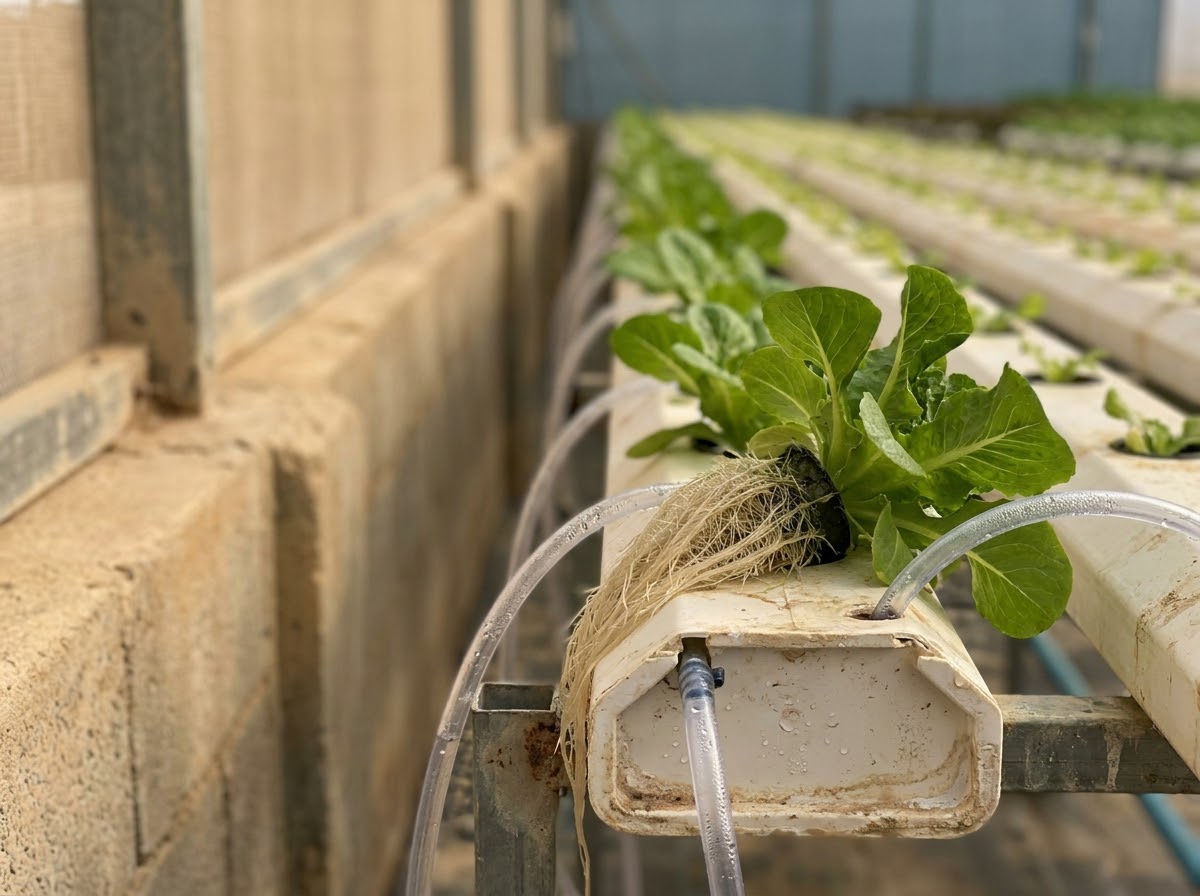
A greenhouse or hydroponic farm in Oman is not only a company-registration project. It is a production system. The site, water, crop, cooling method, packing plan and sales route must work together.
This guide covers greenhouses, hydroponics, aeroponics, controlled-environment farming, vegetable production, nurseries and first-stage farm packing. It does not cover livestock, poultry or dairy projects.
Requirements can change by crop, land type, water source, governorate, project size and commercial activity. Confirm the exact route with the Ministry of Agriculture, Fisheries and Water Resources and the other competent authorities before buying land rights or equipment.
Plan the farm in this order
- Choose the crop and target buyer.
- Set the production method and yearly crop calendar.
- Test the site, water source and power supply.
- Confirm land use, activity eligibility and sector approvals.
- Design the greenhouse, irrigation, cooling and drainage systems.
- Confirm packing, storage, transport and sales arrangements.
- Only then finalise the company, contracts and equipment orders.
Agricultural production models at a glance
| Model | Main use | Key planning issue |
|---|---|---|
| Greenhouse soil production | Vegetables and selected fruit crops grown in protected soil beds | Heat control, soil condition, irrigation and pest management |
| Substrate hydroponics | Crops grown in coco coir, rockwool or another growing medium | Water quality, nutrient dosing, drainage and sanitation |
| Water-based hydroponics | Leafy greens and selected herbs grown with roots in a nutrient solution | Water temperature, oxygen, hygiene and power continuity |
| Aeroponics | Roots receive a controlled nutrient mist | High system control and a strong backup plan |
| Plant nursery | Seedlings, ornamental plants or young crop plants | Nursery-specific licence, plant health and source records |
| Farm-level packing | Sorting, cleaning, grading and packing the farm’s own harvest | Food hygiene, cold handling, packaging and activity scope |
1. Define the agricultural model first
Start with the product, not the greenhouse catalogue. A tomato project has different space, support, cooling and packing needs from a leafy-green project. A nursery also follows a different approval path from a farm that only grows vegetables for harvest.
Write a simple production plan. It should state the crop, variety, growing method, expected planting and harvest periods, water demand, cooling method, labour needs, grade standards and intended buyer. Use realistic trial data. Do not use a supplier’s best-case yield as the main financial forecast.
Choose the market before the system
A farm that supplies supermarkets may need stable size, appearance, packaging and delivery times. A hotel or restaurant buyer may want different pack sizes. A wholesale buyer may accept a wider grade range but use a different price method.
Ask possible buyers about weekly volume, grade, pack size, rejection rules, payment period and seasonal demand. A letter of interest is useful, but it is not the same as a binding purchase contract.
2. Greenhouse production in Oman
A greenhouse protects crops from some outside conditions, but it does not remove Oman’s heat, humidity, dust or salinity risks. The structure must match the site and crop.
Structure and climate design
- Frame and cover: Check wind load, corrosion risk, light level, cover life and replacement access.
- Ventilation: Natural ventilation may be useful in suitable periods. Hot months may need mechanical cooling.
- Cooling: Pad-and-fan, misting, shading and air movement must be designed for the local temperature and humidity.
- Insect control: Screens can reduce pest entry, but dense screens can also reduce airflow.
- Drainage: The site needs a plan for stormwater, irrigation drainage and cleaning water.
- Backup systems: Pumps, cooling controls and dosing equipment may need alarms, spare parts and backup power.
Important: A low equipment price can become expensive if the design is not suitable for the site. Ask for the heat-load basis, expected power use, spare-parts list, warranty scope and local maintenance plan before signing.
3. Hydroponics and aeroponics
Hydroponics grows plants without normal field soil. The roots receive water and nutrients through a controlled system. Aeroponics uses a fine nutrient mist around the roots.
These systems can give close control over nutrition and root conditions. They can also fail quickly when a pump, sensor, cooling unit or power supply stops. The project needs trained operators and clear emergency steps.
| System | Often considered for | Main control points |
|---|---|---|
| Drip irrigation in substrate | Tomatoes, cucumbers, peppers and strawberries | Drain percentage, salt build-up, irrigation timing and root-zone temperature |
| Nutrient film technique | Leafy greens and herbs | Flow, oxygen, channel slope, heat and root disease |
| Deep-water culture | Leafy greens | Water oxygen, temperature, hygiene and raft cleaning |
| Aeroponics | Specialised propagation or high-control crops | Nozzle condition, filtration, pressure, sanitation and immediate backup |
Nutrient and water monitoring
A hydroponic plan normally monitors water quality, pH, electrical conductivity, nutrient stock, tank temperature, flow and drainage. The correct targets depend on the crop and growth stage. Use a qualified agronomist to set them.
Keep a record of readings, nutrient batches, crop symptoms, cleaning, pesticide use and harvest results. Records help find the cause of a problem and support buyer quality checks.
4. Controlled environment and water systems
Water is one of the first technical checks for an Oman farm. Do not design the system only from a general water test. Test the actual proposed source and consider seasonal change.
Water-source questions
- Is the source a permitted well, utility connection, delivered water or another approved supply?
- Is the daily quantity enough during peak production?
- What are the salinity, sodium, chloride, bicarbonate and other important test results?
- Does the water need filtration, disinfection or reverse osmosis?
- Where will reject water, drainage and cleaning water go?
- What storage is needed if the supply stops?
The Ministry of Agriculture, Fisheries and Water Resources has official well-related services. A company can request technical specifications before drilling. This does not replace any separate permission needed to drill, use or change a well.
Do not drill first and ask later. Confirm the land right, survey information, well route and water-use position before paying a drilling contractor. A greenhouse design is not complete until the water source and discharge plan are accepted.
5. Land and site requirements
The land must legally support the proposed agricultural use. A normal address or a low-cost lease is not enough. The lease or usufruct right should clearly allow the project, structures, utilities, water systems, access and the intended contract period.
| Site check | Why it matters |
|---|---|
| Land classification and approved use | The proposed farm and structures must be allowed on the plot. |
| Lease or usufruct term | The term should support the equipment life and investment plan. |
| Water source and quality | Crop choice and treatment cost depend on it. |
| Power capacity and reliability | Cooling, pumps, dosing and cold rooms can need continuous power. |
| Road and truck access | Inputs and fresh harvest must move safely and on time. |
| Flood and stormwater position | Greenhouses, stores and electrical systems need protection. |
| Distance to buyer or market | Travel time affects freshness, transport cost and rejection risk. |
| Future expansion space | Tanks, packing, cold handling and extra greenhouse blocks need room. |
The Environment Authority’s published Class C permit route lists a title deed or lease and plot sketch among the required documents. For an agricultural project, it also lists approval from the agriculture ministry stating annual production capacity. The authority may request an environmental study and a site visit.
Do not assume every farm is in the same environmental class. The activity, location, water use, chemical storage, waste, construction and production scale can change the review.
6. Crop and nursery activities
The commercial activity should match the real work. Crop production, seedling production, ornamental nurseries, packing, wholesale, retail and input trading are not the same activity.
Gov.om publishes a specific service for an ornamental plant and seedling cultivation licence. Its listed documents include a land ownership or lease contract with a sketch and an engineering drawing. It also states that the land must be agricultural and suitable for cultivation. A vegetable farm should not assume that a nursery licence covers all its work, or that crop production automatically covers a commercial nursery.
Activity and ownership check
Many activities may be open to foreign investors, but the exact result depends on the selected code and current rules. Some production, retail, wholesale or input-related activities may be restricted, reserved or subject to extra approval.
Use the Oman business activity finder to search possible CR codes. The tool does not prove foreign-ownership eligibility and does not guarantee a regulator’s approval. Also review the current restricted activities for foreign investors in Oman and confirm the live position before registration.
7. Seeds, fertilisers, pesticides and plant health
A farm needs an input-control plan. Record the source, batch, delivery date, storage condition and use of seeds, seedlings, fertilisers, soil enhancers and pesticides.
Seeds and planting material
Imported plants and plant products can need a plant import permit, phytosanitary documents and inspection. The exact documents depend on the item and risk. An official plant import service lists items such as seed germination and purity evidence, an agricultural holding or nursery licence and a seedling or plant list for relevant cases.
Fertilisers and soil enhancers
Do not treat every soluble nutrient as an ordinary shipment. The official permit service states that companies importing fertilisers or soil enhancers need the relevant practice licence and product registration. If the farm buys from an approved local supplier, keep the invoice and product information.
Pesticides
Use only products allowed for the intended purpose and follow the approved label. The official pesticide import service requires an Oman pesticide registration certificate, approved label and shipment analysis. Importing, selling and using pesticides are controlled activities. Keep treatment, operator, crop and harvest-interval records.
Plant-health control starts at the gate. Set an entry rule for seedlings, tools, boxes, visitors and workers. Isolate new plant material when needed. Clean shared tools and remove infected plant waste through an accepted method.
8. Farm packing and market access
First-stage packing may include harvest reception, trimming, sorting, grading, cleaning, weighing and packing. Confirm that the approved agricultural and commercial scope covers each step. Cutting, cooking, mixing, preserving or making a new food product can move the project into a different food-processing route.
Basic packing flow
- Bring the harvest into a clean shaded area.
- Separate damaged or diseased produce.
- Grade by the buyer’s agreed standard.
- Use clean food-contact surfaces and suitable packaging.
- Identify the batch and harvest date.
- Move the packed produce to the correct holding temperature.
- Load it into a clean and suitable vehicle.
The sales activity must also match the route. Selling the farm’s own produce, operating a wholesale business, running a retail shop and distributing third-party food are different models. Read the separate guide to food distribution and wholesale in Oman when the project will buy, store or distribute products from other producers.
Before agreeing with a buyer
- Define the product grade and acceptable defect level.
- Agree the unit, pack size, label and delivery location.
- State who pays for rejected goods and returns.
- Confirm the price method and payment time.
- Check whether the buyer needs farm audits or residue tests.
- Do not build the full farm around a non-binding conversation.
9. Agricultural workforce
A controlled farm needs more than general labour. It may need a farm manager, agronomist, irrigation or fertigation operator, greenhouse technicians, crop workers, packing staff, maintenance support and quality-control responsibility.
Before hiring, check the current Ministry of Labour position for the activity, company size, occupations, work permits and Omanisation duties. Do not use a general percentage from another sector or zone. Reserved occupations and permit conditions can change.
Plan staff accommodation, transport, heat protection, protective equipment, chemical handling, training and emergency response. For support with labour files and changing workforce rules, review labour and Omanisation support in Oman.
10. Short company, residence and banking pathway
The legal company route should follow the farm plan. First confirm the production activities, ownership position, land path and external approvals. Then register the correct company and apply for the licences that the project needs.
Companies subject to the Foreign Capital Investment Law may also need an investment licence after commercial registration. Gov.om currently lists a feasibility study, passport, experience evidence, a bank statement and a lease contract among the documents for that service. The live request may depend on the case.
For help with the company structure and application sequence, use Oman company setup advisory. Company registration does not replace agricultural, land, environmental, municipal, water or plant-health approvals.
A bank will review the company, owners, activity, source of funds, contracts and expected transactions. Equipment invoices, land documents, feasibility information and buyer or supplier contracts may help explain the project. Bank approval is never guaranteed. Oman Verified provides business banking preparation support for eligible companies.
11. Costs and planning tools
A useful budget separates company costs from farm costs. The largest project costs can come from land rights, site works, greenhouse structures, cooling, water treatment, tanks, irrigation, power, backup systems, crop inputs, packing, transport and working capital.
| Budget group | Examples |
|---|---|
| Legal and approval | Company, investment licence, land documents, technical reviews and permits |
| Site and utilities | Survey, access, drainage, fencing, power, water and civil works |
| Production system | Greenhouse, cooling, irrigation, fertigation, sensors and crop supports |
| Water system | Testing, storage, filtration, treatment, pumps and drainage handling |
| Packing and logistics | Packing area, tables, scales, packaging, cold handling and vehicles |
| Opening stock | Seeds, seedlings, substrate, nutrients, approved crop-protection products and packaging |
| People | Recruitment, permits, wages, training, housing, transport and safety |
| Working capital | Power, water, inputs, repairs and payroll before stable buyer payments |
| Contingency | Replacement parts, crop loss, delayed approval and system changes |
The Oman company setup cost calculator can estimate general mainland company and investor-residence costs. It does not calculate agricultural land, greenhouses, cooling, water treatment, utilities, equipment, crop inputs, packing, environmental studies or sector approvals.
12. Common mistakes
- Buying equipment before testing the water: Treatment and crop choices may change after the test.
- Choosing land only by rent: The wrong use, weak power, poor access or flood risk can stop the project.
- Using supplier yield figures as a promise: Local heat, staff skill, crop disease and buyer rejection affect output.
- Ignoring drainage and reject water: Treatment water and hydroponic drainage need an accepted handling plan.
- Mixing production with trading: Farm production, wholesale, retail and input sales may need different codes and approvals.
- Leaving packing until the end: Grade, pack size, cooling and delivery can change the farm design.
- No technical backup: A pump, power or cooling failure can damage a crop quickly.
- No clear buyer terms: Growing a good crop does not guarantee an acceptable price or quick payment.
- Copying another project’s approval route: The crop, land, location, water and scale may be different.
13. Practical pre-investment checklist
- Crop, variety and yearly planting plan prepared
- Target buyers and grade requirements checked
- Production method selected with a technical reason
- Site visit, survey and land-use review completed
- Lease or usufruct rights reviewed for the full project term
- Water source, quantity and laboratory quality checked
- Power capacity, backup and maintenance plan checked
- Greenhouse heat, wind, ventilation and cooling basis reviewed
- Drainage, waste and environmental route reviewed
- Seeds, nutrients and crop-protection supply route checked
- Packing, storage, transport and rejected-produce plan prepared
- Activity codes and current ownership eligibility confirmed
- Agricultural, environmental, municipal and water steps mapped
- Workforce, permits, Omanisation and safety needs checked
- Capital budget, working capital and contingency prepared
- No major order signed before key conditions are confirmed
Frequently asked questions
Can a foreign investor own a greenhouse or hydroponic company in Oman?
Many activities may allow foreign ownership, but the answer depends on the exact commercial code and current negative list. Crop production, nursery work, wholesale, retail and agricultural-input trading must be checked separately. Confirm the live position before registration.
Does hydroponics remove the need for agricultural approval?
No. Hydroponics changes the growing method. It does not remove land-use, agricultural, environmental, water, building, plant-health or business requirements that apply to the project.
Can I start after renting any agricultural plot?
No. Check the legal use, lease rights, water position, access, construction scope and authority route. The plot must be suitable for the actual project, not only described as agricultural.
Can a farm drill its own well?
Do not assume this. Well drilling and water use follow official controls. Confirm the site-specific route with the Ministry of Agriculture, Fisheries and Water Resources before drilling or changing a well.
Can the farm import seeds, fertilisers and pesticides?
Imports can require the correct commercial activity, product registration, permits, certificates and inspection. The rules are different for plants, seeds, fertilisers, soil enhancers and pesticides. Check each item before ordering.
Can I wash and pack my own vegetables on the farm?
First-stage handling may be possible when it is within the approved project scope and follows hygiene requirements. Confirm the exact activities. Processing, making a new food product, operating a separate cold store or packing third-party goods may require another route.
How much does a greenhouse business cost in Oman?
There is no reliable standard total. Cost depends on land, area, crop, greenhouse type, cooling, water treatment, power, automation, packing and working capital. Obtain a site-based technical design and at least two comparable quotations.
Does the government guarantee a buyer for the harvest?
No general guarantee should be assumed. Some official investment opportunities may include a stated purchase arrangement, but it must be verified in the specific tender or contract. A farm should confirm buyers and contract terms before major investment.
Related Oman Verified guides and services
Omanisation guide
Understand how activity, occupation, company size and location can affect workforce duties.
Oman Vision 2040
See the national priorities behind economic diversification, food security and sustainable investment.
Conclusion
A good Oman greenhouse or hydroponic project starts with one clear crop-and-market plan. The land, water, structure, cooling, inputs, packing and workforce must support that plan.
Confirm the site and sector route before ordering equipment. Use a careful trial, keep production records and expand only when the farm can produce the required grade at a workable total cost.
International setup support
Oman Verified supports international founders and investors with Oman-side agricultural company setup, licensing coordination and implementation follow-up. Licences and approvals are completed by the competent authorities, land and utility matters through the relevant owners and providers, banking through the relevant banks, and engineering, agronomy and legal work through the appropriate qualified professionals.
Official sources
- Ministry of Agriculture, Fisheries and Water Resources — Gov.om
- Invest in Oman — agriculture and investment sectors
- Get Investment License — Gov.om
- Environmental Permit for Class C Activities — Environment Authority
- Request Technical Specifications for a Well — Gov.om
- Ornamental Plants and Seedlings Cultivation Licence — Gov.om
- Get a Plant Import Permit — Gov.om
- Permit to Import Plant Products — Oman Customs
- Permit to Import Fertilisers and Soil Enhancers — Gov.om
- Get Pesticides Import Permit — Gov.om
- Ministry of Labour
Official public information reviewed on July 29, 2026. Confirm the current requirements in the live government systems before submission.