
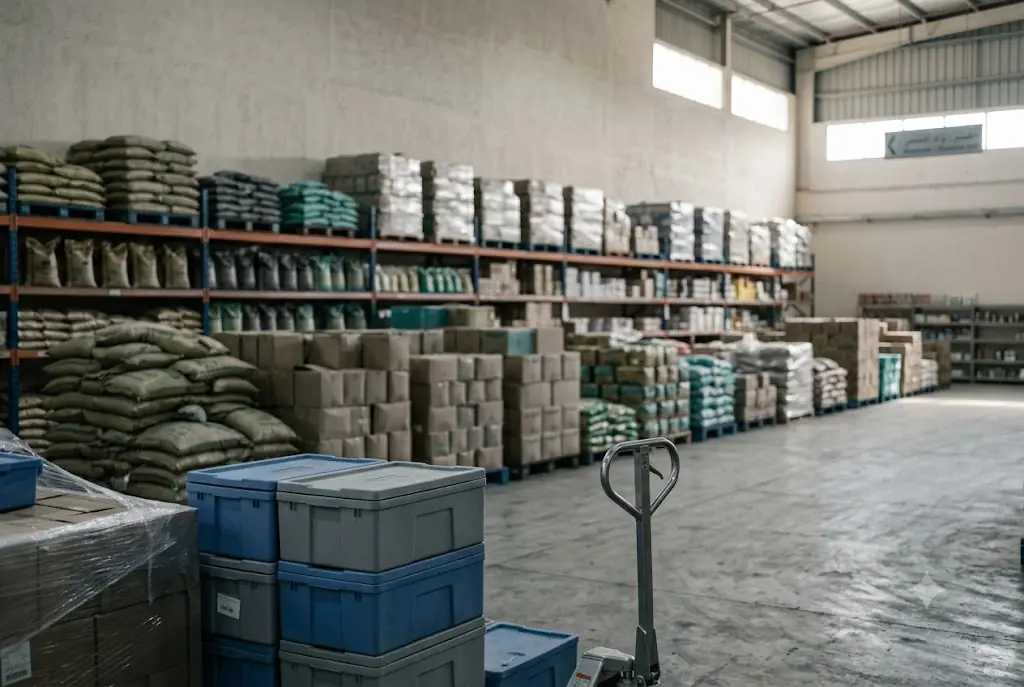
A food distribution business buys products in bulk and supplies other businesses in Oman. The buyers may include supermarkets, small shops, wholesalers and institutional customers.
The first decision is the product group. Packaged dry food follows a different path from fruit, fish, meat or frozen products. The activity code, warehouse and delivery method must all match the product.
This guide explains local wholesale and distribution. It keeps company registration, residence, banking and food import steps short.
Make these four decisions first
- Choose the exact product group.
- Check the activity code and ownership eligibility.
- Match the warehouse and delivery temperature to the product.
- Add product and customs steps only when stock is imported.
At a glance
| Topic | What it means |
|---|---|
| Business activity | The exact product and sales route control the correct activity. |
| Foreign ownership | Many activities may be available, but some food activities are reserved for Omani investors. |
| Premises | The warehouse must suit the activity and local health rules. |
| Temperature | Dry, chilled and frozen products need different controls. |
| Delivery | Use suitable commercial vehicles or a licensed transport company. |
| Fresh produce | Central-market access and activity eligibility must be checked separately. |
| Imported stock | Food registration, Arabic labels and Bayan customs steps may apply. |
| Tax | The normal VAT rate is 5%. Some listed food products are zero-rated. |
Distribution model
A distributor should define where the stock comes from and who will buy it. This choice affects cash flow, storage, delivery and licences.
Importer and local distributor
The company imports products under its own name. It then stores and supplies them inside Oman. This model needs import readiness, product compliance and working capital.
Local-source wholesaler
The company buys products from an Omani producer or an existing importer. It focuses on storage, sales and local delivery. This can reduce the first import burden.
Route distributor
The company serves many shops on fixed delivery routes. It needs strong stock control, sales records, proof of delivery and clear credit limits.
Distributor using outside logistics
The company keeps sales and customer control but outsources storage or delivery. The service provider must hold the correct licences and use suitable facilities.
Decision point: Do not rent a large warehouse before the sales model is clear. A route business, a central-market trader and an importer need different space.
At-a-glance product table
| Product group | Activity position | Main operating need |
|---|---|---|
| Packaged dry food | Often possible under a product-specific wholesale activity. Confirm the live code. | Clean dry storage, pest control and expiry tracking. |
| Packaged chilled food | Check the product activity and food approvals. | Continuous chilled storage and delivery. |
| Frozen food | Check the product activity and food approvals. | Frozen storage, alarms and suitable vehicles. |
| Fresh fruit and vegetables | Wholesale activity 463001 is reserved for Omani investors. | Central-market access, fast stock movement and temperature control. |
| Fish and seafood | Some wholesale fish and fish-product activities are reserved. | Special handling, cold chain and possible transport permits. |
| Live livestock | Wholesale activity is restricted, with an exception stated for large projects. | Veterinary, transport and site controls. |
| Meat and poultry | Check the exact wholesale activity and product approvals. | Cold chain, hygiene and source documents. |
| Grocery-store retail | Grocery-store activity 471103 is reserved for Omani investors. | Retail premises and municipality approval. |
Permitted and restricted products
Oman does not use one universal activity called “all food distribution”. The correct activity depends on the product and the way it is sold.
A packaged-food wholesaler may find suitable activities in the live business system. This does not prove that every product is open to foreign ownership. Use the Oman Verified tool to search food trade activity codes before choosing the commercial activity.
Important restrictions apply to several categories. They include wholesale fruit and vegetables, some livestock activities, wholesale fish and seafood products, and grocery stores. Read the current guide to restricted activities for foreign investors in Oman before relying on a broad food-trading description.
Do not make this assumption
A company may have foreign ownership and still be unable to add a restricted activity. The activity result in the live system is more important than a general statement about foreign ownership.
Fresh meat, poultry, dairy, infant food, supplements and products with animal ingredients may need extra review. The responsible authority and documents depend on the exact product.
Wholesale channels
The best channel depends on order size, delivery frequency and customer credit. A new distributor should not serve every channel at the same time.
Supermarkets and retail chains
Large retailers may ask for vendor registration, product files, barcodes, price lists and agreed delivery windows. They may also set rules for returns and short-dated stock.
Neighbourhood shops
This channel often needs frequent route delivery and smaller order sizes. The distributor should control fuel cost, sales time, credit and returned goods.
Sub-distributors and regional wholesalers
A sub-distributor can cover another governorate. The agreement should define territory, minimum orders, product care, prices, payment terms and customer ownership.
Institutional buyers
Schools, hospitals, factories and other large buyers may use contracts or purchase orders. The distributor must be ready for fixed specifications, delivery records and longer payment periods.
Set the commercial rules in writing
- Minimum order and delivery area
- Price and promotion approval
- Credit limit and payment date
- Short-dated stock and returns
- Damaged goods and temperature claims
- Recall and batch-tracing duties
Central markets
Central markets are most important for fresh fruit and vegetables. They bring wholesale sales, cold storage, inspection and logistics into one location.
Silal Central Market in Barka has operated since June 2024. It includes a large air-conditioned wholesale hall and refrigerated warehouses. It is part of Khazaen Economic City.
Market access does not replace the commercial activity. A foreign investor must first check whether the required wholesale activity is available. Fruit and vegetable wholesale activity 463001 is reserved for Omani investors.
Before applying for space, prepare the commercial registration, authorised-signatory records, activity details and premises plan. Ask the market operator for the current lease, storage and access conditions. Old rental tables should not be used for a new budget.
Important: Leasing a shop or cold room in a central market does not give permission to conduct a restricted activity.
Warehouse and temperature control
The warehouse should be approved for the activity before a long lease is signed. Municipality, health and safety requirements can differ by location and product.
Basic warehouse zones
- Receiving and unloading area
- Inspection or quarantine area
- Approved stock area
- Dry, chilled or frozen zones
- Returned and damaged goods area
- Expired stock area
- Cleaning-material area away from food
These zones reduce mixing and make inspections easier. They also support a fast product recall.
Temperature and condition
Use the storage condition approved for each product. Do not apply one temperature to all food. The label, product file and authority requirements should guide the setting.
| Storage type | Key controls |
|---|---|
| Dry storage | Clean space, pest control, airflow, no direct sun and stock kept away from walls and floors. |
| Chilled storage | Stable temperature, calibrated records, alarms and quick loading. |
| Frozen storage | Stable frozen condition, door control, alarms and an emergency plan. |
| Fresh produce | Product-specific temperature, airflow, humidity and fast stock movement. |
Stock rotation and traceability
Food distributors should normally use FEFO: first expiry, first out. Record the product, batch, supplier, receipt date, expiry date, customer and delivery date.
Cold rooms should have temperature records and alert procedures. Backup power may be needed when a power failure could damage stock.
Lease warning: A cheap warehouse can become expensive if it cannot receive the required health, safety or activity approval.
Local delivery
A distributor can use its own fleet or a licensed transport company. The choice depends on order volume, temperature needs and delivery area.
Using company vehicles
A commercial goods vehicle should be registered with the Royal Oman Police. A vehicle operating card is also issued through the land-transport system for commercial goods transport.
Extra food-vehicle or local health approval may apply. The requirement can depend on the governorate, product and vehicle use.
Using an outside carrier
Check the carrier’s commercial activity, vehicle operating cards and food suitability. The contract should state who records temperature, handles rejected loads and reports delays.
Cold delivery controls
- Pre-cool the vehicle when the product needs it.
- Keep the cargo box clean and closed.
- Do not mix products that can contaminate each other.
- Record temperature during loading and delivery.
- Plan short routes and clear delivery windows.
- Define what happens when a customer rejects the load.
Fish and live aquatic products can need separate transport and marketing licences. Do not treat them as ordinary packaged-food deliveries.
Imported-stock interface
A local distributor that imports its own stock has extra steps. These steps should be completed before the first commercial shipment.
Food product registration
Imported and locally produced food products are registered before sale. The current government service uses one product per application.
The file can include the product image, label, nutrition facts, invoice, packing list, health certificate, laboratory report and evidence for special claims. The exact list depends on the product.
Arabic label approval
Required label information must be in Arabic. English can also be used. The product name, ingredients, allergens, nutrition information, net quantity, dates, origin and Omani business details should match the approved file.
Bayan and customs documents
The company or its customs broker uses Bayan for customs declarations. Company registration, authorised users and electronic identity access should be prepared first.
- Commercial invoice
- Packing list
- Transport document
- Certificate of origin
- Health or veterinary certificate when required
- Product or import permit when required
For support with imported commercial stock, use commercial shipment clearance support. Approval, inspection and release are controlled by the responsible government authorities.
Shipping warning: Do not send the first load because the company is registered. The product, label and customs file must also be ready.
Short company, residence and banking pathway
The setup path should stay simple and product-specific.
1. Confirm the activity
Define the products, sales route and ownership position before registration.
2. Register and approve
Use support with registering an Oman company, then complete the required premises and sector approvals.
3. Prepare operations
Arrange the warehouse, supply contracts and business banking preparation support.
A company registration does not guarantee a bank account, labour approval, food approval, customs release or market-space lease.
Costs and tools
The main cost is often not the commercial registration. Warehouse fit-out, cooling, vehicles, stock and customer credit can be much larger.
| Cost group | What to include |
|---|---|
| General company setup | Commercial registration, chamber, tax file and professional work. |
| Activity and premises | Activity additions, municipality approvals, inspections and safety work. |
| Warehouse | Deposit, rent, racks, pest control, cleaning and monitoring. |
| Cold chain | Cold rooms, alarms, backup power, insulated loading and maintenance. |
| Fleet | Vehicles, registration, operating cards, insurance, fuel and drivers. |
| Imported products | Product files, tests, certificates, labels, customs and broker charges. |
| Stock | Supplier deposits, freight, insurance, damaged stock and slow stock. |
| Working capital | Customer credit, staff, rent and operating costs before payment arrives. |
Tax points
- The standard corporate income-tax rate is 15% of taxable income.
- The normal VAT rate is 5%.
- Mandatory VAT registration starts at OMR 38,500 of taxable supplies.
- Voluntary VAT registration can start at OMR 19,250.
- Some listed essential food products are zero-rated. Food is not automatically zero-rated.
See the current overview of Oman tax rules for companies. Confirm the VAT treatment of each product with its tariff and tax classification.
The Oman mainland cost estimator can show general company and investor-residence costs. It does not include food approvals, warehouses, cold rooms, vehicles, stock, guarantees or free-zone packages.
Common mistakes
- Choosing a broad activity name. The exact product activity may have a different ownership rule.
- Signing the warehouse first. The site may not pass health or safety approval.
- Assuming fresh-food wholesale is open. Several fresh-product activities are restricted.
- Mixing storage classes. Dry, chilled and frozen products need separate controls.
- Shipping before the product file is ready. Company registration alone is not enough.
- Ignoring expiry and batch data. This makes returns and recalls difficult.
- Giving too much customer credit. Sales can grow while cash becomes weaker.
- Using the wrong delivery vehicle. Commercial and food-transport rules may apply.
- Using old fee tables. Market rents, permits and government charges can change.
- Buying stock without a route plan. Slow stock can expire before customers pay.
Practical checklist
- List every product group and brand.
- Separate packaged, chilled, frozen and fresh products.
- Choose the sales channels and delivery area.
- Check each activity in the live Oman Business Platform.
- Confirm foreign-ownership eligibility for every activity.
- Check sector and product approvals.
- Inspect the warehouse before signing a long lease.
- Prepare dry, chilled or frozen storage as needed.
- Create batch, expiry, return and recall records.
- Choose an owned fleet or licensed carrier.
- Prepare product registration and Arabic labels for imported stock.
- Prepare Bayan access or appoint a customs broker.
- Calculate customer credit and working capital.
- Check VAT treatment for each product.
- Use written supplier and customer agreements.
Frequently asked questions
Can a foreign investor own a food distribution company in Oman?
Many product-specific wholesale activities may be available to foreign investors. Some food activities are reserved for Omani investors. Check the exact code before registration.
Can a foreign-owned company wholesale fresh fruit and vegetables?
Wholesale fruit and vegetables under activity 463001 is listed as an activity for Omani investors. Do not add a local partner or structure only to avoid a restriction without proper legal advice.
Do all food distributors need space in Silal Central Market?
No. Silal is mainly relevant to fresh-produce wholesale and related storage. A packaged-food distributor can use another approved warehouse that matches its activity.
Do I need a cold store?
Only when the product needs chilled or frozen storage. Dry packaged products still need clean, suitable and approved storage.
Can I use my own delivery vehicles?
Yes, when the vehicles are correctly registered and suitable for the goods. Commercial vehicle operating cards and extra food or product permits may apply.
Must imported food be registered before sale?
Food product registration applies to imported and locally produced products. The exact documents and fees depend on the product category.
Is all food zero-rated for VAT in Oman?
No. The normal VAT rate is 5%. Only food products included in the official zero-rate list receive zero-rated treatment.
How long does the setup take?
There is no safe single timeline. It depends on the activity, ownership review, premises, product files, customs readiness and authority approvals.
Related Oman Verified guides and services
Cross-border trade
Review Oman’s trade agreements when the supply chain may use preferential origin rules.
Staffing and residence
Use employee visa coordination in Oman after the company’s labour eligibility and staffing plan are checked.
Conclusion
A food distribution business in Oman should start with the product, not the company form. The activity, warehouse, delivery method and approvals must support the same product group.
Packaged-food distribution can be simpler than fresh-food wholesale. Fresh fruit, fish, livestock and grocery activities need careful ownership and licence checks. A clear route plan and strong stock records are also essential.
International setup support
This article is a practical setup resource for food-distribution and wholesale businesses. Activity eligibility, ownership, premises, food registration, customs, banking, labour and transport matters are completed through the relevant authorities and service providers, with Oman Verified able to coordinate the client-side Oman process.
Official sources
- Ministry of Justice and Legal Affairs — Ministerial Decision 209/2020
- Ministry of Justice and Legal Affairs — Ministerial Decision 364/2023
- Ministry of Justice and Legal Affairs — Ministerial Decision 435/2024
- Gov.om — Apply for a Food Product Registration Certificate
- Oman Customs — Register a Company in Bayan
- Oman Customs — Users Registration in Bayan
- Gov.om — Get a Vehicle Operating Card for Transporting Goods
- Gov.om — Naql Platform for Land Transport
- Oman Tax Authority — Tax Registration
- Oman Tax Authority — Tax Rates
- Oman News Agency — Silal Central Market
Official public information reviewed on 26 July 2026. Confirm the current requirements in the live government systems before submission.