
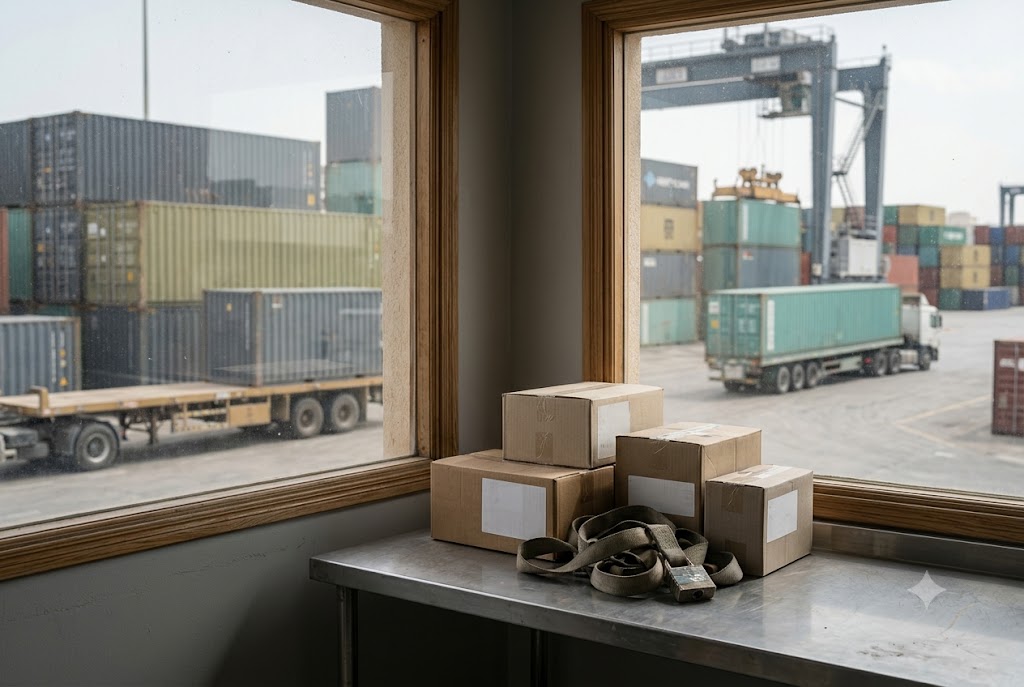
One Oman company may carry out import, export, re-export and wholesale work. These activities can often sit under one Commercial Registration, called a CR.
The company still needs the correct activity codes. Its products, customers and operating model must match those activities. A broad phrase such as “general trading” does not approve every product.
Some combinations are simple. Others need external approvals or cannot be used by a foreign-invested company. The checks should happen before registration, leasing premises or ordering goods.
Check the activity structure in this order
- List every product the company will trade.
- Separate import, export, wholesale and retail work.
- Find the exact activity for each product group.
- Check foreign-ownership and regulator restrictions.
- Check customs, standards and product permits.
- Confirm that the premises support the activities.
You can search Oman commercial activity codes by English title, Arabic title or code. The tool helps with screening. It does not prove ownership eligibility or final approval.
What combining activities under one CR means
A CR is the official company record. It shows the legal entity and its registered commercial activities.
One company can often hold several connected activities. For example, it may import approved electrical products, sell them wholesale in Oman and export stock to another country.
Each activity must support real work carried out by the company. The CR should not contain unrelated activities added only for possible future use.
Combining activities also does not merge their legal conditions. One activity may be open, while another needs a regulator, warehouse or different ownership structure.
Compatibility at a glance
| Planned combination | General position | Main check |
|---|---|---|
| Import and wholesale of the same products | Often compatible | Product-specific activities and import controls |
| Import, wholesale and export of the same products | Often compatible | All required activities, customs registration and product permits |
| Import and re-export | May be compatible | Customs procedure, storage model and destination rules |
| Wholesale and retail | Separate activities | Retail activity, shop or online-sales requirements |
| Trading and product installation | Separate activities | Technical service activity, staff and premises |
| Trading and manufacturing | Separate operating models | Industrial licence, facility and production approvals |
| Unrelated regulated product groups | Possible only after separate checks | Different regulators, permits and compliance records |
| An open activity and a prohibited activity | Not compatible in a normal foreign-invested structure | Exact Negative List code and ownership rule |
Simple rule: Start with the products and sales model. Do not start with the widest activity title available.
Import activities
Import means bringing goods into Oman from another country. Goods released for the local market enter Oman’s customs territory.
The company’s activities should cover the real product category. An activity for importing or trading one type of product may not cover another product group.
The product must also be allowed to enter Oman. Some products need permits, conformity checks, testing, Arabic labels or health documents.
Import activity and product approval are different
A registered trading activity gives the company a commercial scope. It does not give automatic approval for every shipment.
Oman Customs and the relevant product authority may check the HS code, origin, value, quantity, permit and technical documents. The goods may also be inspected.
| Product example | Possible additional control |
|---|---|
| Food and agricultural products | Health, plant, veterinary, label or food-safety requirements |
| Electrical products and toys | Standards, conformity or testing requirements |
| Chemicals and cosmetics | Product classification, safety documents and regulator approval |
| Telecommunications equipment | Telecommunications control or release requirements |
| Fire-safety equipment | Civil Defence and Ambulance Authority approval |
| Medicines and medical products | Health-sector registration and import controls |
The correct authority depends on the exact goods. A similar product can follow a different rule because of its ingredients, use, voltage, material or HS classification.
Export and re-export activities
Export
Export normally means sending goods from Oman to another country. The goods may be made in Oman or previously brought into the country.
The company should check the export activity, customs declaration and destination-country rules. Some products need an export certificate or approval before departure.
Re-export
Re-export normally involves goods that entered Oman and later leave the country. The customs history and procedure must support that movement.
A re-export plan should explain where goods arrive, where they stay and whether they enter the local market. It should also identify the final buyer and destination.
Re-export does not automatically remove customs or tax duties. The result depends on the customs procedure, documents, timing and treatment of the goods.
Mainland or free zone?
A mainland company may suit direct wholesale sales inside Oman. A free-zone company may suit storage, processing and re-export work.
Moving goods from a free zone into mainland Oman can create customs, VAT and local-product requirements. The selected zone’s rules must be checked separately.
Wholesale activities
Wholesale means selling goods mainly to businesses, distributors, shops or other professional buyers. It is different from normal retail sales to final consumers.
Wholesale activities are often product-specific. A company trading vehicle parts may need a different activity from a company trading food, chemicals or construction materials.
The company should also confirm its storage and delivery model. Some goods need a suitable warehouse, cold storage, safety controls or municipality approval.
Wholesale does not automatically include retail
A wholesale company should not assume it can open a shop or sell directly to consumers. Retail, e-commerce and customer-facing premises can require separate activities and licences.
The invoice model should also match the activities. Regular consumer invoices can show that the company is carrying out retail work, even when it describes itself as a wholesaler.
General trading versus registered activities
“General trading” is often used as a company name, business description or commercial phrase. It should not be treated as unlimited legal permission.
The activities recorded on the CR remain important. Product regulators, Customs, municipalities and banks may review those activities.
| Document or phrase | What it does | What it does not do |
|---|---|---|
| Company name | Identifies the business | Does not create an activity licence |
| General trading description | Explains a broad business model | Does not cover every product |
| CR activity | Records approved commercial scope | Does not replace product permits |
| Bayan registration | Creates customs-system access | Does not approve every shipment |
| Product permit | Supports the controlled product or shipment | Does not add an activity to the CR |
A safer structure uses clear activities for the company’s main product groups. New activities can be reviewed later when the business has a real reason to add them.
Restrictions and external approvals
Many commercial activities allow foreign investment. Some activities are prohibited for foreign investors. Other activities are open in principle but need a regulator’s approval.
Review the exact code against the current restricted activities for foreign investors in Oman. A nearby or similar activity may have a different ownership position.
Examples needing special care
| Activity | Published activity code | Current legal concern |
|---|---|---|
| Wholesale of fruit and vegetables | 463001 | Listed among activities prohibited for foreign investment |
| Wholesale of live livestock | 462002 | Listed with an exception for qualifying large-production projects |
| Wholesale of fish and marine animals | 462005 | Listed among activities prohibited for foreign investment |
| Wholesale of fish products | 463009 | Listed among activities prohibited for foreign investment |
| Customs clearance offices | 522901 | Listed among activities prohibited for foreign investment |
These examples do not cover the complete list. The legal decisions, amendments and live government system should be checked before submission.
An activity outside the Negative List can still need approval. This may apply to food, agriculture, medicines, chemicals, telecom equipment, energy products and safety equipment.
Foreign ownership, activity approval and product approval are three separate checks. Passing one check does not confirm the others.
Customs and product controls
A trading company may need registration with Oman Customs before using Bayan for commercial customs work. The detailed guide to Oman customs registration and Bayan account explains the company, user and access stages.
Bayan is the electronic customs system used by the Directorate General of Customs. It supports declarations, permits, payments and connected customs procedures.
An active Bayan position does not guarantee cargo release. Each shipment can still require:
- A correct HS classification.
- A commercial invoice and packing list.
- Transport and origin documents.
- Required product permits.
- Standards, testing or conformity evidence.
- Correct customs value and tax treatment.
- Inspection or sampling where required.
Oman Customs provides a permit directory for controlled goods. It includes services from several authorities. Requirements should be checked before the supplier sends the goods.
A company needing help with one shipment can request customs clearance support in Oman. Customs clearance is different from operating a customs-clearance office.
Before shipping: Confirm the activity, HS code, permit, label, test documents and importer details. A late check can create storage, return or disposal costs.
Banking-model clarity
A bank may ask how the trading company will make and receive payments. A wide list of unrelated products can make the business model harder to explain.
The company should prepare a clear trading profile. It may include:
- Main product groups.
- Supplier and customer countries.
- Expected monthly transaction values.
- Required payment currencies.
- Shipping routes and Incoterms.
- Source of funds and working capital.
- Sample contracts, invoices or purchase orders.
International trading without goods entering Oman can receive extra questions. The company should explain its role, control over the transaction and reason for using an Oman account.
Oman Verified provides business banking preparation support for document and business-model readiness. Each bank completes its own compliance review and may approve, request more information or decline.
Short company and residence pathway
The trading structure should be confirmed before the company application starts.
- Define the products, markets and customers.
- Choose the required commercial activities.
- Check ownership and external approvals.
- Select mainland or free-zone registration.
- Register the company and complete required licences.
- Prepare customs, tax, premises and banking records.
- Apply separately for eligible owner residence if needed.
The Oman company setup advisory service can review the proposed activities, ownership, structure and document path. Registration does not guarantee residence, banking, Customs or product approval.
Costs and planning tools
There is no single reliable cost for every trading company. The final budget depends on the entity, activities, shareholders and required approvals.
| Cost group | Possible items |
|---|---|
| Company | Registration, Chamber record, licences and renewals |
| Premises | Office, warehouse, cold storage or approved facility |
| Product | Permits, testing, conformity, labels and samples |
| Customs | Declarations, broker work, duty, VAT and inspections |
| Logistics | Freight, terminal handling, storage, insurance and delivery |
| Operations | Staff, accounting, banking and compliance records |
You can estimate general mainland company costs before requesting a detailed review. The estimator does not calculate product permits, stock, warehouse, freight, guarantees or sector approvals.
Common mistakes
- Using “general trading” without checking product activities.
- Registering import but forgetting the wholesale activity.
- Using wholesale activities for direct retail sales.
- Adding a prohibited activity to a foreign-owned structure.
- Assuming Bayan registration approves every product.
- Ordering goods before checking import permits.
- Using the supplier’s HS code without an Oman review.
- Signing a warehouse lease before checking its permitted use.
- Mixing trading, installation and manufacturing without separate activities.
- Giving a bank an unclear list of products and countries.
- Assuming re-export always removes customs and VAT costs.
- Treating a free-zone company as having automatic mainland access.
Practical checklist
- Write the exact name of every product group.
- Identify the country of origin and destination.
- Define whether goods enter mainland Oman.
- Separate import, export, re-export, wholesale and retail.
- Find the current activity code for each operation.
- Check the code against the complete Negative List.
- Identify the product regulator.
- Check HS classification and customs treatment.
- Confirm permits before ordering goods.
- Confirm warehouse, shop or office requirements.
- Prepare supplier, customer and transaction evidence.
- Build duty, VAT, freight and storage into the budget.
- Confirm all live requirements before submission.
Frequently asked questions
Can import, export and wholesale activities use one Oman CR?
Often, yes. Compatible activities can often sit under one company. Each activity must be available, support the real business and meet its ownership and licence rules.
Does general trading allow a company to trade every product?
No. A general description does not replace the exact CR activities, product permits, customs controls or sector approvals.
Does an import activity include wholesale sales?
Do not assume it does. Importing goods and selling them wholesale are different parts of the business model. The CR should contain the activities required for both parts.
Can a wholesaler sell directly to consumers?
Retail sales may need a separate activity and suitable premises. E-commerce can also require its own licence and consumer-law compliance.
Can a foreign-owned company carry out every wholesale activity?
No. Some wholesale activities appear on Oman’s Negative List. Others may be regulated. The exact code and current ownership rule must be checked.
Does a Bayan account approve all imports?
No. Bayan access allows the company to use customs-system functions. Each product and shipment remains subject to activities, permits, declarations and Customs review.
Can the same company import goods and re-export them?
It may be possible with the correct activities and customs procedure. The goods, storage route, documents and destination rules must support the model.
Does re-export mean no duty or VAT is payable?
Not automatically. Customs and tax treatment depends on the procedure used, the movement of goods and the supporting records.
Is a mainland or free-zone company better for trading?
Mainland may suit regular sales inside Oman. A free zone may suit storage, processing and re-export. The correct option depends on where goods and customers are located. Port-led operations can also evaluate SOHAR Freezone company setup.
Does company registration guarantee a bank account or residence?
No. Banks and immigration authorities complete separate reviews. Company registration does not guarantee either result.
Related Oman Verified guides and services
Trade agreements
Read about Oman’s trade agreements when reviewing preferential tariffs and origin rules.
Registration mistakes
Review common mistakes in company registration in Oman before submitting the final structure.
Activity restrictions
Check the complete foreign-investment Negative List by activity code before choosing shareholders.
Who Is the Importer of Record?
The importer of record is the party legally responsible for the import declaration, customs classification, permits, duty and VAT treatment, document accuracy and post-clearance records. Registering import or wholesale activities on a Commercial Registration does not by itself make every shipment compliant; the importer must also have the required Bayan access and product approvals.
A foreign supplier that does not open an Oman entity may need a qualified local importer, distributor or importer-of-record arrangement. The contract should state who owns the goods, appears on customs documents, pays landed costs and carries product-compliance risk. Compare the routes for selling in Oman without opening a local company, the Bayan registration guide and the customs clearance guide.
Conclusion
Import, export, re-export and wholesale activities can often operate under one Oman company. The activities must form a clear and legally permitted business model.
Start with the products, customers and movement of goods. Then confirm the activity codes, ownership, product approvals, Customs path, premises and bank profile.
A narrow and accurate structure is usually easier to license, explain and operate than a long list of unrelated activities.
Oman-side customs and licensing coordination
Oman Verified coordinates client-side customs, import, licensing and logistics preparation and follow-up in Oman with the relevant authorities and authorised service providers. It is not MOCIIP, Oman Customs, the Royal Oman Police, the Tax Authority, a municipality, a free-zone authority, a bank or a product regulator.
This guide does not guarantee company registration, foreign ownership, licences, residence, banking, customs registration, product permits, tax treatment, inspection or cargo release. Final decisions remain with the competent authorities and institutions.
Official sources
- Ministry of Commerce, Industry and Investment Promotion — Oman Business Platform, commercial registration and activity licensing.
- Ministry of Justice and Legal Affairs: Ministerial Decision 435/2024 — amendment to activities prohibited for foreign investment.
- Oman Customs: Register a Company in Bayan — company customs registration and required records.
- Oman Customs: Users Registration in Bayan — company-user registration procedure.
- Oman Customs: Permit Directory — product permits and connected government authorities.
- Oman Customs: Import Controls — prohibited goods, restricted goods and supporting documents.
- Oman Customs: Bayan Declaration Guide — import, export and transit declarations through the single-window system.
- Oman Tax Authority: VAT Guidelines — VAT registration, imports, exports and special-zone guidance.
- Oman Investment Authority: Investing in Oman — foreign-investment and ownership information.
Official public information reviewed on July 28, 2026. Confirm the current requirements in the live government systems before submission.