
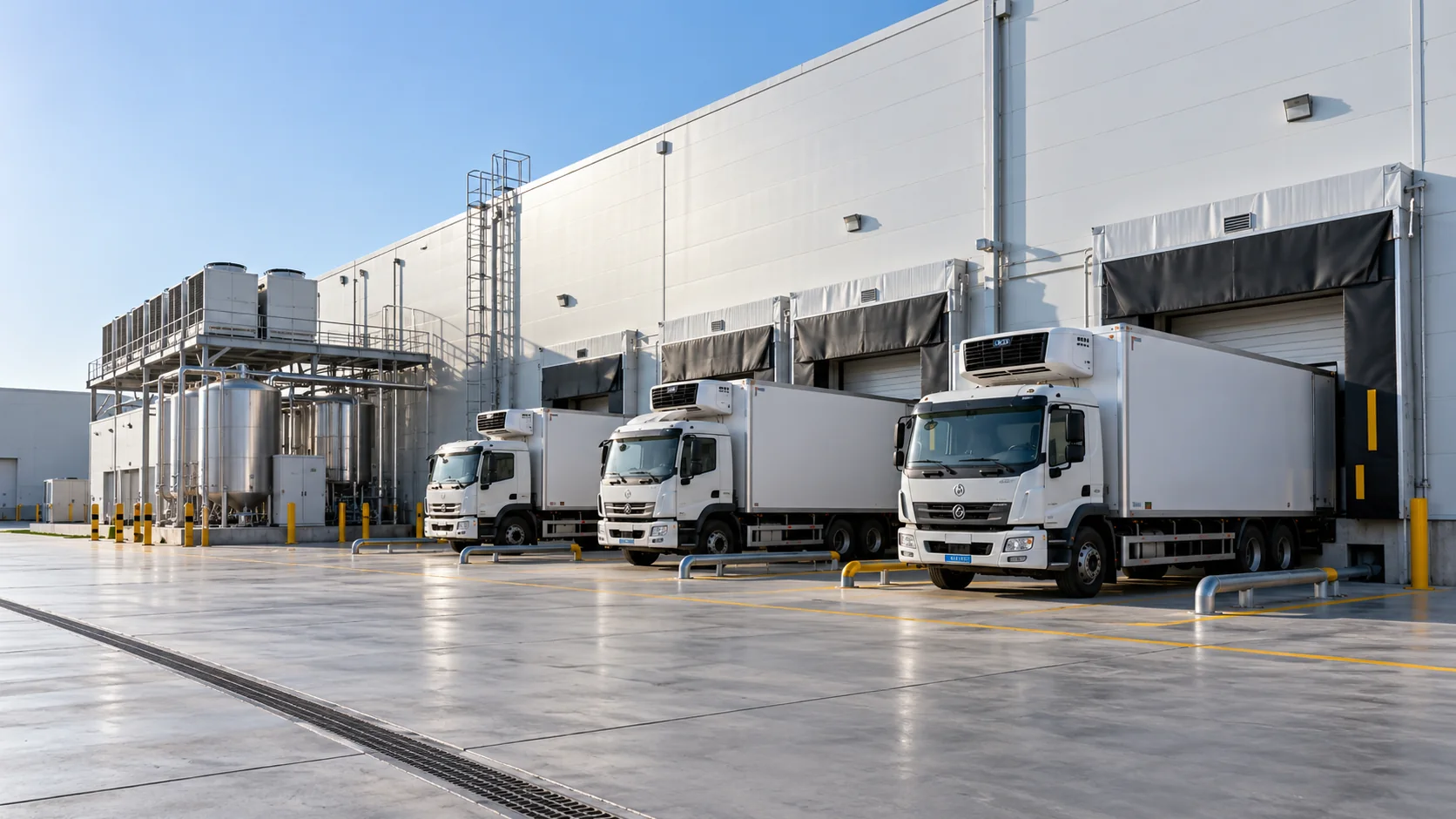
Salalah Free Zone combines food-processing opportunities with port access, regional distribution, industrial utilities and a location close to fisheries and agricultural supply chains.
For the complete Salalah investment framework, see the Salalah Free Zone Investor Guide.
A food or cold-chain project becomes strongest when raw-material sourcing, production, temperature control, food safety, warehousing and export routes are designed together.
For the activity and facility framework, see Salalah Free Zone Activities, Licences and Facility Requirements.
1. Why Salalah fits food-processing projects
SFZ currently highlights food processing as a target sector and points to access to Arabian Sea fisheries, agricultural resources, nearby consumer markets, Port of Salalah, airport connectivity and industrial utilities.
| Project advantage | Operational value |
|---|---|
| Marine resources | Supports seafood processing, freezing and export. |
| Agricultural inputs | Supports food manufacturing and ingredient sourcing. |
| Port access | Connects imported raw materials and exported finished goods. |
| Regional markets | Supports GCC, Yemen and East Africa distribution. |
| Utilities | Power, water and gas support industrial food operations. |
| Warehousing | Ambient and controlled-storage models support inventory planning. |
2. Food-processing project types
- Seafood processing and freezing
- Meat and poultry processing
- Fruit and vegetable processing
- Packaged and dry foods
- Beverage production
- Ingredients and food inputs
- Cold storage and frozen distribution
- Food packaging and labelling
3. Cold-chain design
| Cold-chain stage | Design focus |
|---|---|
| Inbound raw material | Temperature at receipt, inspection and quarantine. |
| Processing | Hygiene zoning, process temperature and product flow. |
| Blast chilling / freezing | Capacity, pull-down time and energy load. |
| Cold storage | Temperature range, racking, monitoring and backup power. |
| Dispatch | Loading dock, staging time and reefer interface. |
| Transport | Refrigerated vehicle/container and temperature record. |
Warehouse and land choices are covered in the Salalah premises guide.
4. Food-safety and facility zoning
Food projects are designed around clean material flow, hygiene, pest control, drainage, waste handling, employee welfare and product segregation. The project file can map raw materials, processing, packing, cold rooms and dispatch as separate functional zones.
5. Utilities and refrigeration load
Cold-chain projects often carry higher electrical demand than standard warehousing. The utility schedule should include compressors, evaporators, blast freezers, backup systems, processing equipment, hot water and cleaning systems.
Size production, cold storage and dispatch together.
Use one capacity model across the production and distribution flow.
Production
Production capacity and the product flow.
Cold storage
Inventory days, temperature zones and storage space.
Dispatch
Dispatch frequency, staging and the reefer interface.
Shared utility and control assumptions
Refrigeration equipment, energy load, monitoring and backup systems.
Utility and environmental planning is covered in the Salalah facility-development guide.
6. Environmental and waste planning
- Organic by-products and solid waste
- Wastewater and cleaning effluent
- Odour and process ventilation
- Refrigerants and leak management
- Packaging waste
- Energy efficiency
- Emergency response and product recall arrangements
7. Export and regional distribution
Food products can be built around export, re-export or mixed regional distribution. The logistics file links food approvals, cold-chain records, customs declarations, origin documents and destination-market requirements.
For regional cargo planning, see Regional Distribution and Re-export from Salalah Free Zone.
8. Food-project readiness checklist
- Product categories defined
- Raw-material sources mapped
- Process flow prepared
- Cold-chain temperatures specified
- Facility size and zoning prepared
- Power and water loads estimated
- Food-safety approvals mapped
- Environmental inputs prepared
- Packaging and labelling plan ready
- Export and destination-market requirements mapped
9. Frequently asked questions
Does SFZ target food-processing investment?
Yes. Food Processing is listed among SFZ’s current target sectors and business opportunities.
Can cold storage be part of the project?
Yes. Cold storage can be integrated into a food-processing, distribution or dedicated cold-chain project, with temperature, utility and product requirements built into the facility.
Can food products be re-exported from Salalah?
Yes. The project can use free-zone warehousing and Bayan re-export procedures with the required food, customs and destination-market documents.
What should be sized first: the cold store or production line?
Size them together using production capacity, inventory days, temperature zones and dispatch frequency.
Keep entity formation separate from the industrial approval file: the Oman company registration guide explains the wider structure and company-setup workstream.
10. Official sources
- Salalah Free Zone — food industry business opportunities
- Salalah Free Zone — land and utilities
- Salalah Free Zone — leasable facilities
Official public information reviewed on October 7, 2026.