
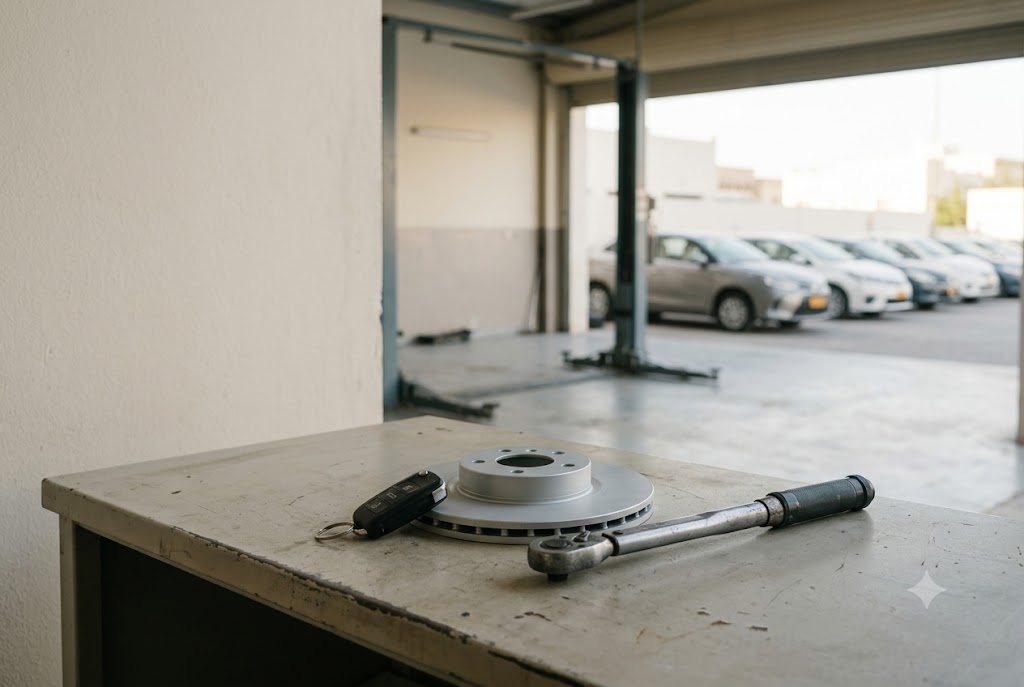
A car rental company, a repair workshop and a car wash are different businesses in Oman. They may serve the same vehicle market, but they do not automatically use the same commercial activity, premises or approval route.
This parent guide explains the main models. It covers passenger-car rental, mechanical repair, body and paint, electrical repair, tyres, oil service, washing, detailing, mobile service and fleet management. It also explains where the models can connect and where they must stay separate.
The correct route depends on the exact service, the owners, the location, the vehicles, the equipment and the way customer vehicles will be handled. Check the live Oman Business Platform and the responsible authority before signing a lease or buying a fleet.
Start with the business model, not the company name
- Rental: you give a vehicle to a customer for an agreed period.
- Workshop: you inspect, maintain or repair a vehicle.
- Body and paint: you perform collision, panel, preparation or refinishing work.
- Quick service: you provide electrical, tyre, battery, oil or similar work.
- Wash and detailing: you clean, polish or protect vehicles.
- Mobile service: your team travels to the vehicle.
- Fleet management: you manage records, maintenance, drivers or suppliers for a fleet.
One company may hold more than one approved activity. This does not mean that one licence, one site or one operational approval covers every model.
Business Models at a Glance
| Business model | Main activity logic | Typical premises logic | Main extra checks |
|---|---|---|---|
| Passenger-car rental | Rental of passenger land transport without a driver | Customer office, fleet parking and vehicle handover area | MTCIT licence, rental-vehicle approval, ROP registration, operating card, insurance and contracts |
| Mechanical workshop | Vehicle inspection, maintenance and mechanical repair | Approved workshop or industrial site | Municipality, civil protection, equipment, waste and technician requirements |
| Body and paint | Panel, collision, preparation and refinishing work | Purpose-suitable industrial workshop | Ventilation, paint and solvent control, fire safety and environmental review |
| Electrical, tyre and oil service | Separate service activities according to the work offered | Approved service shop or workshop | Foreign-ownership status, waste handling, equipment and site approval |
| Car wash and detailing | Vehicle cleaning, polishing and appearance care | Location accepted for washing or detailing | Municipality location rules, drainage, water use and waste controls |
| Mobile auto service | Approved mobile or field service matching the real work | Operational base plus properly equipped service vehicle | Where work may be done, public-space rules, fluids, waste and safety |
| Fleet management | Management, coordination or software; separate activities if vehicles are rented, transported or repaired | Office, control room or fleet base | Contract scope, data, insurance, labour and any transport approvals |
1. Starting a Car Rental Business in Oman
A passenger-car rental business gives vehicles to customers without a driver. It is a regulated land-transport activity. A normal Commercial Registration by itself is not the full operating route.
Main licensing sequence
- Select the correct rental activity in the company record.
- Confirm that the ownership structure is accepted for that activity.
- Secure premises that can support customer service, records, vehicle handover and fleet parking.
- Apply for the MTCIT licence for renting passenger land-transport vehicles without a driver.
- Obtain Ministry approval to register each vehicle for rental activity.
- Complete the vehicle-registration process with the Royal Oman Police.
- Obtain the required operating card after commercial vehicle registration.
- Put the correct insurance, rental contract, deposit process and vehicle-control system in place.
Current Gov.om services separate the business licence from the approval to register a rental vehicle. The rental-vehicle registration service also states that the operating card is obtained after the ROP registration process. The official pages currently list an OMR 30 company fee for rental-vehicle registration approval and an OMR 30 company fee for a commercial vehicle operating card. Confirm the live fee and service scope before payment.
Do not build the plan around an assumed minimum fleet. Public pages can change, and a licence review may consider the business plan, vehicle type, parking, operating capacity and current regulations. Confirm the live requirement directly in the official system.
Rental fleet and customer controls
- Record the condition of the vehicle at handover and return.
- Verify the permitted driver and driving-licence details.
- State the deposit, insurance excess, mileage, fuel and late-return terms.
- Explain who pays traffic fines, tolls, recovery and damage charges.
- Set rules for additional drivers, off-road use and cross-border travel.
- Keep maintenance, inspection, registration and operating-card dates for every vehicle.
- Use a policy that expressly covers the real commercial rental use.
A clear rental agreement protects both sides. General conditions should be easy to read. The company should not hide important charges in a separate document that the customer does not receive.
2. Opening a Vehicle Repair Workshop
A repair workshop is not an extension of a rental office. It is a premises-based technical operation. The correct activity depends on the work done inside the workshop, not only on the words “auto service” in the brand name.
Define the repair scope
- Routine maintenance and inspections
- Engine, transmission, brake and suspension work
- Diagnostics and fault finding
- Air-conditioning work
- Electrical and electronic repair
- Tyre service and wheel work
- Oil and fluid replacement
- Body, collision and paint work
These services may use separate activities. Some may also have a different foreign-ownership status. Use the search Oman commercial activity codes tool for early research, but treat the result as a search aid only. It does not prove that the activity is open to foreign ownership or that a regulator will approve the project.
Workshop premises
The site must be suitable for the actual work. A small retail unit may not be accepted for lifts, mechanical repair, bodywork, painting, oil storage or vehicle movement. Check the municipality, landlord, building use, access, parking, drainage, power load and fire-safety route before signing the lease.
Larger workshops, yards and technical service bases may need an industrial location. An industrial location advisory in Oman can help compare customer access, plot or unit suitability, utilities, lease conditions and approval routes.
Workshop equipment and technicians
- Use equipment designed for the vehicle weight and work type.
- Keep lift inspection, calibration and maintenance records where applicable.
- Separate customer areas from active work bays.
- Control keys and access to every customer vehicle.
- Use trained technicians for diagnostic, electrical, mechanical and paint work.
- Provide personal protective equipment and safe chemical storage.
- Keep job cards, quotations, approvals, parts records and invoices.
3. Body Repair and Vehicle Painting
Body repair and painting create different risks from normal mechanical work. The project may involve cutting, welding, sanding, fillers, paint, thinners, compressed air, spray equipment and contaminated filters.
The premises should be reviewed for ventilation, fire separation, chemical storage, worker protection, noise, overspray and waste. A paint booth or preparation area must not be treated as a simple decoration item. Its design and operation should match the safety and environmental requirements that apply to the site.
Body-and-paint planning questions
- Will the business perform panel beating, structural repair or only cosmetic work?
- Will welding or hot work take place?
- What paint and solvent volumes will be stored?
- How will air emissions, filters, sludge and contaminated materials be handled?
- Is the proposed building approved for this use?
- Which environmental category and civil-protection requirements apply?
4. Electrical, Tyre, Battery and Oil Services
Quick-service activities look simple, but they should not be grouped under a general repair label without checking the live activity list. Electrical repair, battery service, tyre repair, wheel work and oil replacement may be recorded as separate commercial activities.
Foreign investors should review the current negative list before selecting these activities. Oman has updated the list more than once, including amendments in 2023 and 2024. Use the guide to restricted activities for foreign investors in Oman, then confirm the result in the live government system. Do not rely only on an old list or a copied activity code.
Operational controls
- Store new and used oils in controlled areas.
- Keep used batteries upright and protected from damage.
- Separate tyres, filters, oily materials and general waste.
- Use suitable electrical testing and battery-charging equipment.
- Record customer approval before adding parts or work.
- Issue a clear invoice with the service and parts data.
5. Car Wash and Detailing
Car washing, cleaning, polishing and detailing need their own activity and site review. Water, drainage, chemicals, noise, vehicle queues and nearby businesses can affect municipal approval.
In Muscat, the municipality has stated that new car-cleaning and polishing licences are directed to industrial zones or petrol stations, subject to the relevant conditions. This is a Muscat-specific location rule and should not be copied as a nationwide rule. Check the municipality responsible for the exact site.
Different detailing models
| Model | Main site question | Main operating risk |
|---|---|---|
| Automatic or tunnel wash | Water, drainage, queue and equipment layout | High water flow, maintenance and traffic movement |
| Manual wash | Approved washing area and wastewater control | Runoff, chemicals and inconsistent processes |
| Dry or waterless detailing | Whether the location accepts the activity | Chemical use, waste cloths and misleading “no-water” assumptions |
| Paint protection and polishing | Clean enclosed work area | Dust, product handling and customer expectations |
| Mobile detailing | Where the service vehicle may legally work | Public-space use, runoff and waste removal |
6. Mobile Auto Services
A service van does not remove the need for a correct commercial activity. It also does not give the company a general right to repair vehicles on roads, public parking areas or any customer site.
Define the mobile work carefully. Battery replacement, minor diagnostics, tyre assistance, cleaning and mechanical repair can follow different rules. Some work may create oil, coolant, damaged parts or hazardous waste that cannot be left at the customer location.
- Confirm that the selected activity allows the proposed mobile model.
- Check whether an approved operational base is still required.
- Fit the service vehicle for safe tools, parts and chemical storage.
- Control roadside and public-space work.
- Carry spill-control materials and collect all waste.
- Set limits for work that must be moved to a workshop.
- Use a digital job card with location, customer approval and photographs.
7. Fleet Management
Fleet management can mean many things. A company may only provide records, maintenance scheduling, fuel reporting and supplier coordination. Another company may own the fleet, rent vehicles, provide drivers, transport passengers or operate a workshop.
The licence follows the real service. Calling the business “fleet management” does not replace a rental, transport, labour or workshop activity when the company actually performs those functions.
Possible fleet-management scope
- Vehicle records and renewal alerts
- Preventive-maintenance planning
- Workshop and supplier coordination
- Fuel and mileage reporting
- Tyre and battery lifecycle tracking
- Accident and insurance administration
- Driver assignment and document control
- Vehicle replacement and disposal planning
If the company receives customer deposits, fleet-finance payments or large operating flows, prepare the ownership, contracts, source-of-funds records and business explanation needed for business banking preparation support. Bank approval remains independent.
8. Premises, Safety and Environmental Controls
Choose the site after the activity review
The lease is one of the highest-risk early commitments. A location can be affordable and still be wrong for the activity. Confirm the building use, landlord consent, access, parking, municipality conditions, civil-protection route, drainage, power and environmental requirements first.
Fire and civil protection
Workshops may use fuel-contaminated parts, oils, batteries, welding equipment, compressed gases, electrical tools and paint products. The fire-safety design should match the actual risk. Required alarms, extinguishing systems, exits, storage controls and approvals depend on the premises and work type.
Used oil and workshop waste
A normal workshop produces waste. It is not automatically a licensed waste-management company. However, it must store and hand over waste safely. A separate Environment Authority waste-management licence applies to businesses that transport, collect, treat, store, reuse or finally dispose of regulated waste as a commercial activity.
- Keep used oil in closed, labelled and spill-controlled containers.
- Do not discharge oil, coolant, paint residue or chemicals into soil, storm drains or normal drainage.
- Separate batteries, filters, tyres, oily cloths and paint waste.
- Use collectors and handlers that hold the required approvals.
- Keep collection notes, contracts and transfer records.
- Confirm whether the workshop itself needs an environmental permit for its activity and location.
Important: Do not copy an environmental category or permit fee from another workshop. The Environment Authority classifies the real activity, scale, location and environmental impact.
9. Insurance, Contracts and Customer Vehicles
Rental insurance
Tell the insurer that the vehicle will be used for rental. Do not use a private-use policy for an undeclared commercial rental operation. Check the coverage, excess, excluded drivers, off-road use, natural hazards, replacement vehicle, cross-border use and claims procedure.
Workshop custody
A workshop controls customer vehicles, keys and sometimes valuable parts. Review public liability, employer risks, premises risks and cover for vehicles in the company’s care, custody or control. The exact policy depends on the insurer and business model.
Job cards and customer approval
- Record the vehicle, mileage, fuel level and visible condition.
- List the customer complaint and requested work.
- Separate inspection fees from repair costs.
- Obtain approval before extra work or parts.
- State the expected completion time and possible delays.
- Explain warranty terms for parts and labour.
- Issue the required invoice with clear service data.
- Record collection, payment and the person receiving the vehicle.
Oman’s Consumer Protection Authority has reported enforcement cases involving poor vehicle-repair service and missing or incomplete invoices. Good records are not only an internal management tool. They are part of customer protection and dispute control.
10. Company, Residence, Labour and Banking Pathway
After defining the model, the founders can choose the legal company route. The short process is activity review, ownership review, company registration, premises approval, sector licences, tax registration, labour setup and operational readiness. For a complete structure review, use Oman company setup advisory.
Owners, managers, drivers and technicians follow different immigration and employment routes. Company registration does not automatically issue residence or work permission. Use employee visa coordination in Oman after the company role, labour approval and job title are checked.
Workshops and fleet businesses can need technicians, drivers, customer-service staff and supervisors. Plan job titles, Omanisation, work permits, employment records and payroll before recruitment. Workforce compliance support in Oman can help coordinate the Ministry of Labour route. The related guide to Omanisation requirements for companies explains the general concept.
11. Costs and Planning Tools
There is no reliable single startup figure for this parent category. A rental fleet and a paint workshop have very different capital needs. Build the budget from the model below.
| Cost group | Examples | Why it changes |
|---|---|---|
| Company and licence costs | CR, activities, municipality, transport, environmental and safety approvals | Legal form, activities, location and regulators |
| Premises | Deposit, rent, fit-out, parking, drainage, power and signage | Office, workshop, yard, wash or paint use |
| Fleet | Purchase, finance, registration, operating cards and insurance | Vehicle count, type, age, use and finance terms |
| Workshop equipment | Lifts, diagnostics, tyre equipment, tools, paint systems and safety equipment | Service depth, brands and workshop capacity |
| People | Recruitment, visas, wages, training, uniforms and accommodation | Job titles, skills, shifts and Omanisation |
| Compliance | Accounting, tax, waste collection, inspections and renewals | Turnover, activity, waste and licence conditions |
| Working capital | Parts, consumables, deposits, repairs, claims and slow customer payments | Fleet downtime, credit terms and stock level |
The estimate company and investor residence costs tool covers general mainland company and investor-residence items only. It does not calculate fleet purchase, workshop construction, equipment, utilities, insurance, parts, waste contracts or sector approvals.
12. When This Guide Should Become Separate Posts
This is a parent guide. Search demand and regulatory depth may justify separate guides for:
- How to start a passenger-car rental company in Oman
- How to open a mechanical repair workshop in Oman
- How to start a body and paint workshop
- How to open a car wash and detailing business
- How to start a mobile auto-service company
- How to build a fleet-management business
Car rental is the strongest candidate for a standalone post because it has a separate land-transport licence, vehicle-registration approval, ROP process, operating cards, fleet controls and customer-contract issues.
13. Common Mistakes
- Using one broad activity for every service. Rental, repair, wash, tyre, oil and mobile work may need separate activities.
- Signing a lease before site approval. The building may not support workshop, wash or paint use.
- Buying vehicles before confirming the rental route. Registration, vehicle use and operating approvals must align.
- Using old foreign-ownership information. The negative list has been amended and can change again.
- Treating a mobile van as permission to work anywhere. Location and waste rules still apply.
- Ignoring used oil, batteries and paint waste. Safe storage and approved handover are operating requirements.
- Using private insurance for commercial use. The declared use must match the real operation.
- No customer vehicle condition record. This creates avoidable disputes.
- No approval for extra repairs. A quotation is not permission to perform unlimited additional work.
- Underbudgeting downtime and working capital. Vehicles and workshop bays do not produce revenue when they are unavailable.
14. Practical Setup Checklist
- Write one sentence describing the exact business model.
- List every service the company will sell.
- Separate rental, transport, repair, wash, trade and management functions.
- Check the live commercial activity for each function.
- Check current foreign-ownership restrictions.
- Confirm the regulator for every activity.
- Prepare a site requirement sheet before property search.
- Obtain preliminary location guidance before signing a lease.
- Map civil-protection, municipality and environmental requirements.
- Prepare the equipment and technician plan.
- Prepare rental agreements or workshop job-card templates.
- Get insurance quotations based on the real use.
- Build a complete startup and six-month operating budget.
- Plan tax, labour, Omanisation and immigration steps.
- Do not start operations until all required licences and vehicle approvals are active.
15. Frequently Asked Questions
Can one company operate car rental and a repair workshop?
It may be possible for one company to hold more than one approved activity, but the rental and workshop routes remain separate. The company may need different premises, regulator approvals, vehicle processes and operating controls for each part.
Does a Commercial Registration allow the company to rent cars?
No. The Commercial Registration is the company foundation. Passenger-car rental without a driver also follows the MTCIT licensing route, rental-vehicle registration approval, ROP registration and operating-card requirements.
Is there a fixed minimum rental fleet?
Do not rely on an informal number. Confirm the current MTCIT and Naql requirements for the exact rental model before buying vehicles or signing finance agreements.
Can a foreign investor open every type of auto service?
No general answer covers every activity. Some activities may be open, restricted, reserved for Omanis or subject to conditions. Check the current negative list and the live Oman Business Platform for each exact activity.
Can I open a car wash in a normal commercial shop?
Not automatically. The municipality must accept the location and use. In Muscat, current published guidance directs new car-cleaning and polishing licences to industrial zones or petrol stations, subject to conditions.
Does a workshop need a waste-management licence?
A workshop that only generates waste is not automatically a waste-management operator. It must still store and transfer waste safely. A separate waste-management licence applies when a business transports, collects, treats, stores, reuses or disposes of regulated waste as an activity.
Can a mobile mechanic work anywhere in Oman?
No. The company needs an activity that matches the service, and the work location must be lawful and safe. Public roads, parking areas, customer premises, fluids and waste can create extra restrictions.
How much does an auto business cost to start?
The cost depends on the model. A small management office, a rental fleet, a tyre shop and a body-and-paint workshop have very different costs. Build the budget from company, licence, premises, fleet, equipment, people, compliance and working-capital items.
Related Oman Verified Guides
Employment Visa Process
Understand the general sequence after labour approval for eligible drivers, technicians and other employees.
Restricted Job Titles
Check why the proposed employee title must match current Ministry of Labour and immigration rules.
Conclusion
The first decision is not whether to register an “auto company.” It is which vehicle business the company will actually operate. Rental, repair, paint, quick service, washing, mobile work and fleet management each have their own activity and approval logic.
A strong setup starts by separating these functions, checking ownership and location rules, and building the operational system before spending on vehicles, equipment or fit-out.
International setup support: Oman Verified supports international founders and investors with Oman-side car-rental, vehicle-maintenance and auto-service setup, licensing and follow-up. Insurance, banking, municipality and licensing functions are completed through the relevant insurers, banks, authorities and service providers, with current fees, ownership rules, activity names and approval routes checked against the live case.
Official Sources
- Gov.om — Licence to rent passenger land-transport vehicles without a driver
- Gov.om — Approval to register rental vehicles
- Gov.om — Vehicle operating card service
- MTCIT — Land Transport Law
- MTCIT — Executive Regulations on the Management and Operation of Land Transport
- Ministry of Justice and Legal Affairs — Ministerial Decision 209/2020
- Ministry of Justice and Legal Affairs — Ministerial Decision 364/2023
- Ministry of Justice and Legal Affairs — Ministerial Decision 435/2024
- Muscat Municipality — Locations for car cleaning and polishing activities
- Environment Authority — Waste Management Licence
- Gov.om — Environmental permit for Category C activities
- Civil Defence and Ambulance Authority — Licensing and certificate procedures
- Tax Authority — Tax and VAT registration
- Consumer Protection Authority — Vehicle repair service and invoice compliance case
Official public information reviewed on August 3, 2026. Confirm the current requirements in the live government systems before submission.