
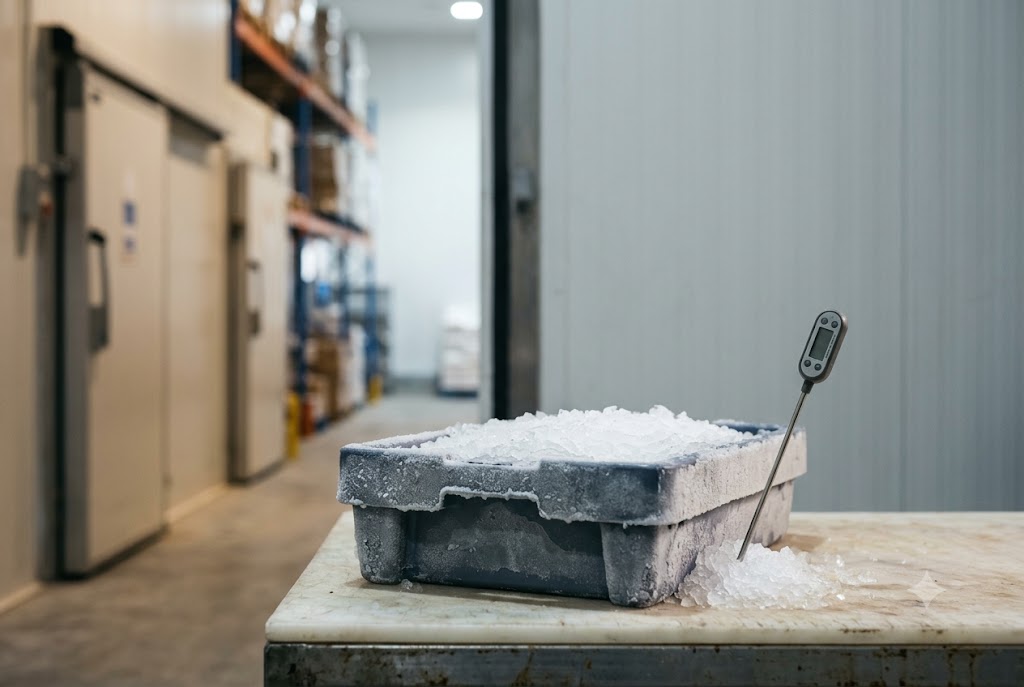
A cold storage business keeps goods inside a controlled temperature range. The goods may be chilled, frozen, pharmaceutical or industrial products. Each model has different site, safety and licence needs.
The first decision is the operating model. A company may run storage for other businesses, store only its own goods, or rent space from an approved operator. This choice changes the activity, premises and approval path.
This guide explains the main planning checks in Oman. Exact conditions still depend on the product, location, activity and approved technical design.
Decision box: start with five answers
- Which goods will enter the facility?
- What temperature and humidity does each product need?
- Will you store your own goods or third-party goods?
- Will the site be mainland, industrial, free-zone or customs-controlled?
- Who regulates the product: food, medicine or another controlled item?
Do not sign a long lease first. Confirm land use, activity, power, drainage, access and approval feasibility before commitment.
Cold-storage models at a glance
| Model | Main use | Main extra checks |
|---|---|---|
| Chilled food store | Fresh food, dairy, selected meat and prepared products | Product temperature, hygiene, segregation, pest control and food inspection |
| Frozen food store | Frozen meat, seafood, poultry, vegetables and prepared food | Low-temperature design, frost control, door safety, defrost and power continuity |
| Pharmaceutical store | Medicines, vaccines and other health products | Ministry of Health licence, ownership eligibility, responsible staff, traceability and product-specific conditions |
| Industrial cold store | Temperature-sensitive materials that are not food or medicine | Material classification, chemical or dangerous-goods controls, environment and fire design |
| Rented third-party space | An importer or distributor stores its goods with another operator | Operator approvals, written service levels, records, insurance, access and liability |
Choose the cold-storage business model
Own and operate a cold store
An operator provides temperature-controlled space as a service. Customers may pay by pallet, room, square metre, weight or storage period.
The company controls the building, equipment, staff and storage records. It also carries direct operational risk. Contracts should define accepted goods, temperature limits, access, stock checks, alarm response, damage reporting and liability.
Store only your own goods
An importer, wholesaler, manufacturer or retailer may operate a private cold room. The room supports its main business. It may still need premises, food, fire and product approvals.
A private room should not be offered to other businesses unless the company has the correct activity and approvals for that service.
Rent space from another operator
A distributor can avoid building its own facility. It can rent approved space from a cold-store operator. The distributor still remains responsible for its own products, activities, import documents and sales rules.
Check the operator’s current licences and inspection status. The contract should show the exact rooms, temperatures, alarm process, access rules and insurance position. It should also explain what happens after a temperature failure.
Chilled storage versus frozen storage
Chilled and frozen storage are not the same design. A chilled room keeps goods above their freezing point. A frozen room holds goods at a lower temperature for longer storage.
| Point | Chilled room | Frozen room |
|---|---|---|
| Common planning range | Often about 0°C to 5°C for many chilled foods | Often -18°C or colder for many frozen foods |
| Final set point | Based on the exact food and approved safety plan | Based on the exact product and approved safety plan |
| Main design issue | Humidity, airflow, condensation and product separation | Insulation, frost, defrost, floor protection and door opening |
| Loading risk | Warm air and slow handling can raise product temperature | Door opening can cause frost, ice and temperature recovery problems |
| Product mix | Some products need different humidity or odour separation | Raw products still need safe separation and clear stock control |
Important temperature note: These are common planning ranges, not one legal limit for every product. Meat, fish, dairy, produce, prepared food and medicine can have different limits. Follow the product rule, label, approved plan and authority direction.
Food, pharmaceutical and industrial use
Food cold storage
A food cold store is part of the food supply chain. The Food Safety and Quality Centre and the relevant municipality or zone authority may take part in the approval and inspection route.
The operator should identify every food group before design. Raw meat, seafood, poultry, dairy, produce and ready-to-eat food may need different rooms or strong separation controls.
A food importer or distributor can use an approved third-party cold store. This does not replace product registration, import permits, labels, customs work or the correct trading activity.
Pharmaceutical cold storage
A drug warehouse is a separate regulated pharmaceutical establishment. The current public Ministry of Health service includes a special licence, site conditions and inspection stages.
The same public service states that an owner or partner must be Omani. The exact structure and any later legal change must be checked with the Ministry of Health before registration or lease commitment.
Pharmaceutical storage follows the approved product conditions. Some refrigerated medicines use 2°C to 8°C. Other products use different ranges. Temperature mapping, records, calibrated devices, responsible staff, stock traceability and controlled disposal may apply.
A normal logistics cold store must not present itself as an approved drug warehouse without the required pharmaceutical licence.
Industrial temperature-controlled storage
Industrial products may need cooling for quality or process control. The business should obtain the safety data for every material before design.
Flammable, toxic, reactive or hazardous materials can change the fire, ventilation, spill and environmental requirements. Do not mix industrial chemicals with food or medicine unless the approved design clearly permits it.
Location and land use
The right location depends on customers, ports, roads, power, water, drainage and delivery times. It also depends on the legal use of the land and building.
| Location type | May suit | Check before commitment |
|---|---|---|
| Mainland commercial or logistics site | Local distribution and customer access | Municipal use, truck access, neighbours, power and building approval |
| Industrial city or economic city | Larger facilities, processing links and regional distribution | Plot use, utilities, operator conditions, environment and expansion space |
| Free zone or special economic zone | Export, re-export, port-led logistics and selected industry | Zone activity, mainland sales, customs status, lease and sector approval |
| Customs warehouse | Goods held under an approved customs regime | Customs approval, warehouse code, plan, guarantees and Bayan operation |
A zone label does not prove that the site fits cold storage. Compare land, customers, utility capacity and customs needs through a free-zone investment assessment in Oman.
A normal warehouse and a customs warehouse are different. Oman Customs publishes a separate registration route for public and private customs warehouses. It requires prior approvals, a site plan, registration steps and guarantees.
Property checks before signing
- Permitted land and building use
- Owner consent for cold-room work and heavy equipment
- Power supply and possible upgrade
- Generator, fuel and exhaust position
- Truck turning, loading and waiting space
- Drainage, wash water and waste route
- Roof and slab capacity for equipment and racking
- Fire-engine access and emergency exits
- Distance from heat, dust, pests and pollution sources
- Space for future rooms, plant and maintenance access
Design and temperature control
Oman has a national warehouse standards guide. The Oman Building Code also covers building, fire, mechanical, plumbing and energy matters. An approved engineer should apply the current rules to the real site.
Room and product flow
The layout should reduce warm-air entry and cross-contamination. Receiving, checking, quarantine, storage, picking and dispatch should follow a clear flow.
- Separate receiving and dispatch where the volume needs it.
- Provide a checking area before goods enter the main room.
- Keep rejected, damaged, returned and expired stock separate.
- Separate raw goods from ready-to-eat food where required.
- Keep cleaning chemicals outside food storage rooms.
- Leave safe airflow and inspection space around stock.
- Protect food from floors, walls, leaks and condensation.
- Use clear zones for allergens or strong odours when needed.
Building finishes
Food areas need durable and easy-to-clean surfaces. Joints, corners, doors and service openings should not collect water or allow pests to enter.
Floor choice depends on temperature, loads, cleaning and traffic. Frozen rooms also need a design that controls frost and protects the floor structure. The engineer should decide insulation thickness, vapour control and floor-heating needs.
Monitoring and alarms
A display on the refrigeration unit is not enough for a large operation. The business needs a monitoring plan that can show what happened during storage.
- Choose sensors for the real room size and airflow.
- Map temperatures before full operation and after major changes.
- Set high and low alarm limits for each product zone.
- Send alarms to trained people at all operating times.
- Keep records for the period required by the product rule and contract.
- Calibrate devices on a planned schedule.
- Use a manual cross-check when a sensor appears wrong.
- Protect data and alarm systems during a power or internet failure.
Fire safety and backup systems
Cold rooms create special fire and rescue issues. Insulated panels, electrical loads, racking, packaging, refrigerants and limited exits must be reviewed together.
The Civil Defence and Ambulance Authority may need to review the plans and safety systems. The exact need follows the building, occupancy, size, location and refrigerant design.
- Keep emergency routes clear and correctly marked.
- Use approved fire detection and firefighting systems.
- Provide emergency lighting and safe exit hardware.
- Prevent accidental lock-in inside walk-in rooms.
- Place emergency controls where responders can reach them.
- Review refrigerant leak detection and ventilation needs.
- Keep plant rooms clean and open for maintenance.
- Train staff for alarm, evacuation and product protection.
Backup power
Power loss can damage stock before the building becomes unsafe. The backup plan should start from the longest safe time for each product.
A project may use a generator, automatic transfer system, equipment redundancy, thermal reserve or an emergency transfer agreement. The correct solution depends on load, room size and product risk.
Test the backup system under realistic load. Keep fuel, maintenance and call-out arrangements ready. Alarm and data systems also need backup power.
Warning: Do not buy the final refrigeration plant before the load, product, room, power and approval design are complete. A low equipment quote can become expensive after redesign.
Food safety and inspection
A food cold store needs a working food-safety system. The system should match the goods and process. HACCP principles may form part of the approved approach, but the required certification or plan must be confirmed for the exact activity.
Receiving checks
- Confirm supplier and product approval where required.
- Check the vehicle and product temperature.
- Inspect packaging, seals, labels and expiry dates.
- Record batch or lot details.
- Reject or quarantine goods outside the approved conditions.
- Move accepted goods into the correct room without delay.
Storage controls
- Use first-expire, first-out where expiry dates apply.
- Keep stock away from contamination and blocked airflow.
- Control pests without contaminating food.
- Use a written cleaning plan.
- Investigate every important temperature alarm.
- Record corrective action and product decisions.
- Keep traceability ready for a withdrawal or recall.
Inspection file
Keep one clear file for inspectors and customer audits. It may include licences, plans, temperature records, calibration, cleaning, pest control, maintenance, training, supplier records, complaints, rejected stock and disposal evidence.
Operations and maintenance
A cold store can pass the first inspection and still fail later. Daily control and planned maintenance protect the goods and the licence position.
| Frequency | Typical control |
|---|---|
| Every shift | Room temperature, alarms, doors, ice, leaks, stock position and housekeeping |
| Daily | Records, rejected stock, cleaning, dock condition and backup status |
| Weekly | Door seals, drains, evaporators, pest signs, emergency access and stock ageing |
| Planned schedule | Refrigeration service, electrical checks, calibration, fire systems, generator and racking |
| After an incident | Product risk review, root cause, corrective work, customer notice and authority notice where required |
Temperature failure response
- Confirm that the alarm is real.
- Protect people before equipment or stock.
- Keep doors closed when this is safe.
- Start the approved backup plan.
- Identify affected rooms, times and products.
- Place uncertain stock on hold.
- Ask the responsible food, quality or pharmaceutical person to decide.
- Record the event, action and final product decision.
Do not release affected goods only because the room later returned to normal. Product temperature, time, safety data and approved procedures must support the decision.
Short company, residence and banking pathway
This sector needs a short connected setup path. It does not need another general company-registration guide.
- Define the goods, customers and storage service.
- Select the activity and check ownership restrictions.
- Choose a site and confirm its permitted use.
- Prepare the company and investment structure.
- Complete building, fire, food, health, environment or customs approvals where applicable.
- Install, test and commission the facility.
- Prepare staff, records and inspection documents.
- Open only after all required approvals are active.
Foreign investors can use company establishment support in Oman for the legal structure and setup sequence.
Specialist technicians and warehouse staff may need labour and immigration planning. Our employee visa coordination in Oman covers the separate residence route where eligible.
Banks may review the shareholders, source of funds, lease, activities, contracts, equipment and expected transactions. Use business banking preparation support for the company account file. Bank approval is not guaranteed.
Costs and planning tools
There is no safe single price for a cold storage business. Facility size is only one factor. Temperature, products, site and backup level can change the budget greatly.
| Cost group | Examples |
|---|---|
| Company and licence | Commercial Registration, investment licence, activities and sector approvals |
| Property | Lease, deposit, land, utility connection and building changes |
| Design and approval | Engineering, surveys, drawings, fire, food and environmental work |
| Cold rooms | Panels, doors, flooring, refrigeration, controls and commissioning |
| Utilities and backup | Power upgrade, generator, fuel, water, drainage and monitoring |
| Warehouse equipment | Racking, pallets, forklifts, dock equipment and safety barriers |
| Quality and safety | Calibration, testing, pest control, cleaning, insurance and audits |
| People | Managers, technicians, warehouse staff, training, labour and residence |
| Working capital | Electricity, maintenance, spare parts, rent and customer payment delay |
The public fee for a Ministry of Health drug warehouse licence is OMR 450 on the current Gov.om service. This is a special pharmaceutical route. It is not a general cold-store fee.
Oman Customs currently publishes OMR 1,000 for the issue and annual renewal of a public or private customs warehouse. Site, guarantees, systems and other approvals are separate.
You can search Oman cold-storage activity codes before the formal activity check. The tool does not prove foreign ownership or regulatory approval.
You can also estimate general mainland company and owner-residence costs. The estimator does not include the site, cold rooms, equipment, utilities, approvals, stock, staff, customs guarantees or free-zone packages.
Common mistakes
- Signing the lease before checking land use and power.
- Using one temperature for every product.
- Mixing chilled, frozen and controlled-room products without review.
- Calling a normal cold store a pharmaceutical warehouse.
- Buying equipment before the approved load and layout.
- Ignoring warm-air entry at the loading dock.
- Using only one sensor near the cooling unit.
- Having alarms without a trained response team.
- Testing the generator without the real operating load.
- Blocking airflow with poor pallet placement.
- Keeping returned or expired stock with saleable goods.
- Using a food warehouse for chemicals or industrial goods.
- Assuming a free-zone licence gives customs warehouse status.
- Ignoring maintenance access and spare-part lead times.
- Opening before the final inspection and operating approvals.
Practical cold-storage checklist
- Write the exact goods and annual volume.
- Define chilled, frozen and other temperature zones.
- Decide own goods, third-party storage or rented space.
- Check each activity and ownership position.
- Identify every product regulator.
- Choose mainland, industrial, zone or customs location.
- Confirm land and building use.
- Check power, water, drainage and truck access.
- Prepare a product-flow and room plan.
- Complete engineering and authority reviews.
- Plan fire safety and refrigerant controls.
- Plan backup power and emergency product transfer.
- Select monitoring, alarms and record storage.
- Prepare cleaning, pest and waste controls.
- Prepare receiving, quarantine and recall procedures.
- Commission and map the rooms.
- Train staff and test emergency response.
- Keep all approvals and records ready for inspection.
Frequently asked questions
Can a foreign investor own a cold storage business in Oman?
Foreign ownership may be possible for suitable activities. It is not automatic for every activity or product. Check the exact code, Negative List, regulator and live Oman Business system. A pharmaceutical drug warehouse has a separate public ownership condition.
Does every cold store need a food licence?
No. A food cold store needs food-related review. A pharmaceutical or industrial store follows another route. Every model still needs the correct commercial activity, premises and safety position.
What temperature should a food cold room use?
There is no single setting for all food. Many chilled foods use a range near 0°C to 5°C. Many frozen foods use -18°C or colder. Follow the exact product rule and approved food-safety plan.
Is HACCP certification always required?
Do not assume one rule for every facility. HACCP principles may be required in the approved food-safety system. Confirm the required plan, certification and audit route for the exact activity and location.
Can an importer rent cold storage from another company?
Yes, subject to the operator’s approvals and a suitable contract. The importer remains responsible for its products, activities, permits, labels, customs records and sales duties.
Is a generator required?
The exact approved backup solution depends on the facility and product risk. A cold store needs a clear power-failure plan. This may include a generator, redundant equipment, thermal reserve or emergency stock transfer.
Is a customs warehouse the same as a normal cold store?
No. A customs warehouse uses a separate Customs approval and Bayan route. Oman Customs lists site plans, prior approvals, warehouse registration, a warehouse code and guarantees among the steps.
How long does cold-storage licensing take?
No single time applies to every project. Timing depends on the company, site, design, power, building work, product regulator, inspections and document readiness. Do not promise an opening date before the approval path is confirmed.
Related Oman Verified guides and services
Customs system
Read about Oman customs registration and Bayan account before the first commercial import.
Activity restrictions
Check restricted activities for foreign investors in Oman before selecting the final code.
Workforce planning
Review Omanisation requirements for companies before setting the staff budget.
Tax and VAT
See Oman tax rules for companies for income tax, VAT and records.
Conclusion
A cold storage business in Oman starts with the goods and operating model. The site, rooms, power, fire design, monitoring and licences must support those goods.
Check the location before signing. Complete the technical design before buying equipment. Open only after the required inspections and approvals are complete.
International setup support
Oman Verified supports international investors with Oman-side cold-storage company setup, premises, food-safety, health, environmental, customs and zone coordination. The relevant official and regulatory functions are completed through MOCIIP, MAFWR, the Food Safety and Quality Centre, the Ministry of Health, municipalities, CDAA, the Environment Authority, Oman Customs and the relevant zone authorities.
Company registration, foreign-ownership eligibility, licensing, premises, food or pharmaceutical approvals, environmental approvals, customs, banking, residency, inspections and opening requirements are completed through the relevant authorities and institutions, with Oman Verified coordinating the client-side process where engaged.
Official sources
- Ministry of Transport, Communications and Information Technology — Unified Guide for Warehouse Standards and Requirements
- Ministry of Housing and Urban Planning — Oman Building Code
- Gov.om — Permit to Commence Construction and connected approvals
- Gov.om and Ministry of Health — Pharmaceutical Establishment Licence
- Ministry of Health — Guideline for Pharmacy Practice in a Medical Store
- Gov.om and MAFWR — Authorised Distributor Agent Approval and warehouse accreditation reference
- Oman Customs — Register a Public or Private Customs Warehouse
- Oman Customs — Request for Goods Entry to Warehouse
- Environment Authority — Waste Management Licence
- Civil Defence and Ambulance Authority
Official public information reviewed on 29 July 2026. Confirm the current requirements in the live government systems before submission.