
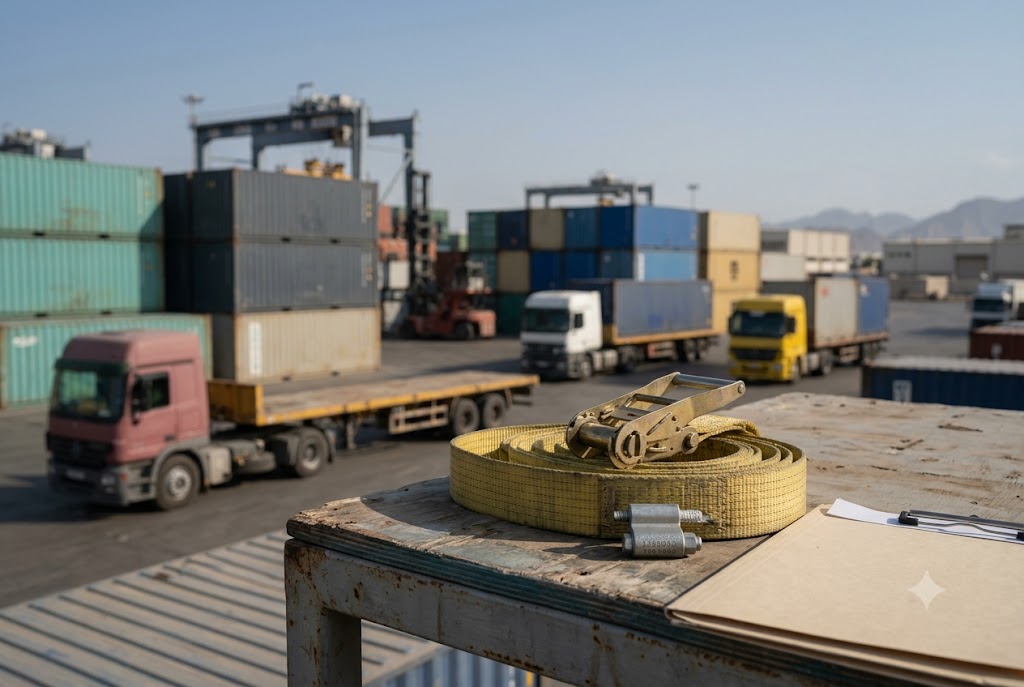
A logistics company in Oman can use several business models. It may arrange freight, manage suppliers, plan stock, store goods or coordinate delivery.
These services do not all use the same licence. Freight forwarding is different from trucking, customs clearance, shipping agency and warehouse operation.
The correct structure depends on the real work. It also depends on the target market, location, goods, vehicles and customs role.
Choose the operating model first
- Will the company only arrange transport?
- Will it own or operate trucks?
- Will it store customer goods?
- Will it act inside a port?
- Will it submit customs declarations?
- Will it serve Oman or mainly re-export goods?
The answers decide the activities, approvals, premises and cost.
What does a logistics company do?
Logistics is the planning and movement of goods from one point to another. It may include transport, storage, documents, inventory and delivery control.
A company may provide one service or combine several services. Each added service can create a new licence or approval need.
For example, a freight forwarder can book space with a carrier. This does not mean it may operate trucks or clear goods through customs.
Business models at a glance
| Business model | Main work | Main approval question |
|---|---|---|
| Freight forwarding | Arrange sea, air or road freight | Does the company act as a port cargo agent or ship agent? |
| Supply-chain management | Plan suppliers, stock, orders and delivery | Is the work advisory only, or does it include physical handling? |
| Warehousing | Store goods for the company or customers | Is the site approved, and what goods will be stored? |
| Road freight transport | Move goods using trucks | Are MTCIT licences and Naql vehicle cards required? |
| Customs clearance | Submit declarations as a licensed broker | Does the ownership meet Oman Customs rules? |
| Shipping agency | Represent a vessel or shipping line | Is a separate maritime licence required? |
Freight forwarding in Oman
A freight forwarder arranges transport for a customer. It connects the shipper with shipping lines, airlines, truck operators, warehouses and customs brokers.
Common work includes freight quotes, carrier booking, consolidation, tracking, document control and delivery coordination.
A forwarder does not need to own every asset
A forwarding company can use licensed third-party carriers. It may work without owning a truck, ship or aircraft.
The contracts should clearly show who carries the goods. They should also define insurance, liability, delay and damage rules.
Port cargo-agent and ship-agent roles
A general logistics registration does not cover every port role. A company acting as a cargo agent in Omani ports may need a separate MTCIT cargo-agent licence.
A company representing a vessel or shipping line may need a separate ship-agent licence. The exact role should be checked before adding it to the business plan.
Important: Do not use “freight forwarding”, “cargo agent”, “ship agent” and “customs broker” as equal terms. They describe different legal and operating roles.
Supply-chain management
Supply-chain management can be a light service model. The company may plan purchasing, stock, suppliers, orders and delivery schedules.
This model can suit companies that manage information and contracts. It may need fewer physical assets than a transport or warehouse company.
The scope changes when the company imports goods, stores stock, operates vehicles or handles regulated products. Those functions must be reviewed separately.
Typical supply-chain services
- Supplier and purchase-order coordination
- Demand and stock planning
- Shipment scheduling
- Inventory reporting
- Third-party logistics coordination
- Delivery and performance monitoring
Warehousing in Oman
Warehousing adds premises, safety and operating requirements. The licence depends on the site, storage model and goods.
Private and customer warehousing
A private warehouse stores the company’s own goods. A public or third-party warehouse stores goods for customers.
The second model creates more responsibility. Contracts should cover stock records, access, loss, damage, insurance and release procedures.
Site and safety approval
The building must be suitable for warehouse use. Civil protection review may include the plans, exits, fire systems and site inspection.
The municipality, zone operator or property authority may also need to approve the use. A normal office lease is not enough for storage activity.
Food, medicine, chemicals, fuel, gas, cold storage and dangerous goods can need extra approvals from the relevant regulator.
Customs or bonded warehouse
A customs warehouse is different from a normal commercial warehouse. Oman Customs approval, Bayan registration, a site plan and financial guarantees may apply.
Do not sign a long warehouse lease before confirming that the site can support the planned customs and storage model.
Activities that need separate treatment
| Activity | Why it is separate | Likely authority or system |
|---|---|---|
| Truck transport | It involves licensed vehicles and operators | MTCIT, Naql and ROP vehicle records |
| Customs clearance | It is a regulated broker activity with ownership rules | Oman Customs and Bayan |
| Port cargo agent | It is a licensed role inside Omani ports | MTCIT |
| Ship agent | It represents vessels or shipping lines | MTCIT maritime services |
| Air dangerous goods | Special air-safety rules apply | Civil Aviation Authority |
| Customs warehouse | Goods remain under customs control | Oman Customs and Bayan |
Customs-clearance ownership rule
Oman Customs states that a customs-clearance company must be fully owned by Omani citizens or GCC nationals.
A foreign-owned freight forwarder can coordinate clearance through a properly licensed customs broker. It should not present itself as the licensed broker.
Mainland versus free zone
The best location follows the customer and cargo flow. There is no single best location for every logistics company.
| Question | Mainland may fit | Free zone may fit |
|---|---|---|
| Main market | Customers and deliveries inside Oman | Re-export, transit or regional distribution |
| Premises | Office or warehouse near local customers | Port, airport or zone-linked facility |
| Customs flow | Regular import into Oman | Storage or movement before entry into mainland Oman |
| Operating model | Domestic contracts and local distribution | International cargo, consolidation or value-added logistics |
| Cost structure | May offer more location choice | May include zone packages and facility commitments |
Goods entering mainland Oman from a free zone can become an import into the local customs area. Customs duty, VAT and product permits may then apply.
Investors comparing port, airport and re-export models can request assistance with choosing an Oman free zone.
Customs, Bayan and transport interfaces
Bayan customs system
Bayan is Oman’s electronic customs system. Companies, individuals and customs offices can register users and receive the correct authority.
Bayan access does not make a company a licensed customs broker. User rights depend on the company’s legal role and customs approval.
An importer, exporter, freight forwarder and customs broker may use different functions. The correct authority should be set before shipments start.
Naql transport platform
Naql is the MTCIT platform for land-transport licences, vehicle operation cards and permits. It connects with ROP vehicle records and company activity data.
A company operating trucks should check the licence and card requirements. Heavy or unusual loads may need an exceptional transport permit.
A company using subcontracted trucks should check the carrier’s licence, vehicle documents, insurance and delivery responsibility.
Product permits
Some goods need approval before customs release. Examples can include food, medicine, chemicals, telecom equipment and controlled products.
The importer should check the HS code and product requirements before shipping. A forwarder cannot remove a product approval requirement.
Premises and staff
Office-only model
A coordination business may start with an office. The lease and location must still match the registered use and local licensing rules.
Warehouse or yard model
A warehouse, truck yard or cargo-handling site needs more review. Access, fire safety, loading, neighbours and building use all matter.
The company should confirm the site before fit-out. A low-cost lease can become expensive if the activity is not approved there.
Staff and Omanisation
Staff planning depends on the activities, job titles, company size and current Ministry of Labour rules.
There is no safe universal Omanisation percentage for every logistics company. Check the live company file before planning foreign workers.
Short company, residence and banking pathway
1. Company
Define the model, activities, ownership and location. Then register the entity and complete sector approvals. See our Oman company setup advisory.
2. Residence
Owner and staff residence depend on the final company and labour file. Review residency services for company owners.
3. Banking
The bank will review owners, source of funds, contracts, routes and expected payments. See company bank account assistance in Oman.
Registration, residence and bank approval are separate decisions. No adviser can guarantee any of them.
Costs and tools
A logistics budget should separate general company costs from operating costs.
| Cost group | Possible items |
|---|---|
| Company | Registration, chamber, investment licence, renewals and professional support |
| Premises | Office, warehouse, yard, deposit, fit-out and utilities |
| Sector approvals | Transport, port, civil protection, customs or product approvals |
| Assets | Trucks, handling equipment, racking, scanners and software |
| Risk | Insurance, customs guarantees, cargo claims and contract liability |
| People | Salaries, work permits, training and Omanisation planning |
You can search Oman business activity codes before preparing the application. The tool helps with names and codes. It does not prove foreign-ownership eligibility or regulatory approval.
You can also estimate general mainland company and residence costs. The estimator does not include warehouses, fleets, specialist licences, guarantees, equipment or free-zone packages.
Budget rule: Do not calculate a logistics company from the CR fee alone. The main cost may come from the site, fleet, approvals, guarantees and staff.
Common mistakes
- Using one broad activity for several regulated services.
- Calling the company a customs broker without the required licence.
- Buying trucks before confirming transport activities and Naql rules.
- Signing a warehouse lease before checking approved use.
- Choosing a free zone without checking the target customer.
- Assuming Bayan access gives customs-broker authority.
- Ignoring product permits until the goods arrive.
- Using fixed Omanisation percentages from old online guides.
- Giving banks a vague business model with no routes or contracts.
- Offering every service from the first day without trained staff.
Practical checklist
- Write the exact services and exclusions.
- List the countries, ports and customer types.
- Decide whether the company will own vehicles.
- Decide whether it will store customer goods.
- Check each commercial activity in the live system.
- Check foreign-ownership and regulator conditions.
- Choose mainland or free zone from the cargo flow.
- Confirm the premises before signing a long lease.
- Map Bayan, Naql and customs-broker responsibilities.
- Prepare insurance and customer contract terms.
- Plan staff, job titles and Omanisation.
- Prepare a clear banking profile and payment flow.
Frequently asked questions
Can a foreign investor own a logistics company in Oman?
Oman allows full foreign ownership in many sectors. The exact activity must still pass the Negative List, investment and regulator checks. Customs clearance has a separate ownership rule.
Does a freight forwarder need its own trucks?
No. A forwarder can arrange transport through licensed carriers. Owning and operating trucks creates separate transport requirements.
Does freight forwarding include customs clearance?
No. A forwarder may coordinate with a licensed broker. Customs clearance is a separate regulated activity in Oman.
What is Bayan?
Bayan is Oman’s electronic customs system. It supports company registration, users, declarations, manifests and customs procedures based on approved authority.
What is Naql?
Naql is the MTCIT platform for land-transport licences, vehicle operation cards and transport permits.
Can a logistics company operate from a normal office?
An office may suit a coordination-only model. Storage, truck parking and cargo handling need suitable approved premises.
Is mainland or free zone better?
Mainland can suit local Oman services. A free zone can suit re-export, transit or port and airport logistics. The cargo and customer flow should decide. For port-connected industrial and logistics projects, review the SOHAR Freezone company setup route.
How long does setup take?
A basic company registration can be faster than the full operating launch. Warehouses, transport, port, customs and product approvals can add time. A fixed timeline is not safe before the model is reviewed.
Related Oman Verified guides and services
Shipment clearance
For importer documents, Bayan coordination and broker support, review customs clearance support in Oman.
Trade routes
Review tariffs, origin rules and regional access in Oman’s trade agreements.
Foreign ownership
Check whether a planned service appears among restricted activities for foreign investors in Oman.
Workforce planning
Plan job titles and staffing with our guide to Omanisation requirements for companies.
Conclusion
A logistics and freight forwarding company in Oman can start with a focused service model. It does not need to own every transport or storage asset.
The main task is to separate coordination from regulated operations. Trucking, customs clearance, port agency and warehousing need their own review.
Choose the activities, location, premises and partners from the real cargo flow. This reduces licensing, banking and operating problems later.
Oman-side customs and licensing coordination
Oman Verified coordinates customs, import, licensing and logistics preparation and follow-up for international clients in Oman. Government, customs, labour, licensing and visa services and decisions are completed by the competent authorities, while banking services and decisions are completed by the relevant banks. Requirements are checked against the activity, location, goods, ownership and applicant profile.
Official sources
- Ministry of Commerce, Industry and Investment Promotion — foreign investment and Oman Business Platform
- Gov.om — Get Investment License
- Gov.om — Get Cargo Agent License
- Gov.om — Land Transport by Trucks for Goods and Equipment
- MTCIT — Naql digital platform
- Oman Customs — Users Registration in Bayan System
- Oman Customs — Requirements for Customs Clearance Licence
- Gov.om — Final Civil Protection Licence for an Establishment
- Oman Tax Authority — Tax and VAT Registration
- OPAZ — Sohar Free Zone
Official public information reviewed on July 26, 2026. Confirm the current requirements in the live government systems before submission.