
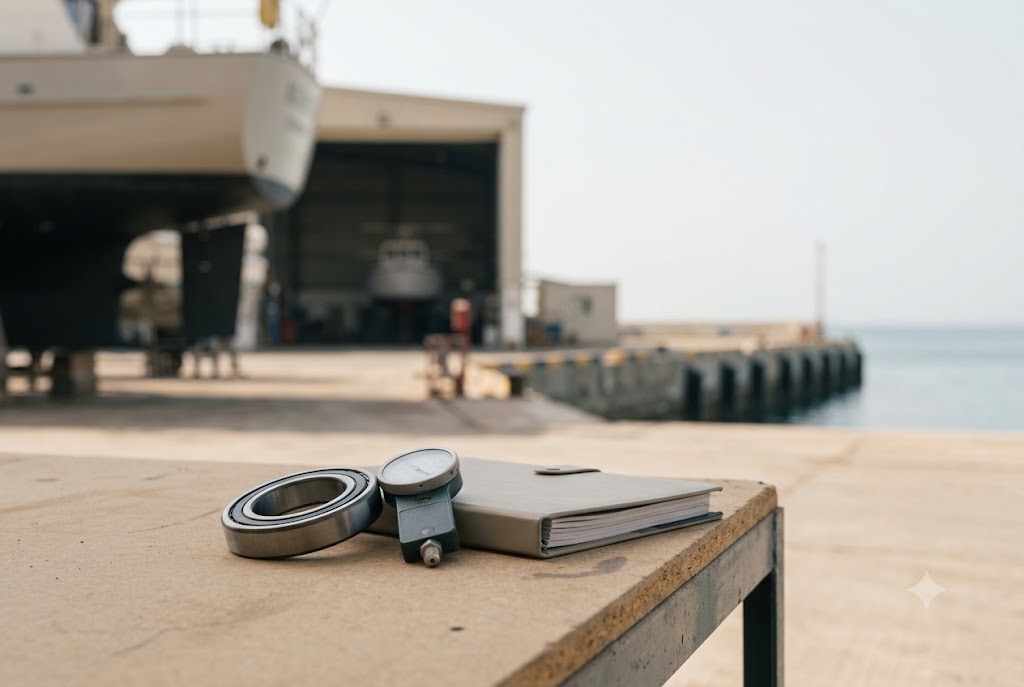
A marine business in Oman can cover very different services. It may repair engines on small boats, maintain luxury yachts, supply spare parts, support vessels inside a port, manage maintenance records or help crews while they are ashore.
These activities do not all use one licence. A Commercial Registration creates the company, but it does not automatically give access to a port, marina, dry dock or vessel. The exact activity codes, technical licences, location permissions and safety controls must match the real work.
This guide explains how to plan a marine services, ship repair and yacht maintenance company in Oman without turning the project into a general company-registration guide.
The basic planning rule
Define the work first. Select the location second. Map the licences third.
A mobile engine technician, a yacht-care team and a shipyard operator have different risks and approvals. Do not register a broad activity and assume it covers every marine service.
Choose the Marine-Service Model
Start by choosing one main operating model. You can add related services later, but the first licence plan should be clear.
- Mobile repair team: technicians travel to marinas, fishing harbours, yards or client locations.
- Fixed workshop: engines, electrical systems, pumps, fiberglass parts or equipment are repaired at one approved site.
- Marina-based yacht care: routine cleaning, detailing and maintenance are provided under a marina access agreement.
- Port technical contractor: the company works on commercial vessels inside controlled port areas.
- Shipyard or dry-dock operator: the business controls or leases major repair infrastructure.
- Vessel-management business: the company plans maintenance, controls budgets, manages vendors and supports compliance records.
- Crew-support business: the company gives shore-side logistics and coordination to visiting or locally based crews.
A business can combine models. For example, it may have a small workshop and a mobile team. Each added service should still appear in the activity and approval review.
Marine Services at a Glance
| Service model | Typical work | Main approval question |
|---|---|---|
| Mobile mechanical repair | Engines, pumps, cooling, fuel systems and troubleshooting | Does the activity and technical licence cover the work, and can the team enter the client site? |
| Electrical and electronics | Batteries, charging, wiring, navigation equipment and control panels | Is a separate electrical repair licence or qualified technician required? |
| Hull and deck work | Welding, fiberglass, carpentry, painting and antifouling | Can the location handle hot work, dust, chemicals and waste? |
| Yacht maintenance | Cleaning, detailing, air-conditioning, generators and planned care | Does the marina allow outside contractors, and what insurance is required? |
| Marine parts supply | Parts, tools, safety equipment and consumables | Are trading, import and customs activities included? |
| Port technical support | On-board repair, inspection support and urgent attendance | Who sponsors the gate pass and issues the work permit? |
| Inspection | Condition reports, damage review and technical checks | Is it a private condition report or a statutory or class survey? |
| Vessel management | Maintenance plans, records, budgets and vendor control | Which duties remain with the owner, master, flag state and classification society? |
| Crew support | Transport, accommodation, provisions and local coordination | Is it shore-side support, recruitment, placement or vessel manning? |
Ship and Boat Repair
Ship and boat repair can include mechanical, electrical, structural and finishing work. The licence plan should name the real systems that the company will touch.
Mechanical work
Mechanical work may include engines, gearboxes, shafts, pumps, cooling systems, generators and fuel systems. The company should have qualified technicians, service manuals, safe lifting equipment and a clear process for used oil and damaged parts.
Electrical work
Electrical work may include batteries, charging systems, wiring, panels, alarms and marine electronics. Oman has a separate public service for a licence to repair ship and boat electricity. This means the company should not assume that a general repair activity covers every electrical service.
Hull and structural work
Welding, steel work, aluminum work, fiberglass repair, sandblasting and painting need stronger site controls. Hot work, fumes, dust, sparks and chemical waste can make a normal commercial unit unsuitable.
Important: A repair company may carry out normal commercial work, but safety-critical changes may need approval from the vessel owner, flag administration, recognised organisation or classification society. Keep written approval before changing structure, machinery, safety equipment or certified systems.
Yacht Maintenance
Yacht maintenance is often more regular than ship repair. Clients may want monthly care, pre-season checks, emergency attendance and one contact for many small jobs.
- Exterior washdown, detailing and polishing
- Teak, upholstery and interior care
- Battery, generator and air-conditioning checks
- Engine servicing and fluid changes
- Bilge, pump and freshwater-system checks
- Navigation-light and basic electrical checks
- Fiberglass, gelcoat and minor carpentry work
- Maintenance records and service reminders
The commercial model can use annual maintenance contracts, monthly retainers or job-by-job pricing. The contract should state what is included, what needs owner approval and which parts are charged separately.
Marina access is a separate issue. A client’s permission does not always allow an outside contractor to enter. The marina may ask for company documents, staff identification, insurance, safety induction and approval before each job.
Marine Parts and Equipment
A repair company may also sell filters, pumps, batteries, ropes, safety items, engine parts, electrical parts and maintenance chemicals. This is a trading and customs issue as well as a technical issue.
The Commercial Registration should include the correct trading or import activity. The company may also need registration in Oman Customs’ Bayan system. Invoices, packing lists, certificates of origin, product documents and permits may be needed according to the goods and HS code.
Whole marine units, marine engines, radio equipment, dangerous goods and some safety products can need extra approval. Check the item before shipment, not after it reaches the port. For operational help, see customs clearance support in Oman.
Good practice: Build a parts list with the HS code, brand, country of origin, technical data sheet, safety data sheet and expected permit before placing a large order.
Port Technical Services and Port Access
Port technical services can include on-board troubleshooting, urgent repair, equipment support, cleaning, inspection assistance and maintenance during a vessel call. These services are not the same as freight forwarding, customs brokerage, shipping agency, cargo handling or marine tourism.
Oman has a public Marine Services Licence service for activities such as ship loading and unloading services, management or direction of marine transport, and marine guidance. Repair and maintenance also have a separate public licence service. The correct route depends on the exact work.
A Commercial Registration or technical licence does not create automatic port access. Controlled areas normally need a gate pass, a port or terminal sponsor, vessel or agent approval, safety induction, personal protective equipment and a job-specific work permit.
| Access item | Why it matters |
|---|---|
| Client purchase order or work order | Shows the commercial reason for attendance. |
| Vessel, owner or agent confirmation | Connects the contractor to the vessel call. |
| Gate pass | Controls entry of people and vehicles. |
| Safety induction | Explains local hazards and emergency rules. |
| Hot-work, cold-work or diving permit | Controls high-risk work at the port or vessel. |
| Tool and equipment declaration | Controls equipment entering and leaving the area. |
| Insurance certificate | Shows the required liability cover. |
| Waste-removal approval | Controls oil, paint, chemicals, scrap and other waste. |
Port rules are local. Salalah, Sohar, Duqm, fishing harbours and private marinas may use different forms and approval systems. Ask the operator for the contractor pack before pricing the first job.
Inspection and Vessel Management
Private condition reports
A company may prepare a private condition report for an owner, buyer, insurer or manager. The report can describe visible damage, maintenance needs and estimated repair work. It should clearly state its scope and limits.
Statutory and classification surveys
A statutory survey or class survey is different. It can affect vessel certificates, navigation rights and legal compliance. Oman has a specific public licensing route for establishments that inspect and examine marine units not covered by international maritime treaties.
Do not issue statutory, flag-state or classification certificates unless the company is licensed and formally authorised for that work. A repair report is not a class certificate.
Vessel-management services
Vessel management may include planned maintenance, technical records, budgets, supplier control, dry-dock planning, insurance-renewal support and document tracking. The management agreement should show which tasks belong to the manager and which legal duties remain with the owner, master, flag administration and classification society.
- Keep a written scope for every vessel.
- Use approval limits for purchases and emergency work.
- Record defects, repairs, parts and technician reports.
- Protect vessel data and owner information.
- Do not describe coordination as regulatory certification.
Crew-Support Services
Crew support can include airport transfer, hotel booking, local transport, provisions, courier work, medical appointment coordination and document delivery. These are shore-side support services.
Recruiting seafarers, placing them on vessels and managing a vessel’s required crew are more sensitive activities. Ships may need a minimum safe manning document. Seafarers may also need recognised competency certificates and identity documents.
Keep three groups separate:
- Your shore-based employees: technicians, office staff and drivers employed by the Oman company.
- Visiting vessel crew: people who arrive and leave with a vessel under maritime and immigration procedures.
- Crew placed or supplied by your business: a model that needs a careful licensing and contract review before launch.
For the Oman company’s technicians and staff, review labour and Omanisation support in Oman. For owners and foreign employees, see Oman visa and residency services.
Workshop, Marina and Port Permissions
The location can change the whole project. A quiet office is not enough for welding, painting, engine testing or chemical storage.
| Location | Suitable for | Points to confirm |
|---|---|---|
| Office or business centre | Management, sales and coordination | Do not use it for noisy, hazardous or industrial repair. |
| Light workshop | Bench repair, electrical work and small parts | Zoning, municipal licence, fire safety, storage and waste. |
| Industrial workshop | Engines, welding, fiberglass and larger equipment | Industrial use, power, ventilation, drainage, lifting and environmental class. |
| Marina service base | Yacht care and routine maintenance | Marina contract, contractor access, working hours and insurance. |
| Port contractor base | Commercial-vessel attendance | Port registration, passes, inductions and permits. |
| Shipyard or dry dock | Major hull and machinery work | Land or concession rights, heavy infrastructure and full safety systems. |
Do not sign a long lease before the activity, zoning and environmental route are checked. A site that looks cheap can become unusable after inspection. For help comparing workshop areas, see industrial location advisory in Oman.
A mobile company also needs a legal base. It must still store tools, chemicals, spare parts and waste safely. Mobile work does not remove port, marina or environmental controls.
Safety, Insurance and Environmental Controls
Safety system
A marine contractor should have simple written procedures before the first job. The system should cover:
- Hot work and fire watch
- Confined-space entry and gas testing
- Work at height and fall protection
- Lifting plans and certified lifting equipment
- Electrical isolation and lockout
- Fuel, battery and chemical handling
- Diving and underwater work by approved specialists
- Personal protective equipment
- Emergency contact and incident reporting
- Spill response and waste separation
Environmental permit
Not every marine workshop uses the same environmental route. Oman’s Environment Authority uses activity classes. A higher-risk project may need an environmental impact assessment by an approved consultant. A lower-risk project may use a simpler permit route.
The review can cover paint and solvent use, oily water, used oil, batteries, sludge, dust, noise, air emissions, drainage, chemical storage and hazardous waste. A dry dock or large shipyard is very different from a small clean workshop.
Do not assume every project needs a full EIA. First confirm the activity class, location and permit channel. Projects inside an approved industrial area, free zone or industrial port may use a different Environment Authority service from projects outside those areas.
Insurance
The insurance package should match the work. Common covers may include public liability, employer liability, property and tools, professional indemnity, marine liability and pollution liability. A marina, port, shipyard or large client may set a minimum cover limit.
Ask an Oman-licensed insurer or broker to review the final service list. A basic office policy may not cover work on vessels, hot work, underwater work or pollution.
Short Company, Residence and Banking Pathway
Many business activities in Oman may allow full foreign ownership, but the exact activity code, negative list, external approval and legal form must be checked. Marine work should not be approved only from a general description.
- Write the exact service and equipment list.
- Map each service to the correct commercial activity.
- Check foreign-ownership status and external approvals.
- Choose the mainland, industrial-area, port or free-zone location.
- Register the legal company and obtain the required technical licences.
- Complete location, environmental, municipal and safety approvals.
- Set up tax, accounting, employment and banking controls.
For the legal-company route, use Oman company setup advisory. Project payments, supplier accounts and client contracts also need a suitable banking file; see corporate bank account opening support in Oman.
Prepare a clear bank file. Include the service model, target clients, expected countries of payment, source of funds, supplier countries, contracts or enquiries, workshop details and beneficial-owner documents.
Costs and Planning Tools
The total cost depends more on the operating model than on the company certificate. A mobile service company may start with tools and a vehicle. A fixed workshop may need rent, fit-out, ventilation, power, lifting equipment, fire systems and environmental work. A dry-dock project is a major industrial investment.
Use the Oman business activity finder to search possible commercial activity codes. The tool does not prove that an activity is open to foreign ownership or that a regulator will approve it.
The Oman company setup cost calculator can estimate general mainland company and investor-residence costs. It does not calculate workshop rent, port fees, dry-dock access, equipment, vehicles, environmental studies, insurance, stock or technical licences.
Selected published official fees
The figures below were published in official online services at the review date. They cover only the named service. They are not a full project budget.
| Official service | Published fee | Published service time |
|---|---|---|
| Licence to repair ship and boat electricity | OMR 150 | 1 day |
| Licence for inspection and examination of marine units not covered by international maritime treaties | OMR 450 | 3 days |
| Environment Authority Class A permit | OMR 1,500 | 30 working days |
| Environment Authority Class B permit outside approved industrial, free-zone or industrial-port areas | OMR 750 | 30 working days |
| Environment Authority Class B permit inside approved industrial, free-zone or industrial-port areas | OMR 375 | Published target: 30 minutes for a complete application |
| Environment Authority Class C permit | OMR 150 without a study or OMR 600 with a study | Depends on whether a study is required |
The current public pages for the general marine-services licence and the general ship, yacht and boat repair licence should be checked live for the final fee, documents and category. Do not copy an old fee from a proposal or unofficial article.
Budget categories
- Company registration and annual compliance
- Technical and external approvals
- Lease, deposit and municipal costs
- Workshop fit-out and utilities
- Tools, diagnostic equipment and lifting equipment
- Vehicle and mobile-service equipment
- Safety equipment and staff training
- Environmental study, monitoring and waste handling
- Insurance
- Spare-parts stock and customs costs
- Port, marina, yard and gate-pass charges
- Staff salaries, visas and Omanisation planning
- Working capital for slow-paying clients
Common Mistakes
- Using one broad activity for every service. Repair, electrical work, inspection, trading, agency work and crew support are not automatically the same.
- Assuming the Commercial Registration gives port access. Ports and marinas control entry and work permits separately.
- Signing a workshop lease before checking use and environmental class. A normal commercial unit may not allow industrial work.
- Promising statutory inspection. A private condition report is not a flag-state or classification certificate.
- Ignoring waste and chemical controls. Paint, solvent, oil, batteries and sludge need a planned route.
- Importing parts before checking the HS code and permit. Extra approval may apply to some marine units, engines and regulated equipment.
- Mixing crew transport with crew recruitment or manning. These models have different legal and operational risks.
- Underpricing port work. Mobilisation, passes, waiting time, overtime and vessel delays can remove the profit.
- Buying weak insurance. An office policy may exclude vessel work, hot work or pollution.
- Depending on promised port or government contracts. Registration does not guarantee procurement or tender success.
Practical Checklist
- List every service in simple words.
- List the vessel types: commercial ship, fishing boat, yacht, workboat or small leisure craft.
- Choose mobile, workshop, marina, port or shipyard operations.
- Map each service to a commercial activity.
- Check foreign-ownership status and the current restricted list.
- Identify every external technical licence.
- Confirm technician qualifications and certificates.
- Ask target ports and marinas for contractor requirements.
- Check workshop zoning before signing the lease.
- Confirm the environmental class and permit route.
- Prepare safety procedures and emergency controls.
- Obtain insurance quotations for the exact work.
- Plan customs and permits for imported parts.
- Separate shore employees, visiting crew and crew-placement services.
- Build a price model for labour, parts, mobilisation, waiting and overtime.
- Keep enough working capital for delayed project payments.
- Use written scopes, change orders and completion reports.
Frequently Asked Questions
Can a foreign investor own a marine-services company in Oman?
Many activities in Oman may allow full foreign ownership. The answer still depends on the exact commercial activity, current restricted list, legal form and external approvals. Check the live system before registration.
Does one marine-services licence cover ship repair and yacht maintenance?
Not always. Oman publishes separate services for marine services, repair and maintenance, electrical repair and some inspection work. Select the route from the real scope, not only the company name.
Can the company operate as a mobile repair team?
A mobile model is possible in practice, but it still needs the correct company activities, technical approvals, legal base, safe storage and permission to enter each marina, port, yard or client site.
Does a Commercial Registration allow entry into a port?
No. Port access is controlled separately. A contractor may need a sponsor, gate pass, safety induction, vessel confirmation, insurance and a work permit.
Does every repair company need a dry dock?
No. Many mechanical, electrical and yacht-care services can be mobile or workshop based. Hull work below the waterline, major structural work and some inspections may need a slipway, lift or dry dock.
Can a repair company issue classification certificates?
Not only because it repaired the vessel. Statutory and classification certification must be performed by an authorised body or licensed establishment within its approved scope.
Can the company supply or manage vessel crews?
Shore-side crew support is different from recruitment, placement and manning. Confirm the exact activity and maritime and labour requirements before selling a crew-supply service.
Can the company import marine parts?
It can do so when the correct trading and import activities, customs registration and product permits are in place. Requirements depend on the product and HS code.
How much does a marine-services company cost to start?
There is no single figure. A small mobile team and a shipyard are completely different projects. Build the budget from licences, location, fit-out, tools, vehicles, insurance, staff, environmental work, parts and working capital.
Related Oman Verified Guides and Services
Foreign ownership
Review restricted activities for foreign investors in Oman before selecting the final activity.
Workforce planning
Understand Omanisation requirements for companies before building the staffing plan.
Port-based location
Compare incentives and operating limits through Oman free-zone selection advisory.
Conclusion
A marine-services company in Oman should be built around a clear technical scope. The strongest starting point is not a broad company name. It is a list of real services, vessel types, locations, tools, risks and clients.
Once the scope is clear, the company can map commercial activities, technical licences, port access, environmental controls, staff qualifications and insurance. This reduces the risk of holding a company certificate that cannot legally or practically perform the planned work.
International setup support
Oman Verified supports international founders and investors with Oman-side marine-services company setup, licensing coordination and operational follow-up. Port access, classification, insurance, environmental permits, visas, banking, tenders and contracts are completed through the relevant authorities, operators, institutions and licensed professionals, with Oman Verified coordinating the client-side process.
Official Sources
- Gov.om — Get Marine Services Licence
- Gov.om — Get Licences for Repairing and Maintaining Ships, Yachts and Boats
- Gov.om — Get Licence to Repair Ships and Boats Electricity
- Gov.om — Inspection and Examination of Marine Units
- Gov.om — Minimum Safe Manning Document for Ships
- Gov.om — Maritime Competency Certificate
- Environment Authority — Environmental Permit for Class A Activities
- Environment Authority — Class B Permit Outside Industrial Areas
- Environment Authority — Class B Permit Inside Industrial Areas
- Environment Authority — Environmental Permit for Class C Activities
- Oman Customs — Users Registration in Bayan System
- Oman Customs — Create Customs Declaration
- Oman Customs — Import Naval Unit or Naval Unit Engines
- Port of Salalah — Gate Pass System
- Port of Duqm — Procedures and Forms
- Ministry of Transport, Communications and Information Technology — Maritime Law
Official public information reviewed on 1 August 2026. Confirm the current requirements in the live government systems before submission.