
AL MAZUNAH FREE ZONE INVESTOR GUIDE
Al Mazunah Free Zone in Oman: Investor Guide
This guide explains Al Mazunah Free Zone for trade, logistics and industrial operations near the Oman–Yemen border. It covers location fit, ownership, published tax and customs conditions, business activities, facilities, costs, documents, application steps and the practical risks to check before committing.
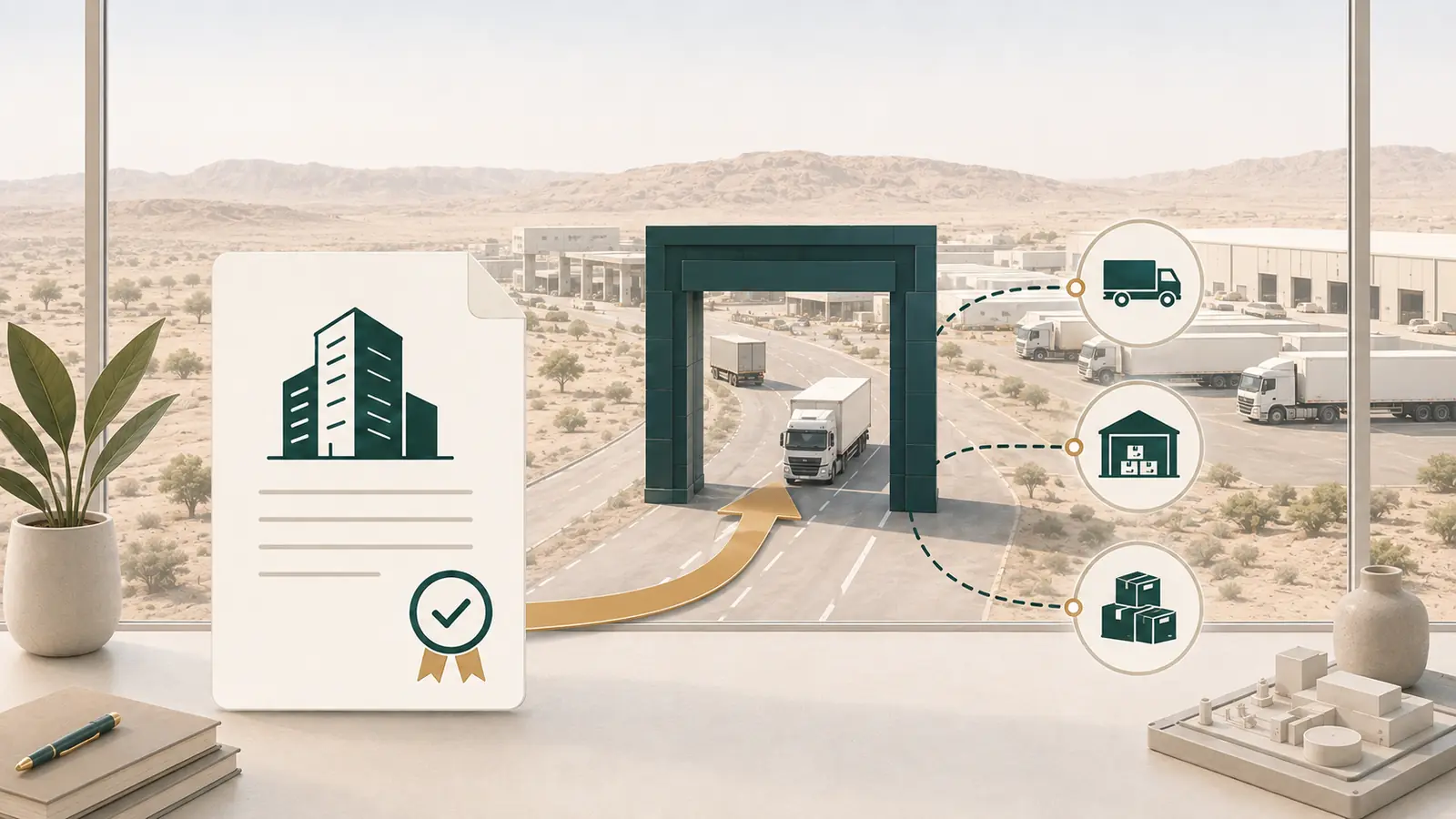
FOREIGN OWNERSHIP
Up to 100%
TAX INCENTIVE
Published 30-Year Exemption
CUSTOMS
Duty Exemptions
LOCATION
Gateway to Yemen
When Al Mazunah Free Zone May Fit
Al Mazunah Free Zone is not a general-purpose replacement for a mainland company. Its strongest value is its border location, its role in trade with Yemen, and the combination of customs, warehousing, transport and light-industrial facilities.
The comparison should start with the supply chain: where the goods originate, where they will be sold, whether processing is required, and how banking, staffing and compliance will be managed.
If the location is still undecided, compare Al Mazunah with other options in the Oman free zones for foreign investors guide.
Best Strategic Use
- A regional base for trade with Yemen
- Storage, consolidation and cross-docking
- Vehicle and spare-parts distribution
- Processing and packaging before export
- Projects that benefit from free-zone incentives
LOCATION AND MARKET ACCESS
A Commercial Gateway at Oman’s Southern Border
The zone is located in Dhofar Governorate near the Al Mazunah–Shahn land crossing. This makes it particularly relevant for goods moving between Oman and Yemen and for companies building a distribution platform serving nearby regional markets.
Cargo can also move through Salalah and continue inland to the zone. The commercial advantage is strongest when the location reduces real transport, customs or inventory friction for the project.
Location Checklist
- Customer or distributor network in Yemen
- Regular land-freight requirements
- Need for bonded storage or customs handling
- Imports through Salalah or other ports
- A plan for border and destination-country risk
Al Mazunah Free Zone on Google Maps
Al Mazunah: 2025 Activity Snapshot
Recent operating figures show an active border-trade and logistics platform rather than an empty paper jurisdiction.
15
new projects localised in 2025
RO 140.7M
cumulative investment reported
270,000 t
goods handled during 2025
6,800
vehicles exported during 2025
Figures are based on Madayn’s March 2026 official update and should be treated as a market snapshot, not a forecast of individual business performance.
Advantages and Limitations
The incentives are meaningful only when they align with a real operating model.
Main Advantages
- Up to 100% foreign ownership of the project
- OPAZ currently lists a 30-year profits-from-income-tax exemption under the zone framework; live applicability must be confirmed for the project
- Customs-duty exemptions and foreign-exchange flexibility
- No minimum investment requirement stated by the zone
- 20% Omanisation requirement for the operating company
- Yemeni workforce can work in the zone under special arrangements
- Certificates of origin and investor-residency facilitation
Main Limitations
- Remote from Muscat and most of Oman’s consumer market
- Commercial value depends heavily on the Yemen trade corridor
- Free-zone companies do not automatically receive unrestricted mainland access
- Corporate bank approval is independent and may involve enhanced due diligence
- Land, facility and external-approval costs vary by project
- Border, destination-market and logistics risks require planning
- A licence alone does not create customers or cargo volume
When the Project May Fit Al Mazunah
Common Project Fits
- Traders with verified buyers or distributors in Yemen
- Automotive, machinery and spare-parts businesses
- Logistics, transport, warehousing and customs operators
- Food, fish, agricultural and packaging projects
- Light manufacturing with a regional export plan
- Companies that need a border-based operational site
Situations Requiring Comparison
- Consultants who only need a Muscat office
- Businesses focused only on local Omani retail customers
- Applicants using the company only as a residency route
- Projects without confirmed logistics or market demand
- Businesses expecting guaranteed bank-account approval
- Investors unable to manage remote operations
Business Activities and Investment Opportunities
The activity must be approved by the zone and accompanied by a practical operating plan.
Cross-Border Trade
Import, export and re-export of eligible goods, with particular relevance to supply chains serving Yemen.
Logistics and Warehousing
Storage, consolidation, container handling, transport routing and cross-docking operations.
Vehicles & Spare Parts
Vehicle exports, construction machinery, commercial equipment, tyres, parts and related distribution.
Food & Fish Processing
Processing, freezing, packaging and value-added production for regional and international markets.
Light Manufacturing
Plastics, wood products, garments, packaging, consumer goods and other approved industrial activities.
Commercial and Operational Activities
Offices, showrooms and other approved commercial activities connected to zone trade and industry.
Business Activity Check
The Oman Business Activity Finder lists official activity codes and titles for an initial shortlist. The result is a research step only; Al Mazunah Free Zone must confirm that the activity and facility are acceptable for the project.
MAZUNAH DRY PORT
One-Stop Border Logistics Operations
Mazunah Dry Port operates as a gateway for cross-border trade from the free zone. Its facilities cover customs inspection, cargo handling, container yards, transport and quarantine procedures. The Oman customs-clearance guide explains Bayan readiness, permits, brokers and the selected customs route.
Core Functions
- Customs clearance and inspection
- FCL, FTL, LCL and LTL handling
- Cross-docking operations
- Container yards and 3PL facilities
- Veterinary, agricultural and health quarantine
- Transportation operations
The Oman trade agreements guide explains tariff preferences, origin rules and market access.
What to Check Before Applying
Before applying, compare project fit, official requirements, third-party dependencies, and recurring costs. Government, zone, banking and external decisions remain separate.
Project Comparison Checks
- Business-model and activity fit
- Free-zone suitability against the trade and facility model
- Initial document requirements
- Current zone information and an official quotation
- Application requirements and authority sequence
- Ownership, structure, and licensed-specialist dependencies
- Post-decision obligations and sequence
Additional Dependencies
- Business-plan requirements
- Translation and attestation requirements
- Investor and employee residency procedures
- Tax and VAT readiness and provider roles
- Accounting records and filing responsibilities
- Corporate bank-account criteria and evidence
- Representative-office legal feasibility and external dependencies
External Cost Categories
- Government and zone fees
- Land, office or warehouse rent
- Utility deposits and operating costs
- External approvals and inspections
- Bank charges
- Immigration and medical fees
- External specialist costs
Project Cost Structure
Commercial fit, current zone information, official charges, facility terms, recurring obligations, and external costs should be compared in one project budget.
Zone and Government Charges
Authority Confirmation
Issued by the relevant authority after it reviews the activity, legal structure, facility and licence category.
Premises and Facility Costs
Depends on Space
Land, office, showroom, yard and warehouse costs depend on size and intended use.
External Specialist Costs
Separately Contracted
Any separately appointed accountant, lawyer, engineer, translator, or technical expert should quote independently from authority and zone charges.
A single total cannot be stated reliably because cost varies by activity, land requirement, facility type, approvals and investor profile. A reliable budget separates current official quotations, facility costs, operating expenses, and any external specialist charges.
Available Legal Structures
The final structure must be confirmed with the zone for your activity and ownership model.
| Structure | Typical Use | Main Point |
|---|---|---|
| Free Zone Establishment (FZE) | Single-owner project | One shareholder with a separate zone entity |
| Free Zone Company (FZ-LLC) | Multiple shareholders | Suitable for joint ownership and partnerships |
| Branch | Existing foreign or Omani company | Operates as an extension of the parent company |
| Representative Office in Oman | Limited permitted presence | May allow limited administration outside the zone, subject to approval |
Compare the Main Options
| Decision Point | Al Mazunah Free Zone | Mainland Company | Salalah Free Zone |
|---|---|---|---|
| Best Use | Yemen trade, border logistics and selected production | Direct business across the Omani market | Port-based export, industry and regional logistics |
| Oman Market Access | Subject to free-zone and customs rules | Direct local market access | Subject to free-zone and customs rules |
| Location | Near Oman–Yemen land border | Any approved location in Oman | Near Port of Salalah |
| Facility Need | Office, yard, warehouse or industrial plot | Office or activity-specific premises | Office, warehouse or industrial land |
| Key Question | Does the border location improve your supply chain? | Do you need direct local operations? | Do you need port-scale logistics or industry? |
Requirements and Documents
The exact checklist depends on the legal structure, nationality, activity and facility requested.
Shareholder Documents
- Passport copies with sufficient validity
- Proof of address and contact details
- Shareholding and authorised-signatory details
- Parent-company documents for corporate shareholders
- Attestation or translation where required
Project Information
- Proposed business activities
- Business plan and financial assumptions
- Required land, office, yard or warehouse area
- Expected cargo, production, or operating model
- Staffing plan and investor-residency requirements
- Environmental or sector approvals, if applicable
Important: Do not prepare expensive translations, attestations or engineering documents before the zone confirms the required format.
Workforce and Investor Residency
The zone states that investor-residency facilitation is available and that the operating company’s Omanisation requirement is 20%. It also permits Yemeni workers to work in the free zone without an Omani entry visa or permanent residence permit.
The practical procedure, permitted roles, payroll, labour registration and border-access arrangements should be reconfirmed for each project before recruitment.
Plan Before Hiring
- Number and nationality of employees
- Investor and manager residency needs
- Omanisation and training obligations
- Housing and transport for site staff
- Labour and immigration approvals
Office, Land and Facility Options
Office or Flexi Space
For eligible administrative or commercial activities where a full warehouse or plot is not required.
Warehouse or Logistics Yard
For storage, vehicle handling, cross-docking, container operations and distribution.
Showroom or Commercial Space
For vehicles, equipment, spare parts and other approved commercial activities.
Industrial Land or Facility
For manufacturing, processing, packaging and projects requiring utilities or environmental approval.
The facility should be selected after activity approval and an operational review. The cheapest space is not always suitable for customs, banking, licensing or future expansion.
Registration and Operating Sequence
1. Define the Project Model
Document the product, market, trade route, ownership, staffing, and required facility before any formal application decision.
2. Check Zone Information and Terms
Use the zone’s official route to confirm activity suitability, facility options, current charges, and commercial terms.
3. Prepare the Required Evidence
Prepare the application information, shareholder documents, and business-plan materials against the current checklist. The applicant remains responsible for accuracy and formal submission.
4. Submit Through the Correct Route
The applicant or an appropriately authorised provider submits the request and responds to official information requests. The zone independently reviews the case and any facility allocation.
5. Complete Agreements and Licensing
If the authority approves the project, the investor signs the relevant agreements and completes registration and licensing through the competent entities or an authorised provider.
6. Complete Post-Registration Requirements
After the zone decision, tax, banking, residency, staffing, customs, and operational requirements follow through their respective official or licensed channels. Each application is decided independently.
Estimated Timeline
| Stage | Typical Timing | Main Dependency |
|---|---|---|
| Initial assessment | Project-dependent | Complete project information |
| Zone quotation and activity confirmation | Depends on zone response | Activity and facility requirements |
| Document preparation | Depends on readiness | Shareholder and corporate documents |
| Application and licensing | Case by case | Zone, regulatory and land approvals |
| Banking and residency | Separate processes | KYC, immigration and external authorities |
Timelines are estimates. Nationality, business activity, facility allocation, environmental approvals and document readiness may materially change the schedule.
What Happens After Registration?
A registered entity is only the beginning. The business must still become operational.
Tax and Zone Records
Complete required registrations and maintain the records needed for the incentive and operating framework.
Corporate Banking
Prepare a clear KYC file, business plan, contracts and source-of-funds evidence. Approval remains the bank’s decision.
Customs and Logistics
Set up customs, dry-port, transport, warehouse and cargo-handling arrangements required by the operating model.
Residency and Labour
Plan investor, manager, and employee procedures, confirm the applicable labour arrangements, and use the relevant authority or authorised-provider route.
Accounting and Audit
Maintain accounting records, invoices, payroll and any required returns or audits.
Renewal and Compliance
Maintain a renewal calendar for licences, leases, immigration, tax, insurance and external approvals, using official portals or authorised providers as applicable.
Risks and Common Mistakes
The correct decision is based on trade economics, not the number of incentives listed on a brochure.
Dependence on Yemen Trade
Demand, border procedures, destination customs and political conditions can affect cargo flow and margins.
Banking and AML Review
A border-trade model may require stronger documentation of customers, products, counterparties and payment routes.
Wrong Facility Choice
An office licence cannot replace a warehouse, yard or industrial site when the activity requires physical operations.
No Verified Buyer Network
Tax incentives do not compensate for weak demand, unreliable distributors or untested payment collection.
Mainland Access Assumptions
Free-zone registration does not automatically remove customs or regulatory requirements for sales into Oman.
Incomplete Operating Budget
Transport, facility, utilities, staffing, insurance, compliance and renewal costs continue after registration.
Frequently Asked Questions
Who issues Al Mazunah registrations, licences, and approvals?
Only the competent government and zone authorities issue registrations, licences, visas, and official approvals. Banks and other regulated bodies make their own decisions.
Can a foreign investor own 100% of a company in Al Mazunah Free Zone?
The zone lists the possibility of 100% foreign ownership. The final ownership structure still depends on the approved activity, legal form and application.
Is the company exempt from corporate income tax?
OPAZ currently lists an exemption of profits from income tax for 30 years under the zone framework. The company must still maintain proper records and obtain current confirmation of eligibility, the applicable period and how the exemption applies to its exact activities and transactions.
Can the company sell directly in mainland Oman?
Free-zone registration does not automatically provide unrestricted mainland sales. Imports into the customs territory of Oman may require customs, tax, distribution and activity-specific compliance.
Is Al Mazunah suitable for a consultancy or online business?
Usually only when there is a clear operational reason to be in the zone. A mainland or Muscat-based structure may be more practical for businesses serving the local Omani market.
Can Yemeni employees work in the zone?
Official zone information states that Yemeni workers may work in the free zone without an Omani entry visa or permanent residence permit. The current labour and access procedure should be reconfirmed before hiring.
Is a corporate bank account guaranteed?
No. Banks independently assess the shareholders, activity, counterparties, expected transactions, source of funds and compliance risk.
How much does company setup cost?
The total depends on the licence, legal structure, facility, land area, approvals, immigration, and any external specialist requirements. Current official quotations and operating costs should be checked before applying.
How long does registration take?
There is no responsible single timeline for every project. A simple approved activity with ready documents may move faster, while land allocation, industrial approvals and banking take longer.
When may a business plan be required?
A business plan may be required by the zone, a bank, a land or facility review, or another project-specific evaluation. The required format should be confirmed before preparation.
Can I operate from Muscat while the project is in Al Mazunah?
The zone states that a representative office within Oman’s customs territory may be allowed. The permitted function and structure must be confirmed before establishing it.
Official Information Sources
Official authority sources should be used for the latest incentives, regulations, facility availability, and application requirements.
OPAZ – Al Mazunah Free Zone
Official incentives, ownership, workforce and application overview.
Madayn – Al Mazunah Free Zone
Official zone profile, sectors, facilities, and investor information.
Mazunah Dry Port
Official logistics and dry-port operating overview from Al Madina Logistics.