
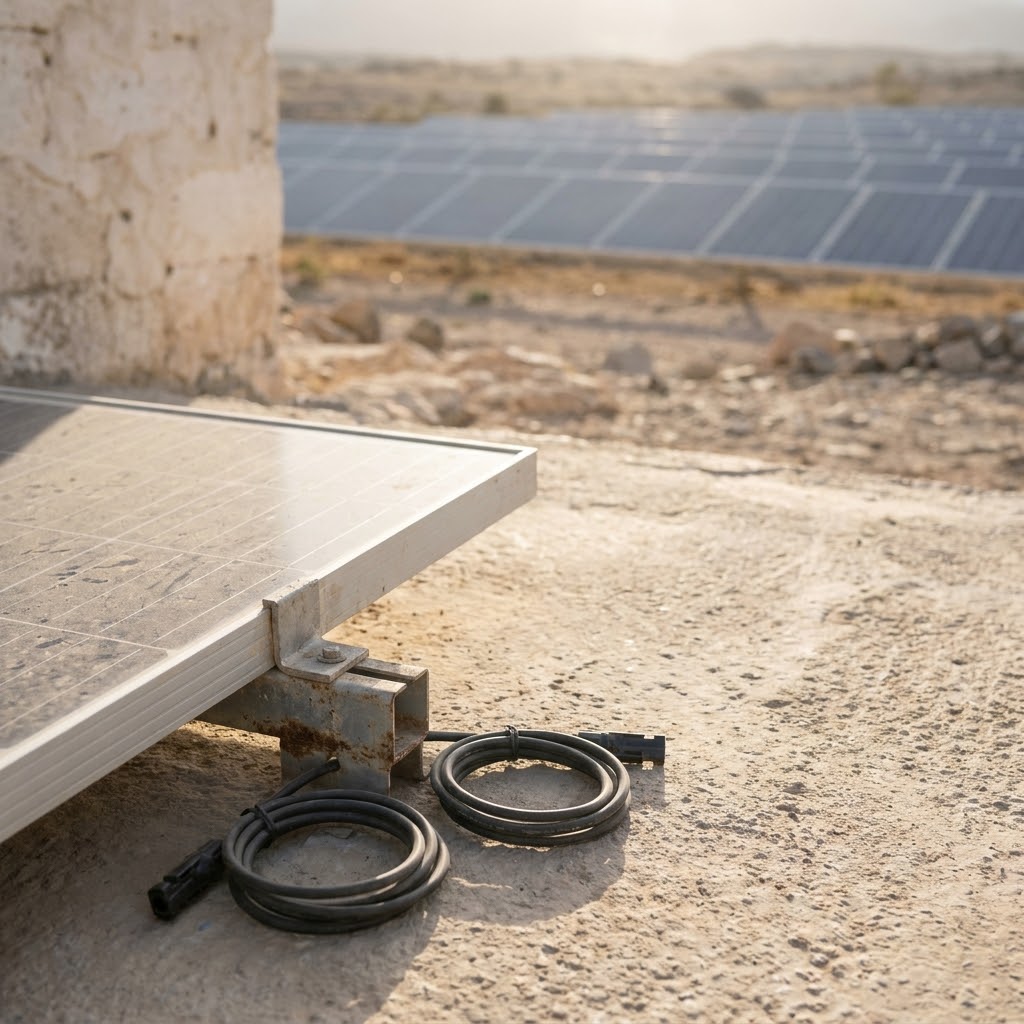
A renewable energy company in Oman can work in several different ways. It may design solar systems, install panels, maintain operating plants, sell equipment, inspect electrical systems or support larger wind and green-hydrogen projects.
These business models do not all need the same approvals. Selling solar equipment is different from connecting a solar plant to the electricity network. Technical consulting is also different from licensed engineering consultancy. Large electricity-generation and green-hydrogen projects follow a separate regulatory and investment path.
The practical first step is to define the exact service, voltage level, customer type and project size. The company can then select the correct commercial activities, technical team, location and approval route.
Choose the correct operating level
- Equipment or support business: sells products or provides non-regulated support without carrying out grid connection work.
- Solar contractor: installs and tests solar systems and may need electrical-contractor and solar-installer certification.
- Engineering consultancy: provides regulated professional design or consultancy through the required professional licence and approved engineers.
- Power developer: owns or sells electricity from a generation asset and must follow the applicable electricity-sector licensing and utility rules.
- Green-hydrogen developer: participates in large integrated projects coordinated through Oman’s green-hydrogen framework. This is not a normal small-business licence.
Renewable energy business models at a glance
| Business model | Typical work | Main compliance question |
|---|---|---|
| Solar design support | Site study, energy model, layout and technical documents | Does the work cross into regulated engineering consultancy? |
| Solar installation | Mounting, electrical work, testing and commissioning | Which DCRP electrical and solar category is required? |
| Operations and maintenance | Cleaning, monitoring, inspection, repairs and reporting | Does the work include live electrical intervention? |
| Equipment trading | Panels, inverters, cables, protection devices and mounting systems | Are the products accepted for the intended grid-connected project? |
| Battery and storage services | Supply, integration, monitoring and maintenance | What electrical, fire-safety and utility approvals apply? |
| Wind support services | Surveying, civil support, electrical work and maintenance | Is the company supporting a project or developing generation? |
| Green-hydrogen support | Logistics, EPC support, HSE, workforce, data and equipment | Does the company meet the project developer’s qualification and tender rules? |
| Assembly or manufacturing | Mounting systems, cables, panels, cabinets or related components | Is an industrial or free-zone location more suitable? |
1. Define the service model before registration
A company should not register a broad activity list without a clear operating plan. Solar installation, electrical contracting, equipment wholesale, maintenance, energy auditing and engineering consultancy can lead to different external approvals.
Write a simple service map before selecting activities:
- Who is the customer: home owner, commercial building, factory, farm, government entity or project developer?
- Will the system be off-grid, hybrid or connected to the electricity network?
- Will the company design, install, supervise, inspect, sell or own the system?
- What voltage and plant size will the company work with?
- Will the company use its own engineers and electricians or subcontract regulated work?
You can use the search Oman commercial activity codes tool for an initial search. The tool does not confirm foreign ownership, professional licensing or regulator approval. The live Oman Business Platform and the relevant technical authority must still be checked.
2. Solar design and consulting
Solar design work may include an electricity-consumption review, site survey, shading study, energy-yield estimate, panel layout, inverter selection, cable sizing, protection design, structural review and single-line diagram.
The company must separate internal sales or proposal work from regulated professional engineering. A supplier may prepare a preliminary system proposal. However, formal engineering consultancy, certified design, structural declarations and professional sign-off may require a separately licensed consultancy and approved engineers.
A contractor that does not hold the required consultancy authority can work with an approved consultant. Businesses planning to sell professional engineering as a core service should review engineering consultancy licence support before choosing the company structure and staff.
Practical boundary: Do not advertise “approved engineering design” unless the company, responsible engineer and document-signing route meet the current professional and technical requirements.
3. Installation and electrical contracting
A commercial registration alone does not give a company the right to connect a solar plant to the electricity network. DCRP publishes requirements for electrical contractors and solar PV installers working in distribution systems below 132 kV.
DCRP’s published implementation procedure states that an applicant for on-grid solar work should first be certified as an electrical contractor. The electrical grades run from Grade E for limited internal wiring to higher grades for low-voltage, medium-voltage and higher-voltage network work. The correct grade depends on the actual project scope.
DCRP solar PV installer categories
| Category | Published scope | Published minimum solar staff |
|---|---|---|
| S1 | Low-voltage plants up to and including 20 kW | One PV Engineer |
| S2 | All low-voltage plants | One PV Engineer and one Senior PV Engineer |
| S3 | Medium-voltage plants | Two PV Engineers and one Senior PV Engineer |
The current DCRP requirement document available during this review also states that an approved testing and commissioning engineer must attend plant testing on behalf of the solar contractor.
The published application fee is OMR 10 for each category. The certificate fees shown are OMR 30 for S1, OMR 60 for S2 and OMR 90 for S3, with a stated validity of three years. These are only the DCRP solar-registration figures. They do not include company setup, electrical-contractor certification, staff, training, insurance, tools, premises or project approvals. Confirm the live fee and document version before applying.
4. Maintenance, testing and performance services
Operations and maintenance can create recurring income after installation. A maintenance contract may include:
- Panel cleaning and visual inspection
- Remote monitoring and alarm response
- Thermal imaging and hotspot checks
- Inverter, cable and protection-device inspection
- Generation and performance reporting
- Preventive-maintenance schedules
- Warranty coordination and spare-parts replacement
The company should define which tasks are non-electrical and which tasks require an approved electrician, PV engineer or testing and commissioning engineer. A cleaning team should not open live electrical equipment or change protection settings without the required competence and authority.
Maintenance contracts should also define access, response time, excluded defects, spare parts, water use, roof damage, shutdown authority, monitoring-data ownership and the method used to measure performance.
5. Equipment sales, batteries and storage
A trading business can sell solar panels, inverters, cables, mounting systems, switchgear, monitoring devices, batteries and spare parts. It still needs the correct commercial activity and any applicable import, customs, warehouse or product requirements.
Grid-connected projects should not use equipment only because it is cheap or internationally known. The contractor must check the current technical acceptance and product-approval position for the specific module, inverter, protection system and connection design.
Nama’s solar PV design-approval form asks for module and inverter datasheets, warranties and certificates. It also requests protection information, wiring diagrams, structural documents and a wind-load analysis. A supplier should therefore keep a controlled technical file for every product model.
Battery systems need a separate risk review
Battery storage can be offered for backup power, load management, off-grid systems or hybrid solar projects. The design should consider battery chemistry, ventilation, temperature, fire protection, emergency isolation, transport, storage, warranty conditions and end-of-life handling. Municipality, Civil Defence, utility or environmental requirements may apply depending on the size and location.
6. Wind and other renewable-energy support
A new company can support wind projects without becoming a power-generation developer. Possible services include site surveys, civil works, foundations, cable routes, transport coordination, crane support, electrical work, inspection, HSE services, spare parts and maintenance.
Utility-scale wind generation is a major infrastructure activity. Land rights, resource studies, environmental review, grid connection, electricity-sector licensing and procurement arrangements must be handled by the project developer and competent authorities. A small service company should describe itself as a contractor, supplier or specialist support provider unless it has the full development authority.
7. Support services for green-hydrogen projects
Hydrom is the central entity coordinating Oman’s green-hydrogen sector. Its role includes master planning, land allocation, project auctions, infrastructure coordination and oversight of large integrated projects.
This means hydrogen production is not a normal small-company activity. The main projects combine large solar and wind assets, electrolysers, water systems, storage, conversion facilities, logistics and export infrastructure. Developers normally need strong consortia, finance, technical records and project qualifications.
Smaller and specialist companies can still enter the supply chain through services such as:
- Electrical, civil and mechanical subcontracting
- Renewable-resource measurement and data services
- HSE, training and workforce support
- Transport, warehousing and heavy-logistics support
- Inspection, testing and commissioning support
- Equipment supply, fabrication and local assembly
- Operations, maintenance and facility services
The correct route is usually vendor registration, tender prequalification, partnership with a qualified EPC contractor or direct subcontracting to a project consortium. Do not present access to a hydrogen project as guaranteed.
8. Grid connection and utility approval
Oman’s electricity sector is regulated by the Authority for Public Services Regulation. Nama Electricity Distribution manages distribution across most of Oman, while Dhofar Integrated Services is the licensed distribution company in Dhofar.
Nama states that solar-energy applications should be submitted to its renewable-energy team. Its published forms show a staged process that starts with an initial service application and continues to design approval.
Typical grid-connected project sequence
- Collect the owner, property and electricity-account information.
- Confirm the proposed connection model and system capacity.
- Prepare the initial application, single-line diagram and equipment specifications.
- Receive the initial enquiry acceptance or technical comments.
- Prepare the detailed design package.
- Obtain the required municipality, Civil Defence or other project approvals where applicable.
- Complete installation through the approved contractor route.
- Carry out testing, protection checks, inspection, metering and final connection procedures.
Nama’s design-approval checklist includes an O&M plan, building permit, harmonic and short-circuit study, electricity-production model, demand information, single-line diagram, earthing, lightning protection, site layout, structural drawings, cable layout, module and inverter warranties, wind-load analysis and interface-protection details. The final list depends on the project.
Important: Do not install first and ask for grid approval later. Obtain the required utility acceptance and design approval before carrying out work that depends on connection to the distribution network.
Lease, power-sale, third-party ownership and other commercial electricity models may need additional APSR approval or sector licensing. The contract should not be signed until the regulatory position, connection rights, tariff treatment and customer obligations are confirmed for the specific project.
9. Technical staff, safety and insurance
Published DCRP staff requirements
The DCRP document reviewed for this guide states that a PV Engineer must be at least 24 years old, hold an engineering degree in an accepted field, have at least four years of electrical construction-related experience, complete DCRP-approved solar training and hold the required HSE induction.
A Senior PV Engineer must meet the core engineering and experience requirements and also show specific solar-project experience. The reviewed document asks for two years of solar experience and participation in at least two solar PV plants involving design, construction, verification and testing. It also lists IOSH Managing Safely for the senior role.
Staff qualifications, experience letters and training records should be authenticated and organised before the application. The company should also keep an updated staff register, Omanisation evidence, insurance documents and company certificates.
Recruitment, work permits, occupation rules and Omanisation can change by activity and job title. Review workforce compliance support in Oman before hiring foreign engineers, technicians or electricians.
Core HSE controls
- Work-at-height planning and fall protection
- Electrical isolation and lockout procedures
- DC arc and live-system risk controls
- Roof-load and structural confirmation
- Safe lifting, crane and material-handling plans
- Heat-stress and outdoor-work controls
- Emergency response and first aid
- Tool inspection and test-equipment calibration
Insurance to discuss with a licensed insurer
- Workers’ compensation
- Public and third-party liability
- Professional indemnity for design responsibility
- Contractors’ or erection-all-risks cover
- Vehicle, warehouse, equipment and stock cover
The required insurance depends on the contract, project value, customer, site and work scope. Policy limits and exclusions should be checked before mobilisation.
10. Short company, residence and banking pathway
The company-registration stage should stay separate from technical approval. Through the Oman Business Platform, founders select the legal form, enter the commercial-register information, sign the electronic documents, pay the official fees and obtain Chamber membership. Additional investment, municipality, tax, labour and sector steps may follow.
Foreign ownership is available for many activities, but not every activity is automatically open or approval-free. Start with an activity and ownership review through Oman company setup advisory.
Investor or employee residence is a separate process and is not created by DCRP certification. Technical staff may also need attested qualifications, suitable job titles and labour approval.
A bank will review the shareholders, source of funds, customers, expected transactions, equipment imports, project contracts and business plan. Solar businesses should prepare supplier quotations, customer proposals and a realistic first-year budget. Business banking preparation support can be arranged separately, but bank approval cannot be guaranteed.
11. Location: service office, warehouse or factory
A design, maintenance or project-management business may operate from a suitable mainland office, subject to its activity and licensing needs. Equipment trading may require storage space that is accepted for the product type and stock volume.
Industrial land or a free-zone location is normally relevant when the company will assemble, manufacture or export components. Examples include mounting structures, cable assemblies, electrical cabinets, battery enclosures or other renewable-energy equipment.
For manufacturing, compare mainland industrial locations through factory location assessment in Oman. Export-focused manufacturers can also review Oman free-zone selection advisory. A free zone should not be selected only because it sounds cheaper; local-market access, customs, workforce, land, utility and customer location must be compared.
12. Costs and planning tools
The cost of a solar services business is not limited to commercial registration. The first-year plan may include:
| Cost area | Examples |
|---|---|
| Company and premises | Registration, Chamber, investment licence where applicable, municipality, office, warehouse and renewals |
| Technical approval | Electrical-contractor route, DCRP solar registration, training, testing and certification |
| Technical team | Engineers, electricians, technicians, HSE staff, visas, wages and Omanisation planning |
| Equipment | Test instruments, safety gear, vehicles, access equipment, cleaning tools and software |
| Stock and logistics | Panels, inverters, mounting systems, batteries, customs, transport and storage |
| Risk and compliance | Insurance, accounting, tax, contracts, warranties and legal review |
| Project working capital | Supplier deposits, mobilisation, customer credit periods and retention amounts |
The mainland company registration cost estimator can estimate general mainland company and investor-residence costs. It does not calculate DCRP certification, technical staff, equipment, vehicles, warehouse stock, project finance, utility studies, factory construction or sector approvals.
Oman’s standard corporate income-tax rate is 15% of net taxable income. The standard VAT rate is 5% on most taxable supplies. Small-enterprise rates and registration thresholds have separate legal conditions. Confirm the current position with the Tax Authority or a qualified tax adviser.
13. Common mistakes
- Registering only “solar trading” while promising installation: the commercial and technical scope do not match.
- Using the wrong DCRP category: the company targets projects above its approved voltage or plant scope.
- Hiring staff after applying: the certification route may depend on sponsored and documented technical personnel.
- Starting installation before utility approval: the final design or connection may be rejected.
- Buying unverified equipment: modules, inverters or protection devices may not be accepted for the project.
- Ignoring structural and wind-load design: roof safety is part of the technical package.
- Selling an electricity-return promise: tariff, export, lease and power-sale rules must be confirmed for the specific model.
- Calling a support company a hydrogen producer: large green-hydrogen development follows a separate auction and project framework.
- Underpricing maintenance: travel, cleaning, monitoring, replacement parts and emergency attendance create continuing costs.
- Depending on one installation contract: recurring O&M, inspection and monitoring services can make revenue more stable.
14. Practical startup checklist
- Define the customer, system type, plant size and voltage level.
- Separate equipment sales, contracting, consulting and power development.
- Check commercial activities and foreign-ownership limits in the live system.
- Confirm whether an engineering consultancy licence is needed.
- Confirm the required DCRP electrical grade and solar category.
- Prepare the technical staff and qualification documents.
- Select an office, warehouse or industrial location that matches the activity.
- Prepare HSE procedures, insurance and calibrated test equipment.
- Create an approved-product and supplier-control process.
- Build utility approval into every project schedule.
- Use written installation, warranty and maintenance contracts.
- Budget for working capital, customer credit and retention.
- Prepare a bank file with contracts, suppliers, customers and transaction estimates.
- Confirm tax, labour, visa and Omanisation duties before operation.
Frequently asked questions
Can a foreign investor own a solar services company in Oman?
Many commercial activities allow full foreign ownership, but the final position depends on the selected activity, restricted activities and external approvals. Technical certification does not replace the foreign-investment and commercial-activity review.
Is a commercial registration enough to install solar panels?
No. Grid-connected solar installation may require electrical-contractor certification, DCRP solar PV installer certification, qualified staff, utility design approval, approved equipment and final testing.
What are the DCRP solar installer categories?
The published categories are S1 for low-voltage plants up to 20 kW, S2 for all low-voltage plants and S3 for medium-voltage plants. Confirm the current document and grade requirements before applying.
Can a company only sell solar equipment?
Yes, equipment trading can be a separate business model. The company still needs the correct trading, import and storage activities. Products intended for grid-connected projects must also meet the project’s technical and approval requirements.
Can the company provide solar design without an engineering consultancy licence?
Preliminary proposals and internal technical support may be different from regulated engineering consultancy. Formal professional design, structural declarations or certified sign-off may require an approved consultancy and licensed engineers. Confirm the boundary before advertising the service.
Does every solar project need Nama approval?
A project that will connect to Nama’s distribution network must follow the applicable Nama connection and design-approval process. Dhofar projects should follow the route of Dhofar Integrated Services. Off-grid and hybrid projects may still need electrical, municipality, Civil Defence, environmental or other approvals.
Can a small company produce green hydrogen in Oman?
Oman’s green-hydrogen production projects are large integrated developments coordinated through Hydrom’s sector framework and auctions. A small company is more likely to participate as a contractor, supplier, service provider or project partner.
How much does it cost to start?
There is no single total. Company registration is only one part. Technical certification, engineers, premises, training, tools, insurance, vehicles, equipment stock and working capital can be much larger than the basic registration cost.
Related Oman Verified guides and services
Engineering consultancy
Review professional-licensing, staffing and approval questions before selling regulated design services.
Construction activities
Compare general building and maintenance work with specialised solar and electrical contracting.
Read about construction and building maintenance activities in Oman
Foreign-investor restrictions
Check whether any selected activity is reserved, restricted or subject to special approval.
Omanisation planning
Understand the general workforce concept before building a technical recruitment plan.
Conclusion
A renewable energy and solar services company in Oman can start with equipment sales, design support, installation, maintenance or specialist project services. The safest route is to select a narrow first-stage scope and build the correct technical approvals around it.
For grid-connected solar work, commercial registration is only the beginning. The company must align its DCRP category, electrical scope, engineers, HSE system, products and utility submissions. For wind and green hydrogen, a new business should normally enter as a qualified support company rather than assume the role of a utility-scale developer.
This guide is for initial planning. Requirements can change by activity, voltage, project size, site, location, ownership and technical design. Obtain written confirmation in the live systems before signing contracts, ordering equipment or starting installation.
Official sources
- Ministry of Commerce, Industry and Investment Promotion — Register Company
- DCRP — Solar PV Installer Requirement
- DCRP — Rooftop Solar PV Contractor Registration Procedure
- Nama Electricity Distribution — Solar Energy
- Nama — Solar PV Initial Service Application Form
- Nama — Solar PV Design Approval Application Form
- Authority for Public Services Regulation — Electricity Sector
- Hydrom — Oman Green Hydrogen Sector
- Oman Tax Authority — Tax Rates
Official public information reviewed on 30 July 2026. Confirm the current requirements in the live government systems before submission.