
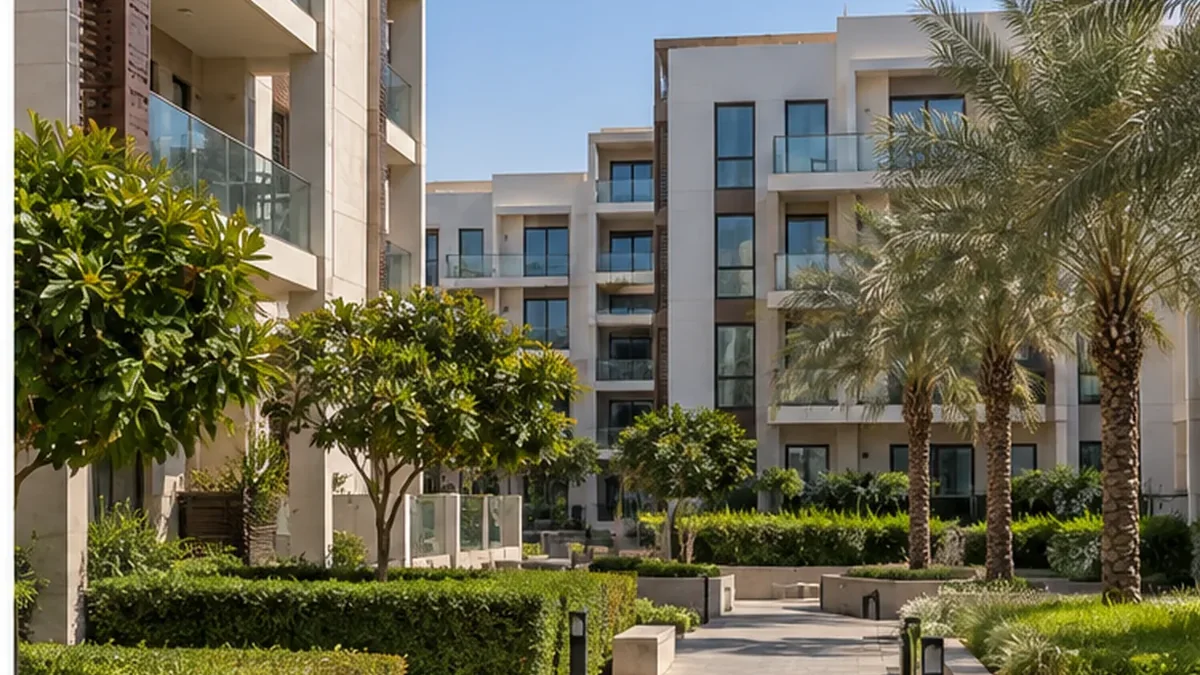
Buying an apartment or managed-community property in Oman means buying into a system of shared ownership and shared cost. Royal Decree 79/2025 introduced a modern statutory framework for common property, common-use management systems and Owners Associations.
For a buyer, this matters because annual service charges, common-area management, reserve spending and Owners Association governance can materially affect both daily ownership and investment return.
The 60-second answer
- Owners of units in common property share ownership of the land/common parts according to the legal framework.
- Owners contribute to management, operation, maintenance and repair of common areas.
- A buyer cannot simply abandon their common-property share to avoid those costs.
- The developer or Owners Association cannot deprive an owner of common-area use merely to force payment of unpaid charges; the law provides a legal recovery route instead.
- The developer must manage and maintain common parts for at least two years after the project-completion certificate, then arrange transfer to the Owners Association.
- Royal Decree 79/2025 requires Owners Associations for common properties and gives them legal personality after registration.
What is “common property”?
Royal Decree 79/2025 defines common property as a building, part of a building, land, or a combination of them that contains units intended for ownership or usufruct together with areas used in common.
Examples can include entrances, corridors, lifts, swimming pools, landscaped areas, internal roads, shared utilities and other facilities identified in the approved project and common-use management system.
Who owns the common parts?
Article 38 states that owners of real-estate units in common property are co-owners of the land and common parts. Their responsibility for managing, operating, maintaining and repairing common areas is generally linked to the area of the unit they own unless another arrangement applies.
This means the apartment or villa is not financially isolated from the wider building or community. The condition and budget of the common property can affect the owner’s annual cost and resale value.
Parking and facilities attached to the unit
Article 39 says parking spaces and facilities allocated to a particular unit form an integral part of that unit and may not be separated or disposed of independently. Additional parking, where available, can be managed under the common-use management rules.
Can common areas be converted into private property?
Articles 40 and 41 protect common parts and facilities from being converted, disposed of or altered in a way that reduces owners’ or occupants’ ability to use them, except where the applicable approval requirements are met.
A buyer should therefore compare the approved common-property plan with what is being marketed as a private terrace, exclusive garden, parking space or amenity.
What are service charges paying for?
Service charges fund the operation, management, maintenance and repair of common areas, services and facilities. The exact budget can include security, cleaning, lifts, landscaping, pools, shared utilities, mechanical systems, common insurance, management and planned repairs.
The law creates the structure, but it does not mean every project has the same rate per square metre. Buyers should request the current project budget and charging method rather than relying on an average quoted for another community.
Can an owner avoid service charges by giving up common rights?
No. Article 42 prevents an owner from giving up their share in common parts simply to avoid the costs associated with them. Shared ownership and the related obligations travel together.
Can the developer block the pool, lift or common facilities if charges are unpaid?
Royal Decree 79/2025 does not allow the developer or Owners Association to deprive an owner or occupant of use of common parts and facilities merely as a way to compel payment of outstanding contributions.
The law instead provides a legal recovery mechanism for unpaid contributions. In other words, payment disputes should be pursued through the prescribed collection route rather than self-help measures that remove access to common property.
The common-use management system
The law defines a common-use management system covering management, operation, maintenance and repair of shared parts, services and facilities. The developer, owner or Owners Association prepares the system as applicable and the Ministry approves it.
For a new purchase, this document can be as important as the unit brochure. It can explain cost allocation, use of shared facilities, management responsibilities and operating rules that continue after handover.
How long does the developer manage the common property?
Article 48 requires the developer to manage and maintain the common parts and facilities for at least two years from the project-completion certificate, in accordance with the common-use management system. Before that period ends, the developer must arrange transfer of responsibility to the Owners Association.
The Ministry may require the developer to continue for a longer period in circumstances specified by the implementing regulation.
When is an Owners Association required?
Article 49 requires an Owners Association in common properties. Its function is to manage, operate, maintain and repair the common parts, services and facilities through one or more contracted companies.
Article 52 provides for a Ministry register of Owners Associations and gives the association legal personality from the date it is entered in that register.
Who becomes a member?
Article 50 says the association is composed of owners of the common property, including a usufructuary whose usufruct contract is registered with the Ministry. Membership begins from issuance of the title deed or registration of the usufruct contract.
This is important for foreign buyers using a registered usufruct structure: they can participate in the association framework even though their underlying property right is not the same as freehold.
Can one project have more than one association?
Yes. Article 54 requires associations in properties that share wider project services or facilities to establish a principal Owners Association for those shared elements. It also allows a single association to manage all common parts and services across a project where appropriate.
Can the developer or Owners Association charge a resale fee?
Article 19 is clear that a developer or Owners Association may not charge an owner an amount merely because the owner sells the property unit.
This does not eliminate legitimate government transfer fees, brokerage, mortgage settlement or separately justified administrative work. But a project-specific “fee for permission to sell” should be checked against the statutory rule.
For the wider exit process, see Selling Property in Oman.
Why the current Gov.om Owners Association page needs context
Gov.om still has an active service for registering an Owners Association, updated in July 2026. However, the service page’s special-condition wording still refers to the older flats-and-floors system under Decree 48/89.
Royal Decree 79/2025 repealed the older flats-and-floors legislation and introduced the new common-property and Owners Association framework. The live portal is therefore useful for current administrative access and listed documents, but its legacy wording should not be treated as a complete statement of the 2026 legal framework.
What should a buyer request before purchasing?
- Current annual service-charge rate and calculation method.
- Latest approved budget.
- Any reserve or sinking-fund position.
- Outstanding arrears across the building/community.
- Major planned repairs or capital works.
- Current common-use management system.
- Owners Association status and manager/operator.
- Minutes or notices relevant to major costs or disputes where available.
- Rules for parking, shared amenities, leasing and alterations.
- Confirmation that the seller’s service-charge account is clear before transfer.
For budgeting, see The Real Cost of Buying Property in Oman. For contract review, see the Oman Property SPA Checklist.
Frequently asked questions
Are Owners Associations mandatory in Oman?
Royal Decree 79/2025 requires an Owners Association for common properties under the new framework, with detailed implementation governed by the regulations.
Can a usufruct holder join the Owners Association?
Yes. Article 50 expressly includes a usufructuary whose contract is registered with the Ministry.
Can I stop paying service charges because I do not use the pool or gym?
Not simply for that reason. Common-property costs arise from the ownership/registered-use structure and the applicable management system, not only from an individual owner’s actual use of each facility.
Can the building block my access for unpaid service charges?
The new law does not allow the developer or Owners Association to deprive owners or occupants of common-area use merely to force payment; unpaid contributions are handled through the prescribed legal recovery process.
Official and primary reference points
Last reviewed: 12 September 2026. Service-charge rates and association procedures are project-specific. Review the current project documents and Ministry-approved management system before purchase.