
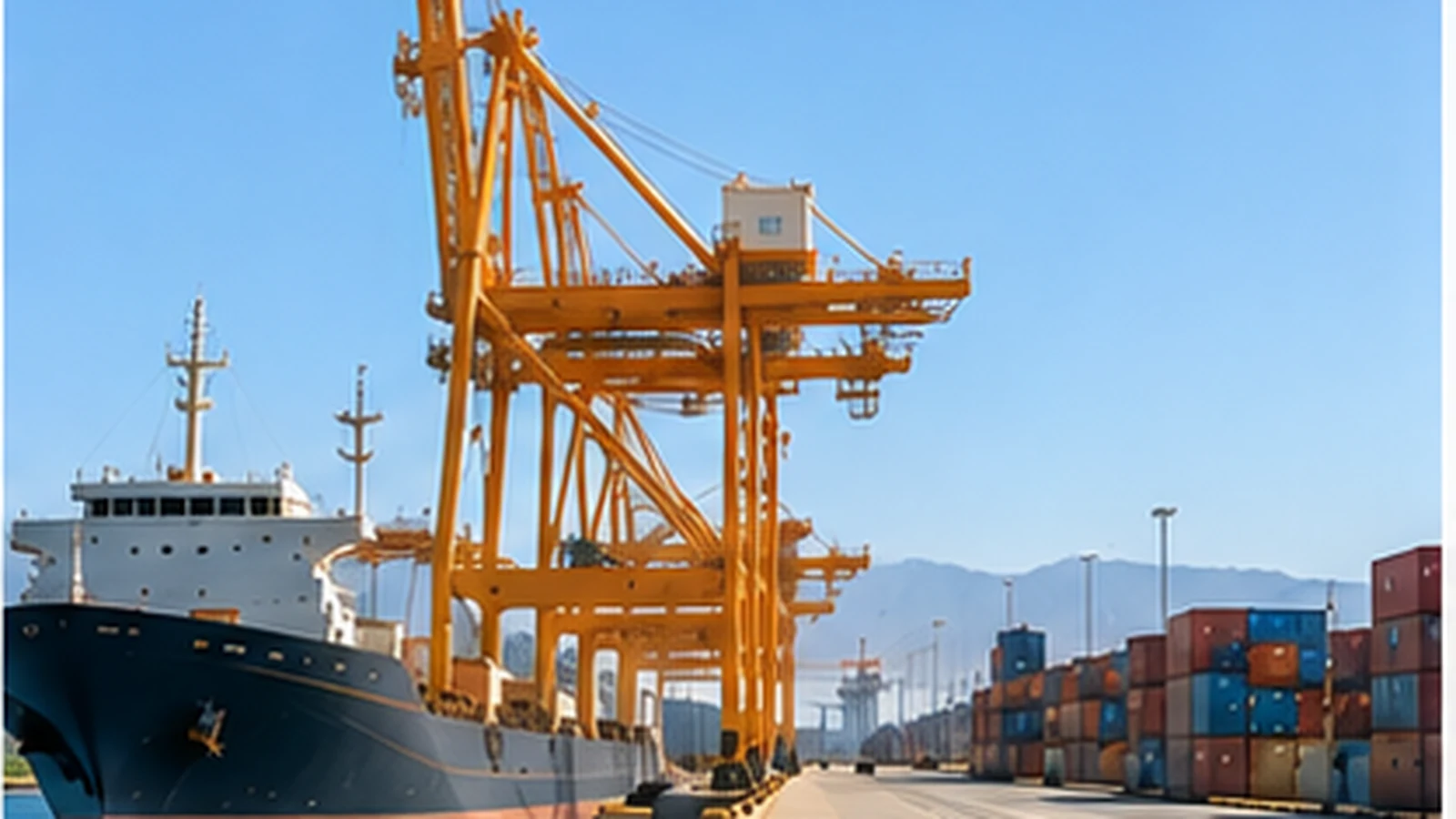
Yes, goods or services from an Oman free-zone company can reach customers in mainland Oman, but the free-zone licence does not create unrestricted mainland access.
For goods, Oman Customs has a specific transfer route from a free zone to the free market. That route can require a Bayan declaration, commercial documents, product permits, customs treatment and VAT review. Services need a different analysis because they do not cross customs like physical goods.
This guide explains the mainland-entry route. It does not replace a full customs-clearance guide or a zone-specific customs manual.
Key rule: a free-zone invoice, licence, tax incentive or warehouse location does not remove mainland customs, VAT, product regulation or local commercial requirements.
1. The legal answer: mainland access is possible, but conditional
OPAZ’s legal framework states that a working company in a free zone may not carry on business in the customs territory except in accordance with the applicable laws, regulations and systems.
This means the commercial question is not simply “Can the company sell?” The real questions are how the goods or services enter the Oman market, who is legally responsible for the import or local activity, which permits apply, and what customs and VAT treatment follows.
2. Goods: Oman Customs has a specific free-zone-to-mainland route
Oman Customs publishes a service called Transfer from Free Zone to Free Market. This is the clearest operational evidence that goods leaving a free zone for the Oman market are handled as a separate customs movement.
| Step | What the official route requires | Why it matters |
|---|---|---|
| 1. Bayan access | Register and work through the Bayan customs system. | The transfer is a customs event, not only a commercial invoice. |
| 2. Transfer declaration | Create a declaration for transfer from free zone to free market. | The goods are formally moved into the mainland customs territory. |
| 3. Commercial documents | Provide the commercial invoice and entry declaration/certificate. | Customs needs the shipment and prior-entry evidence. |
| 4. Transport control | A goods-transportation warranty may be required. | The movement remains controlled until the customs process is completed. |
| 5. Permits and product controls | Provide approvals when the goods require them. | Free-zone status does not remove food, health, conformity, telecom or other product rules. |
| 6. Duty and tax treatment | Pay the amounts due unless a valid exemption or preference applies. | A free-zone location does not itself make mainland entry duty-free or VAT-free. |
For the general national clearance process, use Customs Clearance in Oman: Import, Export and Bayan Guide.
3. Goods entering mainland Oman are treated separately from goods staying in the zone
The GCC Common Customs Law published by Oman Customs allows foreign goods to enter and remain in free zones under the applicable free-zone customs treatment. Goods can also leave the zone for export or transfer to another free zone under the relevant procedures.
When goods leave a free zone for the customs territory, the legal treatment changes. Article 85 of the Common Customs Law states that goods leaving a free zone into the customs office are treated as foreign goods, even when they include local raw materials or goods on which customs duty had previously been paid before entry to the zone.
Practical consequence: do not build the business model on the assumption that goods can move from a free-zone warehouse to an Oman customer as if they were already in normal mainland circulation.
4. Who acts as importer or consignee?
There is no single structure that fits every product. The party bringing the goods into mainland Oman must be legally able to perform the import and must satisfy the activity, customs and product requirements for that transaction.
| Possible route | How it may work | What must be checked |
|---|---|---|
| Related mainland company | A mainland group company imports or buys the goods for Oman distribution. | Activity, customs registration, related-party contracts, inventory ownership, VAT and transfer pricing where relevant. |
| Independent Oman distributor | A licensed local distributor or importer buys or imports the goods. | Commercial contract, importer responsibility, permits, margin, exclusivity and product registration. |
| Free-zone company using a permitted mainland route | The zone company uses a route allowed under the current customs/commercial framework. | Exact zone rules, importer role, activity licence, customs declaration, product controls and tax treatment. |
| Project-specific supply | Goods enter mainland for a specific project or customer arrangement. | Contract terms, consignee, project permits, temporary/permanent import treatment and records. |
The correct route depends on the product, the commercial activity, ownership of the stock, the customer contract and the live customs rules. Do not assume the free-zone company can simply invoice any Oman customer and treat the customs step as an afterthought.
5. Product controls still apply
Customs clearance and commercial licensing are only part of the route. The product itself may need approval before import or sale.
Oman Customs provides an import/export requirements search that can show the HS-code duty treatment, preferential rates where applicable, prior permits, registration requirements and prohibitions.
- food and agricultural products may need health or food-safety approvals;
- medicines, medical devices and cosmetics may need sector registration;
- telecom or radio equipment may need technical approval;
- chemicals and hazardous goods may need additional permits;
- regulated consumer products may need conformity or standards clearance;
- restricted activities may require a separate commercial or sector licence.
6. Customs duty: check the HS code and the actual legal route
The customs result depends on the exact goods. Start with the HS code, origin, customs tariff, any exemption, any trade agreement and any special permit.
A free-zone location can suspend or change customs treatment while goods remain under the zone regime, but mainland entry must be analysed separately. A trade agreement may reduce duty for qualifying originating goods, but it does not remove product permits or VAT automatically.
For Rules of Origin and current trade-agreement status, use Oman Trade Agreements 2026.
7. VAT: Special Zone treatment is conditional
The Oman Tax Authority has separate VAT rules for qualifying Special Zones. Supplies to, from or within a Special Zone may receive zero-rating only when the conditions in the VAT Law and Executive Regulations are met.
This treatment should not be generalized to every investment location or every transaction. A company must first confirm whether the relevant zone and transaction meet the Special Zone conditions. For the separate income-tax framework, see Oman Free Zone Tax Exemptions Under Royal Decree 38/2025.
When goods are transferred into mainland Oman, the import and later local supply should be reviewed under the normal VAT rules that apply to that movement and sale. The standard VAT rate in Oman is currently 5% for most taxable goods and services.
VAT warning: “0% inside the Special Zone” and “0% when sold to a mainland customer” are not the same statement. The mainland-entry transaction needs its own VAT analysis.
8. A simple mainland-entry flow for goods
| Stage | Question to answer | Evidence to prepare |
|---|---|---|
| Commercial model | Who owns the goods and who sells to the Oman customer? | Contracts, purchase orders and invoice flow. |
| Importer role | Who is legally bringing the goods into mainland Oman? | CR, customs registration, activity and authorisations. |
| Classification | What is the exact HS code and customs treatment? | Technical description, tariff search and origin data. |
| Product approval | Does the item need prior registration, conformity or sector approval? | Permit, registration or regulator certificate. |
| Bayan transfer | Which free-zone-to-free-market declaration is required? | Entry declaration, commercial invoice and transfer documents. |
| Duty/VAT | What amounts are due at entry and later sale? | Customs calculation, VAT treatment and exemption evidence if any. |
| Release and delivery | Who receives and distributes the goods after customs release? | Delivery note, warehouse record and customer documentation. |
| Records | Can the company explain the full transaction later? | Customs, tax, inventory, origin and accounting records. |
9. Services are different from goods
A service does not physically cross a customs gate, so the Bayan transfer process for goods is not the correct test. A free-zone service company selling to a mainland customer must instead review where the activity is performed and what the licence allows.
| Service question | Why it matters |
|---|---|
| Is the service within the company’s licensed activity? | The free-zone company cannot perform activities outside its licence. |
| Where is the service physically performed? | Work carried out on a mainland customer site may trigger local commercial or sector requirements. |
| Is the profession regulated? | Engineering, healthcare, finance and other regulated services can need separate approvals. |
| Are employees working onshore? | Labour, work-permit, visa and site-access rules may apply. |
| What is the VAT place of supply? | The VAT result depends on the service and transaction, not only the company’s address. |
| Does the customer contract require an Oman mainland licence or registration? | Tender, procurement and sector rules can affect eligibility. |
A service contract should therefore be reviewed under commercial licensing, sector regulation, labour and VAT rules. A customs declaration is not a substitute for those checks.
10. When a mainland company may still be the cleaner route
If most revenue comes from Oman customers, most goods enter Oman for local distribution, or staff regularly perform services across the mainland, a mainland structure may be simpler than repeatedly routing local business through a free-zone company.
The broader structural decision is covered in Oman Mainland vs Free Zone: Which Business Structure Fits Your Plan?.
| Operating model | Mainland-entry pressure |
|---|---|
| Occasional Oman sale from an export-led warehouse | May be manageable through a defined importer/customs route. |
| Regular local distribution across Oman | A mainland sales/distribution structure may be more coherent. |
| Mostly export/re-export with limited Oman sales | Free zone may remain the main operating base. |
| Service company working mainly at Oman customer sites | Mainland structure may better match the real activity. |
| Factory exporting globally with some Oman sales | Free-zone manufacturing can still fit, but local sales need a separate legal/customs route. |
11. Common mistakes
- Treating the free-zone licence as a mainland licence. The two legal environments are not interchangeable.
- Shipping before confirming the importer. Import responsibility should be clear before the goods move.
- Using the invoice as the customs plan. A commercial invoice does not replace the Bayan declaration or permits.
- Ignoring product registration. Customs release can depend on approvals from another authority.
- Assuming zero VAT. Special Zone zero-rating is conditional and does not automatically follow the goods into mainland Oman.
- Assuming a trade agreement removes all charges. Preferential origin affects customs treatment, not every tax or permit.
- Using one route for goods and services. Services need a separate commercial, sector and VAT analysis.
- Building a local-sales business inside a free zone without comparing mainland first. The extra customs and entity layers may outweigh the zone benefit.
12. Practical checklist before the first mainland sale
- Confirm the product or service activity on the company’s licence.
- Identify the Oman customer and the actual contract flow.
- For goods, identify the legal importer/consignee.
- Confirm customs/Bayan registration and declaration route.
- Confirm the HS code and customs duty treatment.
- Check Rules of Origin only if a trade preference is being claimed.
- Check product permits, standards and registrations.
- Confirm VAT treatment for entry and local sale.
- Map inventory ownership before and after mainland entry.
- Confirm who issues each invoice.
- Confirm workforce/site rules for onshore service delivery.
- Keep the customs, tax, accounting and product records together.
13. Frequently asked questions
Can a free-zone company sell goods in mainland Oman?
Yes, but not as unrestricted free-zone trade. The goods need to enter the mainland through the applicable customs and commercial route, including the correct Bayan declaration, product controls, duty and VAT treatment.
Does Oman Customs have a specific route for goods leaving a free zone for mainland Oman?
Yes. Oman Customs publishes a service called Transfer from Free Zone to Free Market. It requires a customs declaration and supporting documents.
Are goods from a free zone automatically duty free when they enter mainland Oman?
No. The customs treatment depends on the goods, origin, tariff, exemption and legal route. Free-zone status by itself does not guarantee duty-free mainland entry.
Does a free-zone invoice remove VAT?
No. VAT treatment depends on the transaction and the VAT rules. Special Zone zero-rating is conditional and should not be confused with automatic zero VAT on mainland sales.
Can a trade agreement reduce customs duty?
Possibly, if the goods are covered, meet the exact Rule of Origin and the importer has the required proof. A free-zone address does not create origin.
Can the free-zone company use a mainland distributor?
A licensed mainland distributor or importer can be part of the model. The contract, importer responsibility, product approvals, customs and VAT treatment still need to be mapped.
Are services handled through the same customs process as goods?
No. Services need a separate review of activity licensing, where the service is performed, sector regulation, labour rules and VAT place-of-supply.
When should I consider a mainland company instead?
When local Oman sales or onshore service delivery are the main business rather than an occasional part of an export-led model, mainland may be the cleaner structure to review.
14. Next step
Use the Oman Free Zones guide for location context. Use the customs-clearance guide when a real shipment is ready for Bayan planning.
15. Investor implementation note
Oman Verified works with international investors and companies across Oman market entry, company formation, free-zone structures, customs and VAT planning, product approvals, importer routes and ongoing business requirements. For mainland-entry projects, the customs, tax, product and commercial route is mapped against the live requirements before shipment or contract commitment.
16. Official sources
- OPAZ: laws and regulations for Special Economic Zones and Free Zones
- Oman Customs: Transfer from Free Zone to Free Market
- Oman Customs: GCC Common Customs Law
- Oman Customs: Apply a Customs Declaration
- Oman Customs: Import and Export Requirements Search
- Oman Tax Authority: VAT guidelines, including Special Zones
- Oman Tax Authority: current tax rates
Official public information reviewed on September 29, 2026. Confirm the current requirements in the live authority systems before shipment, declaration or contract commitment.