
SALALAH FREE ZONE INVESTOR GUIDE
Salalah Free Zone in Oman: Investor Guide
This guide explains Salalah Free Zone for investors evaluating an export, industrial, logistics or regional distribution base in southern Oman. It covers business fit, ownership, sectors, facilities, costs, tax conditions, documents, workforce rules, registration steps, mainland access and operating risks.
FOREIGN OWNERSHIP
100%
TAX INCENTIVE
Up to 30 Years*
WORKFORCE
Up to 80% Foreign
LOCATION
Arabian Sea Gateway
*The income-tax exemption is activity-specific, requires the prescribed approval, and may be renewed only when the legal conditions are met. Workforce permits also remain subject to role, quota, and authority approval.
Start with the Business Model, Not the Licence
Salalah Free Zone works best when the location, port access, space, utilities, and incentives are part of the operating model. It is not simply a low-cost company-registration route.
This guide compares customer location, production or cargo flow, facility needs, and whether Salalah is more practical than Sohar, Duqm, or mainland Oman.
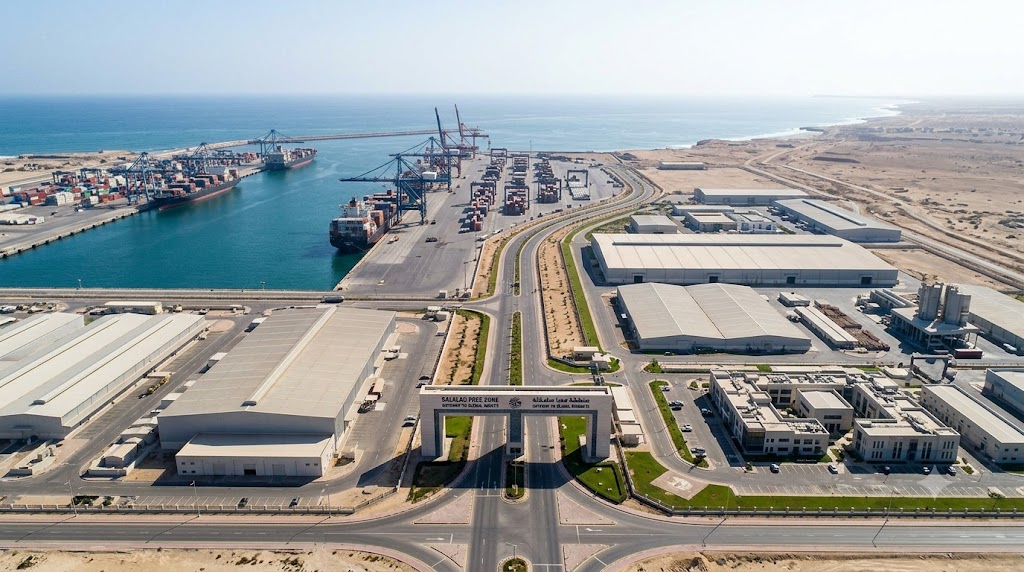
SALALAH FREE ZONE
Why Investors Consider Salalah
Salalah Free Zone is positioned near the Port of Salalah and major Indian Ocean trade routes, giving export-oriented businesses access to Africa, Asia, Europe, and the wider GCC.
The zone is designed for industrial, logistics, food, pharmaceutical, energy, mineral-processing, packaging, and regional distribution projects. The value comes from the full operating ecosystem—not from the licence alone.
Key Reasons
- 100% foreign company ownership
- Direct connection to Salalah’s port-led logistics ecosystem
- Tax exemption of up to 30 years, reviewed every 10 years*
- Customs and VAT benefits for qualifying zone transactions
- No minimum capital requirement under the zone framework
- One-Stop-Shop route for licences, permits, visas, and registrations
LOCATION AND PORT ACCESS
Salalah Free Zone on Google Maps
Salalah Free Zone is in Dhofar, southern Oman, close to the Port of Salalah and Salalah Airport. Its position on the Arabian Sea supports east–west shipping, regional distribution, and access to markets in Asia, Africa, the GCC, Europe, and the Americas.
The map shows the general free-zone location. A proposed office, warehouse, industrial unit, or land plot must be confirmed separately because the zone covers multiple project and facility areas.
Advantages and Practical Limitations
Salalah can be highly effective for the right export or industrial project, but it is not the best structure for every business.
Main Advantages
- 100% foreign ownership is available for approved zone companies.
- The zone is structured for export, re-export, manufacturing, and logistics operations.
- Eligible projects may access long-term tax and customs incentives.
- Offices, warehouses, industrial units, and land are available within the zone.
- Approved work permits may allow a workforce of up to 80% foreign employees.
- Capital and profits can be repatriated subject to banking and legal compliance.
The same activity can have different costs, customs treatment, and market access in another zone or on the mainland.
Main Limitations
- A physical office, warehouse, unit, or land lease is required; offshore registration is not permitted.
- Direct sales into mainland Oman may trigger customs, VAT, and local-market requirements.
- Industrial projects may need environmental, technical, civil-defence, or construction approvals.
- Registration and banking are separate processes; a bank account is not guaranteed.
- Premises, utilities, insurance, staffing, and compliance create recurring costs.
- A tax incentive does not make an unsuitable business model viable.
Choose the legal and operating route only after confirming where the company will earn revenue and where its goods or services will be delivered.
When Salalah Free Zone May Fit
Common Project Fits
- Manufacturing and value-added industrial projects
- Import, export, re-export, and regional distribution
- Logistics, warehousing, cold-chain, and supply-chain operations
- Food, pharmaceutical, petrochemical, mineral, and packaging projects
- Investors needing port access, industrial land, or specialised utilities
Situations Requiring Comparison
- The main objective is only a low-cost visa
- Most customers are inside Oman and direct local sales are the core activity
- The business is a small consulting or online operation with no zone infrastructure need
- The project budget does not cover premises, utilities, staff, and annual compliance
- The investor expects automatic tax, visa, or bank approval
What to Check Before Applying
Before applying, compare project fit, official requirements, recurring obligations, and external dependencies against the actual operating model.
Core Comparison Checks
- Salalah Free Zone suitability against the project model
- Activity, structure, and target-market fit
- Investor Inquiry requirements and official communication route
- Company registration and licensing requirements
- Document checklist and file readiness
- Project-cost and premises-option comparison
- Post-registration obligations and sequence
Additional Implementation Checks
- Investor, manager, and employee residency requirements
- Tax and VAT registration checks
- Corporate bank-account criteria and required evidence
- Office, warehouse, industrial unit, or land requirements
- Translation, attestation, legalisation, and corporate-document dependencies
- Ongoing compliance calendar and renewal dates
Authority and External Costs
- Zone, government, and chamber fees
- Premises rent, deposits, utilities, and insurance
- Translation, attestation, and legalisation
- Bank charges and external specialist costs
- Environmental, technical, and sector approvals
- Construction, fit-out, equipment, and operational costs
Salalah Cost Structure
The total project cost depends on the activity, structure, premises, utilities, workforce, and external approvals.
Zone and Registration Charges
Confirmed only by the zone or relevant authority
Premises and Operating Costs
Depends on space, utilities, fit-out, and use
External Specialist Costs
Depends on any separately appointed accountant, lawyer, engineer, or technical expert
A complete project budget should separate authority charges, premises and utility costs, recurring obligations, insurance, permits, and any external specialist costs.
Company Structures in Salalah Free Zone
The available structure depends on the shareholder profile and the zone’s approval of the project.
| Structure | Best For | Main Point |
|---|---|---|
| Free Zone Company (FZC) | One or more shareholders | Limited-liability zone company for approved projects |
| Free Zone Establishment (FZE) | A single individual or corporate owner | Single-owner company within the free zone |
| Corporate Shareholder Structure | International groups and holding companies | Requires legalised corporate and UBO documents |
| Project with Leased Facilities | Office, warehouse, unit, or land users | Physical presence inside the zone is required |
| Mainland Market Route | Businesses also serving customers inside Oman | May require a distributor, branch, or separate mainland route |
The final entity type, shareholder documents, capital details, and premises arrangement must be confirmed through the live zone process.
Salalah Free Zone or Mainland Oman?
| Topic | Salalah Free Zone | Mainland Company | Why It Matters |
|---|---|---|---|
| Main Purpose | Export, industry, logistics, and regional distribution | Direct business activity inside Oman | Choose based on where revenue is earned |
| Market Access | Zone and international trade routes | Direct access to the Omani market | Mainland sales from the zone need planning |
| Premises | Must be inside the free zone | More location flexibility | Space must match the licence and operation |
| Tax & Customs | Zone incentives may apply | Standard mainland tax and customs rules | Eligibility must be confirmed in writing |
| Best For | Infrastructure-led and export-oriented projects | Local activities, retail, and domestic contracts | The wrong structure can add cost and restrictions |
If direct domestic activity is central to the plan, compare the project with company registration in mainland Oman before committing to a zone lease.
Foreign Ownership and Suitable Activities
Salalah Free Zone permits 100% foreign company ownership for approved projects. The activity and project still need zone approval.
The strongest fit is usually a business that benefits from port access, industrial land, warehouses, utilities, or export-focused incentives.
Priority Sectors Include
- Logistics and supply-chain management
- Food processing and cold-chain operations
- Pharmaceuticals and healthcare manufacturing
- Petrochemicals and downstream industries
- Minerals and industrial materials
- Renewable energy, hydrogen, packaging, and assembly
ACTIVITY CHECK
Business Activity Finder
Use the Oman Business Activity Finder to search official activity codes and titles before preparing the Salalah project inquiry. A finder result is an initial screening step; Salalah Free Zone and any sector regulator must still confirm whether the activity, facility, ownership, and approvals are acceptable for the proposed project.
Requirements and Documents
Shareholder Documents
- Valid passport copies
- Proof of address and contact details
- Photographs and specimen signatures, where required
- Ownership and authorised-signatory details
Project and Corporate Documents
- Business plan or project summary
- Proposed activities, products, markets, and trade routes
- Investment, staffing, premises, and utility requirements
- Corporate certificates, constitutional documents, board resolutions, and UBO records where applicable
Foreign corporate documents may require legalisation, Arabic translation, and approval. Industrial projects may also require environmental and technical information.
RESIDENCY AND WORKFORCE
Investor, Employee, and Family Residency
Eligible owners, managers, and employees may be able to apply through the zone’s official visa and residency channels after the relevant company and employment requirements are met. The official visa and residency route, document requirements, and approval status must be confirmed through the zone and competent authorities.
Salalah Free Zone currently states an Omanisation rate of approximately 20%, allowing work permits for a foreign workforce of up to 80%, subject to role, quota, and authority approval.
Companies that need help checking quotas, labour-file status, work permits, WPS, contracts, or renewals can use our labour and Omanisation guide. The live Ministry and zone records decide the available route.
Important Points
- Residency is not automatic and remains subject to immigration approval.
- Work permits depend on the company, activity, role, and quota.
- Family-join residency may be available after the main applicant’s status is approved.
- Banking, medical, identification, and residency steps may require presence in Oman.
Company residency and Golden Visa comparison →
What Type of Space Is Required?
Salalah Free Zone does not permit offshore registration. The company must lease an approved office, warehouse, industrial unit, or land within the zone.
Office
Suitable for approved administrative, trading, and project-management functions where a full warehouse or factory is not required.
Ready-Built Warehouse or Unit
Suitable for logistics, storage, food, pharmaceutical, assembly, and light-industrial operations.
Industrial Land
Available for projects that need custom facilities, production lines, heavy utilities, or specialised infrastructure.
Land is leased rather than sold. Salalah Free Zone currently describes long-term land leases of up to 30 years, renewable. Plot size, the offered term, renewal conditions, utilities, and approvals depend on the project proposal and availability.
Salalah Free Zone Registration Roadmap
1. Define the Project Model
Document the activity, shareholders, target markets, budget, logistics, premises, utilities, and workforce plan.
2. Compare Activity and Structure
Compare the proposed activity, ownership structure, target markets, project evidence, and zone eligibility before using the applicable official channel. The zone alone reviews suitability and prepares any facility or project proposal.
3. Review Facility and Application Terms
Review the relevant office, warehouse, industrial unit, or land options. Availability, eligibility, and commercial terms are confirmed only by the zone or property provider.
4. Confirm Registration Requirements
Confirm the official company-registration requirements, shareholder records, activity licence, chamber membership, and authority sequence. Official registrations and licences are issued only by the competent authorities.
5. Map Post-Registration Obligations
Map the relevant lease, visa, tax/VAT, customs, environmental, construction, banking, and operational obligations. Each approval remains with the relevant authority, zone, bank, or external provider.
Estimated Timeline
| Stage | Timing | Main Dependency |
|---|---|---|
| Initial Project Definition | Project-dependent | Complete project information |
| Zone Initial Assessment | Project-specific | Activity, facility, and zone review |
| Registration and Licensing | Set by the relevant authority after initial approval | Documents, selected structure, and authority processing |
| Industrial or Construction Permits | Longer separate process | Technical and environmental approvals |
| Residency and Banking | Separate post-registration steps | Immigration and bank due diligence |
Timelines are estimates only. Industrial, regulated, environmental, construction, or high-utility projects can take substantially longer than a standard office or warehouse application.
What Happens After Registration?
Commercial registration is only one part of becoming operational inside Salalah Free Zone.
1. Lease and Facility Activation
Confirm the steps for finalising the office, warehouse, unit, or land agreement, including deposits, utilities, and provider terms.
2. Tax, VAT, and Customs Setup
Identify the registrations and exemption applications that may apply, prepare the required records, and use the appropriate tax, customs, or licensed specialist channel. For shipments moving between the zone, mainland Oman, transit routes, or re-export, review Oman customs-clearance guide before cargo is dispatched.
3. Corporate Banking
Prepare the business profile, source-of-funds evidence, contracts, and expected transaction model for bank review.
4. Visas and Labour File
Review eligibility and document requirements for investor, manager, employee, and family-related permissions; official applications and decisions remain with the competent authorities.
5. Technical and Operating Permits
Identify and track environmental, civil-defence, municipality, construction, health, or sector approvals, with submissions and decisions handled through the relevant authorities or licensed specialists.
6. Compliance and Renewal Planning
Maintain a compliance calendar for licence, lease, tax, visa, permit, and insurance obligations from the first year.
CORPORATE BANKING
Opening a Corporate Bank Account
A Salalah Free Zone company is legally separate from the bank’s approval process. Banks review ownership, activity, customers, suppliers, source of funds, expected countries, premises, and economic substance.
A bank file normally includes ownership records, the business profile, source-of-funds evidence, expected transactions, counterparties, and supporting documents. Our separate corporate bank-account guide explains the file, source-of-funds, UBO, transaction, and review requirements. The final decision, account type, currencies, and conditions belong solely to the bank.
- Bank selection criteria
- Document checklist and records
- Business profile and expected transactions
- Application evidence and compliance checks
Tax, Customs, and Ongoing Compliance
Royal Decree 38/2025 provides a 10-year income-tax exemption from the date the qualifying activity starts, renewable for two further 10-year periods for activities of a special nature under the applicable rules. Salalah Free Zone therefore describes the incentive as up to 30 years, reviewed every 10 years. The exemption requires the prescribed decision and is not automatic for every company.
Tax Exemption Eligibility
The exemption is not automatic for every company or activity. The 2025 law excludes banks, financial institutions, insurance and reinsurance companies, telecommunications providers, construction companies, and land and maritime transportation businesses in the zone. Eligibility, start date, renewal, documentation, and any implementing rules must be confirmed for the specific project.
Customs and VAT Treatment
The 2025 zone law provides customs treatment for qualifying equipment, machinery, raw materials, operating supplies, and exports. Salalah is also classified as a Special Zone for VAT purposes, so qualifying supplies may be zero-rated only when the VAT Law, Executive Regulations, registration, evidence, and movement conditions are met. Goods entering mainland Oman can be treated as imports into the customs territory.
Accounting and Filing
A tax incentive does not remove the need for proper accounting, invoices, records, registrations, and required returns.
Employment and Omanisation
Workforce planning must reflect the zone’s approximately 20% Omanisation requirement and the permits approved for the company.
Licence, Lease, and Permit Renewal
Commercial registration, activity licences, leases, visas, permits, insurance, and other approvals must be monitored and renewed on time.
For the legal basis, review the official Special Economic Zones and Free Zones Law and the Oman Tax Authority’s VAT guide for Special Zones. The Oman corporate tax and VAT guide explains file review, registration, return, and exemption questions.
Recurring Project Costs
The cost of a Salalah Free Zone company continues after registration and should be modelled before the project starts.
| Cost Area | Examples | Depends On |
|---|---|---|
| Zone and Licence Renewal | Commercial registration, chamber, activity, and zone procedures | Structure and licensed activities |
| Premises and Utilities | Office, warehouse, land, electricity, water, gas, security, and maintenance | Space, consumption, and project type |
| Accounting, Tax, and Customs | Records, filings, exemption evidence, VAT, and customs procedures | Transactions and filing requirements |
| Visas and Employment | Investor, manager, employee, and family-related costs | Approved headcount and workforce plan |
| Insurance and Permits | Property, operational, technical, environmental, and sector requirements | Risk profile and project approvals |
| External Specialist Costs | Accounting, licensed legal, technical, and compliance work | Required expertise and project complexity |
The final annual cost depends far more on premises, utilities, workforce, permits, and operations than on the company certificate alone.
Annual modelling should include accounting, filings, exemption evidence, VAT and customs records, lease renewals, permits, insurance, and specialist review where required.
Risks and Common Mistakes
A free-zone company can be registered successfully and still fail operationally when the project model is incomplete.
Choosing Salalah Only for the Tax Incentive
The location should make commercial sense even before the tax benefit is considered.
Assuming Mainland Sales Are Simple
Goods and commercial activity entering the Omani market may require customs, VAT, licensing, distribution, or a mainland structure.
Underestimating Premises and Utility Costs
Land, warehouses, fit-out, utilities, deposits, insurance, and maintenance can exceed registration costs.
Ignoring Approvals and Workforce Planning
Environmental, technical, construction, health, labour, and banking requirements can delay the operational start.
Salalah Free Zone Deep-Dive Guides
Use these focused guides to move from location selection into activity, premises, logistics, workforce, technical approvals and project-file preparation.
- Activities, Licences and Facility Requirements
- Offices, Warehouses, Industrial Units and Land
- Port Logistics, Cargo Flow, Customs and Re-export
- Visas, Workforce, Omanisation and Staff Accommodation
- Utilities, Construction and Environmental Approvals
- Project File, Documents, Technical Data and Approval Timeline
Frequently Asked Questions
Can a foreign investor own 100% of a Salalah Free Zone company?
Yes. Salalah Free Zone states that approved companies can have 100% foreign ownership.
What company types are available in Salalah Free Zone?
The zone lists a Free Zone Company (FZC) for one or more shareholders and a Free Zone Establishment (FZE) for a single owner.
Is an office, warehouse, unit, or land lease required?
Yes. Salalah Free Zone does not permit offshore registration; an approved physical presence inside the zone is required.
Is the tax exemption automatically 30 years?
No. The legal framework provides an initial 10-year exemption for qualifying enterprises, with possible renewals for eligible activities. The specific treatment must be confirmed.
Can a Salalah Free Zone company sell directly inside mainland Oman?
The route depends on the activity and transaction. Customs, VAT, local licensing, distribution, or a separate mainland structure may be required.
What is the Omanisation requirement?
Salalah Free Zone currently describes the Omanisation rate as approximately 20%, which may allow up to 80% foreign workforce, subject to approvals.
Related Guides
TRADE POLICY
Trade Agreements and Export Planning
Understand where an agreement may affect origin, documentation, tariffs, and market access. A company’s location alone does not create preferential origin.
NATIONAL STRATEGY
Vision 2040 and Investment Priorities
Review the national direction for manufacturing, logistics, food security, mining, renewable energy, private-sector growth, and exports.
COMMERCIAL TEST
Policy Fit Is Not Project Approval
A trade agreement or national priority does not guarantee zone acceptance, tax treatment, a licence, a customer, financing, land, utilities, or profit.
Each guide should be applied to the actual product, activity, customer market, investment, facility, and operating plan.