
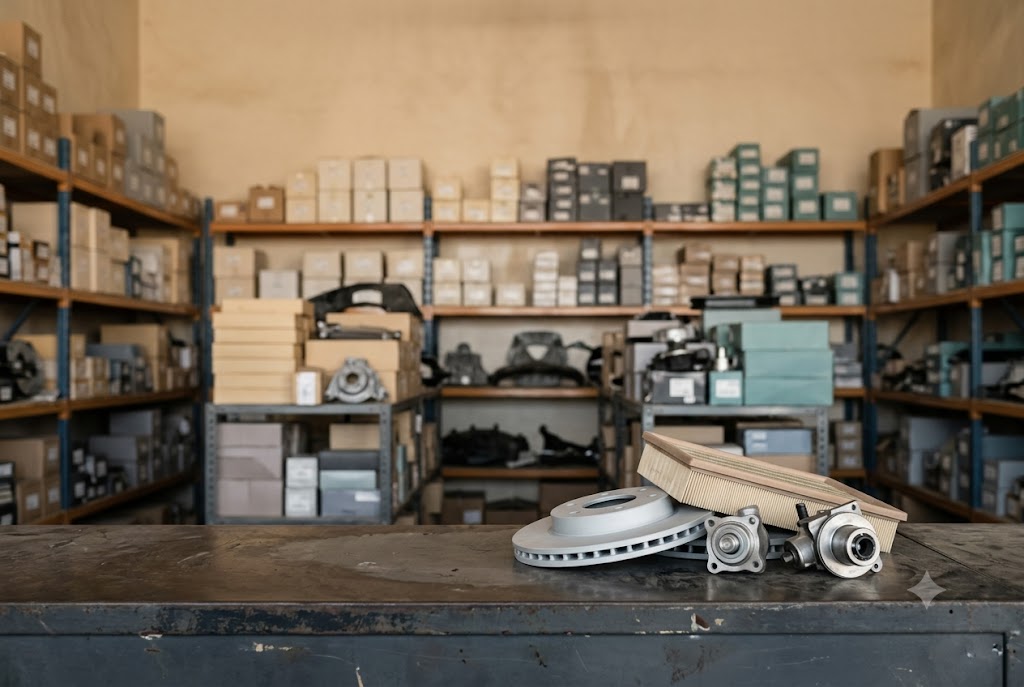
An auto parts business in Oman can use several models. It may import new parts, supply workshops, sell to retailers, operate a shop, or sell online. Some companies also keep stock and deliver orders across Oman.
The first step is to define the real business model. Trading parts is different from repairing vehicles or installing parts. A company should not assume that one trading activity covers workshop work.
Product compliance is also important. Each shipment may have different customs, standard, safety, label and permit rules. These checks should happen before the supplier ships the goods.
First decision: trade or workshop?
- List every product you plan to sell.
- Choose import, wholesale, retail, e-commerce and storage activities as needed.
- Keep repair, fitting and workshop services separate.
- Check foreign ownership and licence conditions in the live system.
A clear activity plan reduces later problems with licensing, customs, premises, banking and staffing.
Auto parts business models in Oman
The term “auto parts business” can describe several different operations. Each operation may need its own commercial activity or approval.
| Business model | What it covers | Main check |
|---|---|---|
| Import | Bringing parts and accessories into Oman | Importer status, HS code, permits and conformity |
| Wholesale | Supplying retailers, fleets and workshops | Correct wholesale activity and stock records |
| Distribution | Holding stock and delivering to business customers | Warehouse, transport and delivery structure |
| Retail | Selling parts directly to vehicle owners | Retail activity, approved shop and consumer duties |
| E-commerce | Selling through a website, app or social channel | Underlying trade activity and e-commerce licence |
| Used parts | Selling tested or dismantled second-hand parts | Product condition, safety, origin and import restrictions |
| Workshop services | Repairing vehicles or installing parts | Separate activities, premises and technical approvals |
Use the Oman Verified tool to search exact Oman business activity codes. A search result does not prove foreign ownership eligibility or final approval. The live Oman Business Platform and the relevant authority remain the final reference.
Import and wholesale operations
An importer normally buys from manufacturers, authorised distributors or large trading suppliers. The company then clears the goods in Oman and sells them to workshops, retailers, fleet operators or other distributors.
Define the product range first
A broad description such as “vehicle parts” is not enough for purchasing or customs work. The importer should prepare a product list with clear technical details.
- Brand and manufacturer
- Part name and part number
- Vehicle make, model and production year
- Country of origin
- New, remanufactured or used condition
- Material, function and technical specification
- Package quantity, weight and value
- Warranty and supplier return terms
This information supports activity selection, HS classification, permit checks, stock control and customer service.
Wholesale sales need clear records
A wholesaler should record the supplier, shipment, batch, part number and buyer. This is important when a part is defective, recalled or reported as counterfeit.
Invoices should describe the goods clearly. Avoid generic lines such as “spare parts” for a large mixed order. Detailed records also make future customs and warranty reviews easier.
Important: Do not send a commercial shipment because a supplier says the product is “standard GCC stock.” Confirm the Oman requirements using the exact product and HS code before departure.
Retail and e-commerce
A retail shop sells directly to vehicle owners. It normally needs the correct retail activity and premises approved for that use. The lease should match the shop, stock and customer-access model.
An online store still needs the underlying auto-parts trading activities. Oman also has a licence for commercial companies that practise e-commerce. Online sales do not remove product, customs, tax or consumer duties.
Build the online catalogue around part accuracy
Wrong-fit orders create high return costs. A useful catalogue should allow the customer to check the vehicle and part before payment.
- Vehicle make, model, year and engine
- OEM or supplier part number
- Clear genuine, aftermarket or remanufactured status
- Product photos that match the actual item
- Stock status and expected delivery time
- Warranty, return and installation conditions
- Seller identity, contact details and invoice process
Maroof Oman can help customers identify licensed online stores. Registration on a trust platform does not replace the required commercial and e-commerce licences.
Workshop activities must remain separate
Importing or selling a part does not automatically allow the company to install it. Workshop work changes the risk, premises, staffing and licensing position.
| Work performed | Why it needs a separate check |
|---|---|
| General vehicle repair | Workshop activity, technical staff and approved premises may be required |
| Electrical repair | Separate technical activity and safety controls may apply |
| Tyre fitting and balancing | Service equipment, site and activity conditions differ from tyre sales |
| Oil and lubricant change | Waste, storage, safety and environmental controls may apply |
| Air-conditioning repair | Technical work, gases and equipment may need added controls |
| Accessory installation | Electrical, body or safety-related fitting may need workshop coverage |
Oman’s list of activities reserved for Omani investors has changed more than once. Workshop activities should be checked one by one. Do not rely on a general statement that every repair activity is open or prohibited.
A practical model is to keep the foreign-owned company focused on import and trade. Installation can be handled by separately licensed workshops under clear commercial agreements. This is a business option, not a rule for every case.
Standards, conformity and product labels
Auto parts do not all follow one approval route. The requirement depends on the product, HS code, material, safety function, condition and intended use.
Oman uses national and Gulf standards for many regulated products. The Directorate General of Standards and Metrology, Oman Customs and other authorities may review conformity documents. The Hazm platform also supports Oman’s product conformity system.
| Product group | Checks before shipping |
|---|---|
| Tyres and wheels | Gulf conformity, size, load, speed, production data and permit route |
| Batteries | Applicable technical standard, safety data, transport and storage controls |
| Lighting and electronics | Electrical safety, electromagnetic rules and road-use restrictions |
| Brake and steering parts | Manufacturer evidence, fitment, safety standard and traceability |
| Oils, fluids and chemicals | Product composition, safety data, labels and controlled-product permits |
| Used or remanufactured parts | Condition, safety, origin, waste rules and item-specific import position |
Labels must match the real product
The package and invoice should not mislead the buyer. The brand, origin, part status and product description must be accurate. Do not present aftermarket parts as genuine parts.
Arabic information may be required for some regulated products. The exact label content should be checked against the current technical rule for that product.
Used-parts warning: The research draft contained claims about universal pre-export inspection and radiation certificates. These are not safe general rules for Oman. Check each used product in the official import-requirements system before purchase.
Customs, HS codes and Bayan
Bayan is Oman Customs’ electronic system for declarations, documents, permits and related procedures. The company should prepare its importer and user access before the first commercial shipment.
Oman Verified provides import customs clearance assistance for shipment-readiness review and local coordination. Final classification, valuation, inspection, permit and release decisions remain with the authorities.
Basic import flow
- Confirm the importer, seller, buyer and delivery route.
- Classify each product under the current HS code.
- Search the permit and restriction requirements.
- Prepare the commercial and technical documents.
- Submit the customs declaration through an authorised user or broker.
- Complete payment, inspection and release steps.
Common shipment documents
| Document | Purpose |
|---|---|
| Commercial invoice | Shows seller, buyer, goods, quantity, value and currency |
| Certificate of origin | Supports the declared country of origin |
| Packing list | Shows packages, quantities, weights and packing details |
| Transport document | Links the cargo to sea, air, road or courier transport |
| Technical catalogue | Explains function, material, model and product use |
| Conformity or test document | Supports a regulated product approval where required |
| Permit file | Shows approval from the responsible authority where required |
Duty and import VAT
Do not apply one customs-duty rate to every auto part. The rate depends on the HS code, origin and customs treatment. A trade agreement may change the duty only when the product meets the origin rules and the evidence is accepted.
Standard-rated imports are generally subject to 5% VAT. The final customs value, duty, VAT and any exemption are decided using the real shipment documents.
Inventory, storage and warehouse planning
Auto parts can hold a large amount of working capital. A company may have thousands of stock lines with small differences in model, year or engine.
Choose the correct premises type
| Premises | Use | Main issue |
|---|---|---|
| Retail shop | Customer sales and small stock | Commercial use, access, display and municipal licence |
| Ordinary warehouse | Holding cleared local-market stock | Approved use, safety, insurance and fire controls |
| Distribution unit | Picking, packing and local delivery | Loading access, vehicles, staff and operating hours |
| Customs warehouse | Goods under a customs warehouse procedure | Separate Customs approval, system setup and guarantees |
| Workshop | Repair or installation | Separate workshop activity and technical premises |
A customs warehouse is not the same as a normal commercial warehouse. Do not add customs claims to a normal storage site without the separate approval.
Useful stock controls
- Use a unique SKU for each real part variation.
- Link supplier numbers with OEM reference numbers.
- Record batch and shipment details for safety parts.
- Separate genuine, aftermarket, remanufactured and used stock.
- Set minimum and maximum stock levels.
- Track slow stock and dead stock each month.
- Protect batteries, fluids and sensitive electronics during storage.
- Keep damaged or returned goods away from saleable stock.
Supplier, counterfeit and warranty risk
Supplier selection is a legal and commercial issue. Oman’s Consumer Protection Authority has taken action in cases involving counterfeit vehicle parts, false origin information and products sold as genuine when they were not genuine.
Check the supplier before the first order
- Verify the legal supplier name and address.
- Ask for brand-authorisation evidence where relevant.
- Check sample packaging and serial information.
- Compare part numbers with the manufacturer catalogue.
- Agree how defective and wrong-fit goods are handled.
- Define responsibility for testing and conformity documents.
- Keep payment, shipment and communication records.
Give customers clear product information
The invoice should identify the product and price. The seller should explain whether the part is genuine, aftermarket, remanufactured or used. Warranty limits and installation conditions should be given before sale.
A business should also have a written process for defective goods, returns and recalls. A shop policy cannot remove rights given by Oman’s consumer law.
Short company, residence and banking pathway
The company route should support the real products, customers, premises and import plan. Full registration steps are outside this sector guide.
- Confirm the trade and workshop activity boundaries.
- Check foreign ownership and any sector approval.
- Select the legal entity and approved premises.
- Complete commercial, tax and customs readiness.
- Prepare the banking file and supplier-payment route.
- Plan staff positions and work permissions before hiring.
For the registration route, use Oman company setup advisory. This keeps the full company process outside this informational post.
Companies that need sales, warehouse or delivery staff can request employee visa coordination in Oman. Job approval, Omanisation and work permission depend on the current labour rules and company file.
Importers may also need company bank account assistance in Oman. A bank decides each application after reviewing ownership, activities, suppliers, expected transactions and source of funds.
Costs and useful tools
The largest cost is often not the company registration. Stock, freight, warehouse space, slow inventory and customer credit can need much more capital.
| Cost group | Examples |
|---|---|
| Company and activities | Commercial registration, activities and local licences |
| Premises | Deposit, rent, fit-out, signboard and safety work |
| Customs setup | Bayan access, broker, declarations and permits |
| Product compliance | Testing, certificates, translation and labels |
| Shipment | Freight, insurance, handling, terminal and delivery |
| Government charges | Customs duty, VAT and product-specific fees |
| Stock | Initial order, spare stock and slow-moving items |
| Operations | Staff, software, vehicles, insurance and returns |
The general Oman mainland setup cost estimator covers general company and investor-residence costs. It does not calculate auto-parts stock, warehouse fit-out, customs, product approvals, freight, duty, VAT or workshop equipment.
Common mistakes
- Using one vague trading activity for the whole business.
- Adding installation services without workshop approval.
- Shipping goods before checking the HS code and permits.
- Trusting a supplier’s general “GCC approved” statement.
- Selling aftermarket goods as genuine parts.
- Using a residential or unapproved site for commercial stock.
- Mixing used, damaged and new parts in one stock process.
- Ordering too many slow-moving product lines.
- Ignoring warranty, return and recall procedures.
- Assuming a trade agreement creates automatic duty exemption.
- Choosing activities before checking foreign ownership limits.
- Opening an online store without the e-commerce route.
Practical checklist
- Define import, wholesale, retail and online sales separately.
- List every workshop or installation service separately.
- Check the live activity and foreign ownership position.
- Prepare the full product and supplier list.
- Confirm HS codes before placing large orders.
- Search permits and conformity requirements by product.
- Approve labels, origin and product-status wording.
- Set up the importer and Bayan route.
- Choose an approved shop or warehouse.
- Prepare fire, safety and insurance requirements.
- Build a part-number and stock-control system.
- Write supplier, warranty and return terms.
- Prepare customs, tax and accounting records.
- Review banking and supplier-payment evidence.
- Check labour approval before hiring staff.
Frequently asked questions
Can a foreign investor own an auto parts company in Oman?
Many trading activities may be available to foreign-owned companies. The exact activity must still be checked against the current negative list, live registration system and any added licence conditions.
Can one company import, wholesale and retail auto parts?
It may be possible when all required activities are added and the premises support the model. The company should confirm each activity instead of using one broad description.
Can the same company repair vehicles?
Repair and installation are separate from trading. The exact workshop activity, foreign ownership position, technical licence, staff and premises must be reviewed before offering the service.
Do all imported auto parts need one conformity certificate?
No. Requirements differ by product and HS code. Tyres, batteries, lighting, safety parts, chemicals and used goods can follow different checks.
Are all auto parts charged 5% customs duty?
No fixed rate should be assumed for every item. Customs duty depends on classification, origin and the applicable customs treatment. Check the current tariff before ordering.
Can an auto parts company sell online?
Yes, subject to the correct auto-parts trading activities and the applicable e-commerce licence. Online sellers must also follow product, invoice, warranty and consumer rules.
Can a company import used auto parts?
Used parts need a product-by-product check. Safety, condition, waste, origin, standards and import restrictions can affect whether a specific item is accepted.
Does a normal warehouse need Customs approval?
A normal warehouse needs the approvals for its location and use. A customs warehouse is a different regime and needs separate Customs approval, system access and guarantees.
Related Oman Verified guides and services
Activity restrictions
Review restricted activities for foreign investors in Oman before adding workshop or neighbouring activities.
Origin and tariffs
Read about Oman’s trade agreements when a supplier claims preferential customs treatment.
US trade route
Check the Oman–US Free Trade Agreement only when the goods may meet the agreement’s origin rules.
Conclusion
An auto parts business in Oman needs more than a general trading licence. The company must separate trade from workshop work, classify each product, check conformity before shipping and use approved premises.
The strongest plan starts with a narrow product list and clear customer group. It then connects activities, customs, stock, supplier controls and customer warranty duties.
Official sources
- Ministry of Commerce, Industry and Investment Promotion — Oman Business Platform, Hazm and official service routes.
- Ministerial Decision 209/2020 — activities prohibited for foreign investment.
- Oman News Agency: 2024 update to prohibited activities.
- Gov.om: e-commerce licence for commercial companies.
- Ministerial Decision 499/2023 — e-commerce regulation.
- Oman Customs: search import and export requirements.
- Oman Customs: user registration in Bayan.
- Oman Customs: customs declaration requirements.
- Oman Customs: customs duty calculator.
- Oman Tax Authority: income tax and VAT registration.
- Consumer Protection Authority: counterfeit vehicle spare-parts case.
- Consumer Protection Authority: non-genuine spare-parts case.
- Consumer Protection Authority: invoice and warranty obligations.
- Gov.om: warehouse approval service.
- Gov.om: final civil protection licence for an establishment.
Official public information reviewed on 26 July 2026. Confirm the current requirements in the live government systems before submission.