
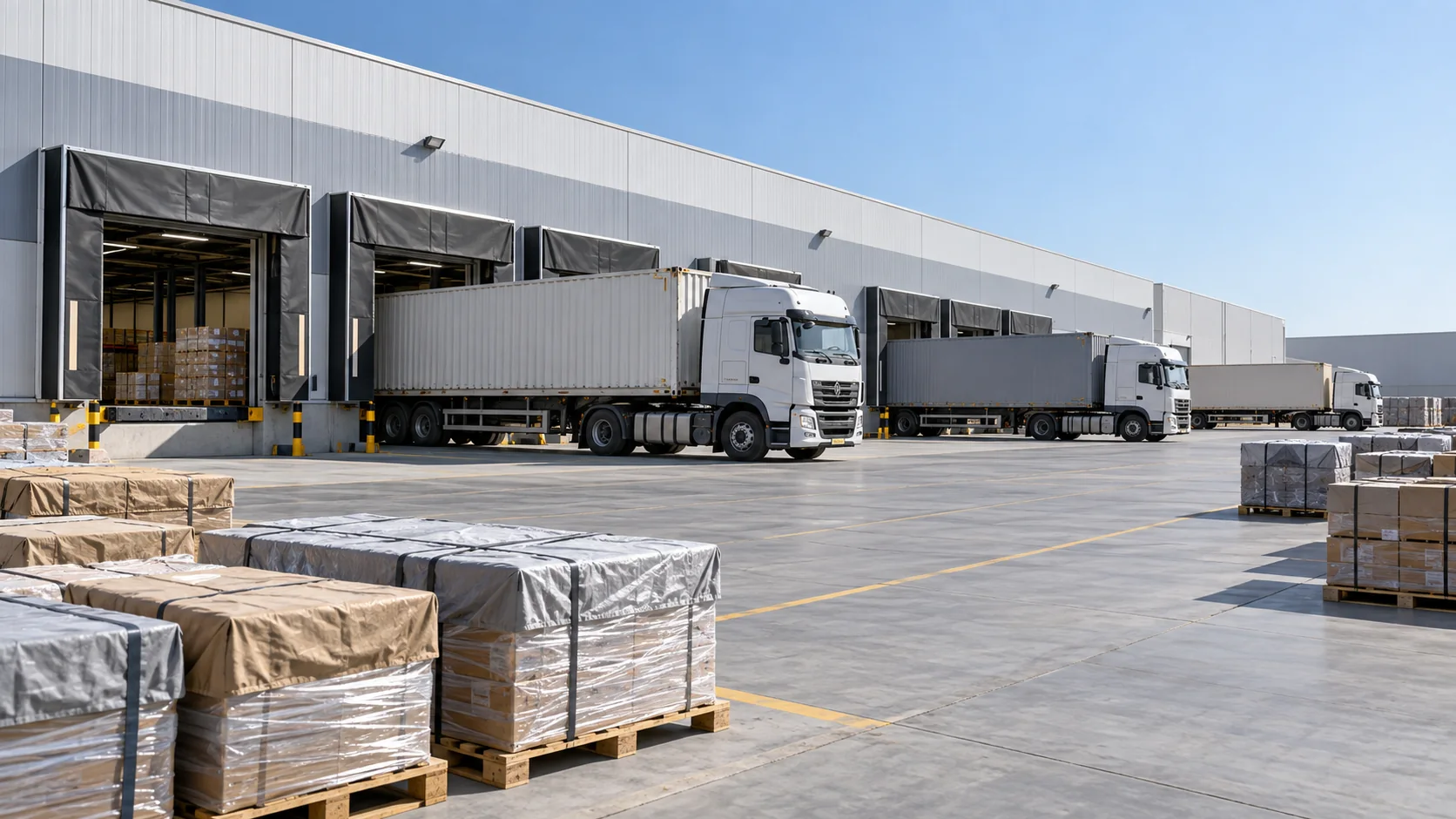
SOHAR can be a strong base for trading and re-export when goods arrive through the port, remain under the zone/customs structure and move onward to regional or international markets. The business model still needs the correct licence, warehouse/customs route and origin logic.
For the wider SOHAR context, use the SOHAR Freezone Investor Guide.
1. Trading and re-export model
| Stage | Decision |
|---|---|
| Supplier | Where are the goods sourced and on what Incoterm/payment terms? |
| Arrival | Port, customs declaration and free-zone entry route. |
| Storage | Own warehouse, 3PL or build-to-suit unit. |
| Value-added work | Storage only, packing, labelling, assembly or permitted processing. |
| Destination | Re-export, another free zone or mainland Oman. |
| Origin | Does any trade agreement preference actually apply? |
2. General Trade Licence supports broad trading activity
SOHAR currently markets a General Trade Licence for companies importing, exporting, distributing and storing a wide range of products. Broad licence wording does not remove product restrictions, sector permits or customs controls.
3. Re-export is different from mainland distribution
If goods leave SOHAR for a foreign destination, the re-export route stays different from goods moving to mainland Oman. Mainland entry uses a separate customs declaration and local product/tax rules.
For customs mechanics, use the SOHAR customs guide.
4. Storage and simple handling do not create Omani origin
A trading company should not market goods as Omani-origin simply because they are stored, repacked or relabelled in SOHAR. Preferential Rules of Origin depend on the relevant agreement and product rule.
Use Oman Trade Agreements and Rules of Origin before promising an FTA tariff preference.
5. Commercial planning questions
- customer countries and expected annual volumes;
- product restrictions/registration;
- warehouse/3PL model;
- inventory ownership;
- insurance;
- customs broker and Bayan process;
- bank/payment route;
- Incoterms;
- returns/reverse logistics;
- mainland Oman share of sales.
6. When SOHAR may fit
SOHAR can be attractive where port access, bonded-zone logistics, warehousing, industrial customers or re-export routes are central. It may be less efficient when almost all goods are imported only for regular domestic distribution across Oman.
7. Frequently asked questions
Can a SOHAR company re-export goods without paying normal Oman import duty?
Goods operating within the free-zone customs regime can receive the applicable free-zone customs treatment, subject to the declaration, restrictions and destination.
Can a General Trade Licence cover any product?
No. Product and sector restrictions still apply.
Can goods be sold in mainland Oman?
Yes through the applicable mainland customs/commercial route; do not treat it as the same as re-export.
Does repacking in SOHAR create Oman origin?
Not automatically. Check the product-specific Rules of Origin.
Should a trading company lease its own warehouse?
Not always. Compare own space with a licensed 3PL based on volume, product control and operating cost.
8. Official sources
- SOHAR: General Trade Licence and warehousing opportunities
- Oman Customs: procedural services
- SOHAR One-Stop Shop
Official public information reviewed on October 2, 2026. Confirm the exact goods, licence, customs route and product approvals before contracting.