
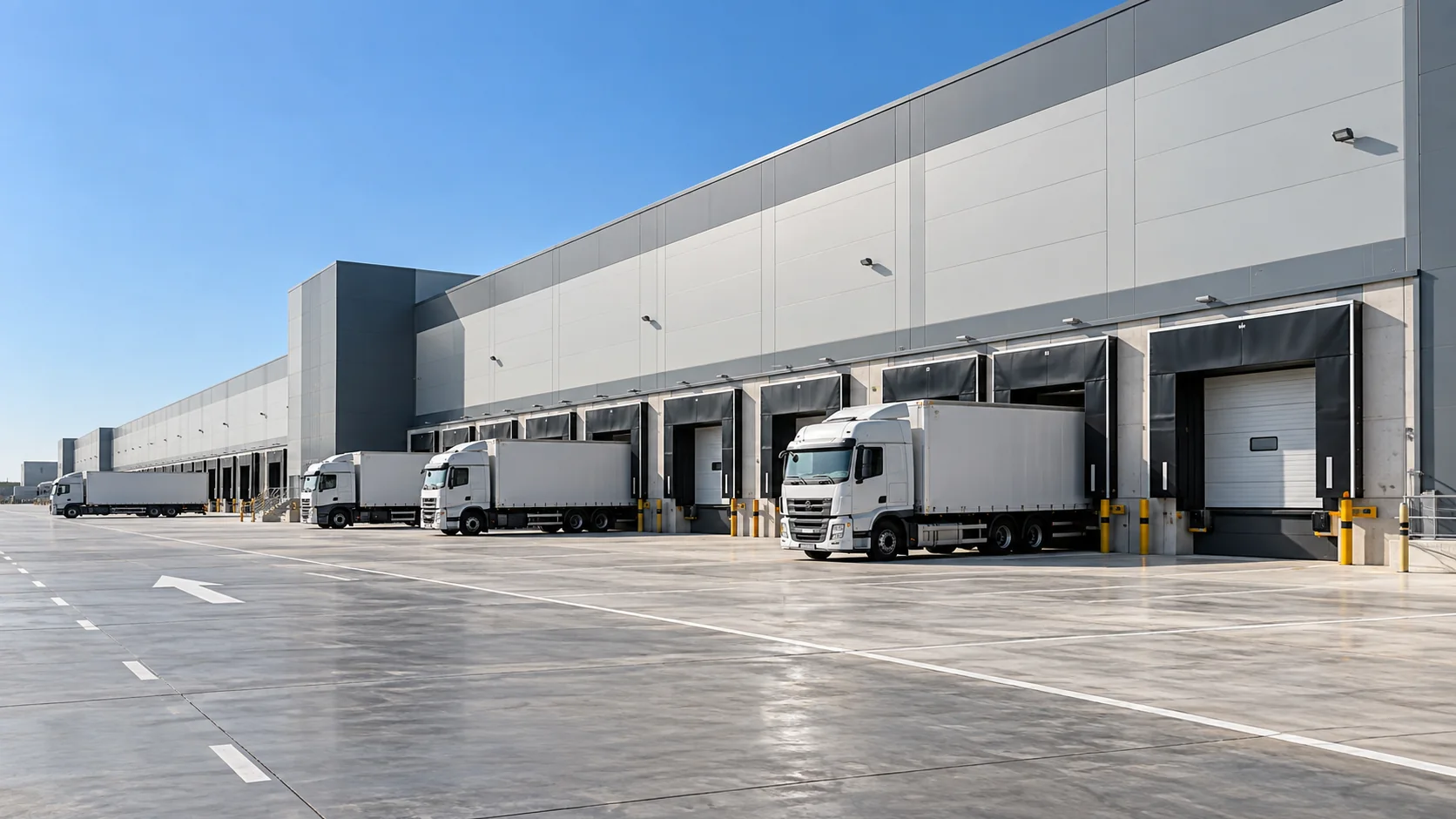
SOHAR’s port/free-zone ecosystem makes warehousing and regional distribution one of its clearest use cases. The operating model should be built around cargo flow, warehouse type, customs status, target markets and service level.
For the broader SOHAR project context, use the SOHAR Freezone Investor Guide.
1. Current warehousing signal
SOHAR currently offers ready-built and build-to-suit warehouse options. In its August 2026 performance report, SOHAR said leased warehouse space had reached about 37,000 m², up 19% year on year.
That figure shows demand; it does not prove that a particular warehouse is available today. Use live quotations.
2. Regional distribution model
| Component | Decision |
|---|---|
| Inbound | Container, breakbulk, air/road feeder or supplier consolidation. |
| Warehouse | Own unit, build-to-suit or 3PL. |
| Inventory | Fast-moving, buffer stock, controlled goods or project spares. |
| Value-added logistics | Packing, labelling, kitting, inspection or licensed processing. |
| Outbound | Re-export by sea/road, another free zone, or mainland Oman. |
| SLA | Lead time, order cut-off, delivery reliability and inventory visibility. |
3. Port connectivity is a practical advantage
SOHAR’s current site positions the free zone as directly connected to the port and regional road network. The port handled large volumes in 2026, with container throughput rising strongly in the first half of the year.
Use the logistics advantage only where it reduces real lead time, handling or inventory cost. A warehouse should not be selected just because it is in a free zone.
4. Own warehouse or 3PL?
| Own warehouse | 3PL |
|---|---|
| More control over layout, staff and stock | Lower fixed commitment at lower/uncertain volume |
| Can fit dedicated regulated processes | Uses provider’s systems and operating licence |
| Higher rent/fit-out/management responsibility | Less control over layout/service priorities |
| Better for stable large-volume operations | Useful for market testing and variable volume |
5. Customs and inventory must reconcile
The distribution file should match customs entry/exit declarations, warehouse stock, customer invoices and re-export/mainland transfers.
For shipment mechanics, use the SOHAR customs guide.
6. Product-specific storage
- food: hygiene, temperature, pest control and product approvals;
- pharma: validated temperature, monitoring and health regulation;
- chemicals: compatibility, hazardous storage and emergency planning;
- high-value goods: security and insurance;
- oversized/project cargo: yard, lifting and road access;
- automotive/spares: racking, SKU control and regional delivery.
7. Regional-route questions
- UAE / Saudi road route;
- sea feeder or mainline route;
- customer lead-time requirement;
- border/customs documentation;
- returns/reverse logistics;
- mainland Oman share;
- Rules of Origin where tariff preference is expected.
8. Frequently asked questions
Does SOHAR have ready-built warehouses?
SOHAR currently markets ready-built and build-to-suit warehouse solutions, subject to availability and project fit.
Is 37,000 m² a warehouse available for one investor?
No. That was the approximate total leased warehouse area reported by SOHAR for the first half of 2026.
Can a distributor use a 3PL instead of leasing?
Potentially, if the activity, goods and customs model allow it. Compare control and cost.
Can warehouse stock be sold into mainland Oman?
Yes through the applicable customs/mainland route, not as unrestricted free-zone movement.
Does SOHAR guarantee a delivery time to GCC markets?
No. Route, border, carrier, customs and customer location determine actual lead time.
9. Official sources
- SOHAR: warehousing solutions and industrial land
- SOHAR: H1 2026 warehouse and cargo performance
- SOHAR Port statistics
Official public information reviewed on October 2, 2026. Confirm live warehouse availability, rates, customs status and operating conditions before commitment.